
The net worth of Jeff Bezos, the owner of Amazon, has just surpassed $100 billion, the first time in modern history that a person has been known to hold such a vast fortune. But he is still far behind the African King Musa Keita I, who is thought to be the richest person […]
Who Is the Richest Person in History?
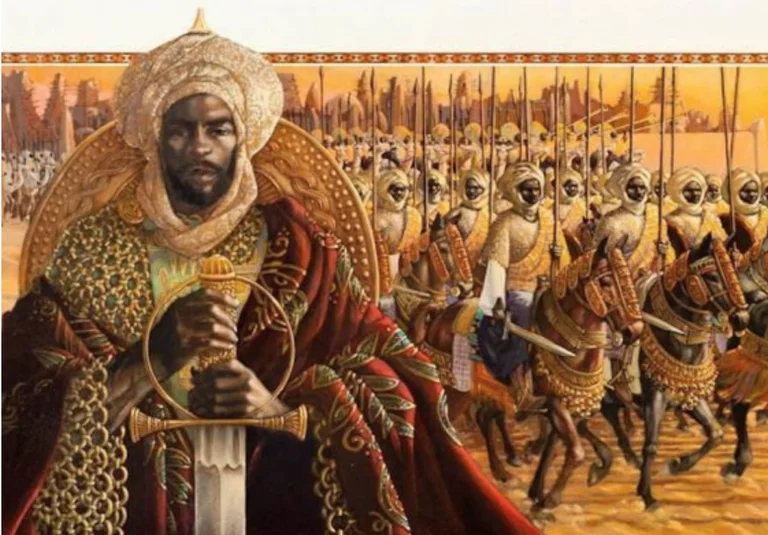
The net worth of Jeff Bezos, the owner of Amazon, has just surpassed $100 billion, the first time in modern history that a person has been known to hold such a vast fortune.
But he is still far behind the African King Musa Keita I, who is thought to be the richest person of all time—“richer than anyone can describe,” reports Time.
His wealth was unimaginable, writes TIME’s Jacob Jacobson: “There is really no way to put an exact number on his wealth.”
He led the Mali Empire in the 14th century, and his land was rich in lucrative natural resources, most notably gold.
“His great wealth was only one part of his rich legacy,” reports Jessica Smith at TED-Ed.
Musa Keita came to power in 1312. When he was crowned, he was given the name Mansa, meaning king. At the time, much of Europe was hungry and plagued by civil wars, but many African kingdoms were flourishing.
While in power, Mansa Musa expanded the borders of his extraordinary empire. He annexed the city of Timbuktu and reasserted control over Gao. In all, his empire stretched about 2,000 kilometers.
Mansa Musa had land without end. To put it in perspective, he ruled all or parts of modern-day Mauritania, Senegal, Gambia, Guinea, Burkina Faso, Mali, Niger, Nigeria and Chad.
The rest of the world learned of his great wealth in 1324, when he made the nearly 4,000-mile pilgrimage to Mecca. And he did not do it cheaply.
“No one could travel on a budget; he brought a caravan as far as the eye could see,” reports Smith. “Chroniclers describe an entourage of tens of thousands of soldiers, civilians and enslaved people, 500 heralds with gold objects and dressed in silk robes, and many camels and horses carrying an abundance of gold bars.”
At his stop in Cairo, he spent so much gold and gave so much money to the poor that he caused massive inflation! It would take years for the city to fully recover from the currency crisis.
The extravagant journey put Mansa Musa on the map.
“Material wealth was not the king’s only concern,” says Smith. “As a devout Muslim, he had a great interest in Timbuktu.” He urbanized the city by building schools, mosques and a great university.
He also built the legendary Djinguereber Mosque in Timbuktu, which still stands today.
After reigning for 25 years, Mansa Musa died in 1337. He was succeeded by his son, Maghan I. “The king’s rich legacy continued for generations, and remains to this day in the mausoleums, libraries and mosques that bear witness to that golden age in Mali’s history,” says Smith.
Related

Curiosities
Jordan Blocks Telegram App After Deadly Church Attack to Prevent Extremism

Curiosities
Don’t Rely Only on Mileage: When Should You Change Your Engine Oil?

Curiosities
1979 Porsche 924 returns to the United Arab Emirates Police fleet

Curiosities
Restaurant in Canada bans children under 15, decision sparks debate
Curiosities
12 curiosities from around the world you shouldn’t miss

Curiosities
Why do mosquitoes prefer some people over others? The reason has been revealed

Curiosities
Father and son break Guinness record playing ‘Hungry Hungry Hippos’ blindfolded

Curiosities
Why Are Highway Direction Signs Green in Some Countries and Blue in Others?

Curiosities
What happens when there is a bomb threat on an aircraft?

Curiosities
NASA Searches for a Secret Underground Cave on the Moon

Curiosities
Wearing boxing gloves and a special costume, this dog became Halloween’s star

Curiosities
After 28 years and 50,000 kilometers, British adventurer Karl Bushby returns home





