
Although more than 30 years have passed since his de.ath, Enver Hoxha continues to be an enigmatic figure. The life of the most important Albanian of the 20th century is full of mysteries and contradictions. Although he was one of the most widely read people, Enver Hoxha established one of the most brutal dictatorships […]
50 Interesting Facts from the Life of Enver Hoxha
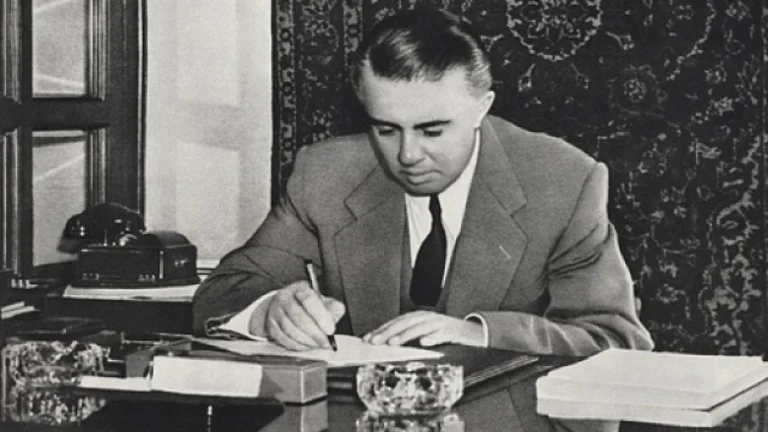
Although more than 30 years have passed since his de.ath, Enver Hoxha continues to be an enigmatic figure.
The life of the most important Albanian of the 20th century is full of mysteries and contradictions. Although he was one of the most widely read people, Enver Hoxha established one of the most brutal dictatorships in Albania. The most chilling fact is that during his regime 6,027 people were executed, 17,650 were imprisoned, and more than 20,000 people were interned.
During the period in which he led the Albanian state, 10 ministers were killed, and 20 generals in the Albanian army were executed, imprisoned, and interned. Also, from the founding of the Communist Party in 1941 until 1985, 41 leaders of this party were executed, imprisoned, and interned. “Tirana Observer” publishes today 50 facts from the life of Enver Hoxha. From the strange proposal he made to Nexhmije Hoxha, to his passions, the things he hated most, and the elimination of his closest comrades.
1- The dictator Enver Hoxha was born on October 16, 1908, in the city of Gjirokastër.
He had one brother and two sisters. The former communist dictator lived 76 years, 5 months, and 26 days. Enver Hoxha died on April 11, 1985.
2- According to the doctors’ report, Hoxha died as a result of a heart attack and fell into a coma on April 9. Two days later, none of his vital organs was functioning, leading to his death.
3- Hoxha’s family owned land in Gjirokastër and the Dropull area. They were Muslim and belonged to the Bektashi sect.
4- In 1930 Hoxha completed the French Lyceum in the city of Korçë with high marks. According to accounts, he was an exemplary student.
5- In 1931, Ahmet Zogu’s Albanian government gave him a scholarship to study at the University of Montpellier in France, which he left halfway through. In France he wrote several articles in the newspaper “L’Humanité” under the pseudonym Lulo Malësori, denouncing Zogu’s government.
6- The communist dictator lived for almost five years in several Western countries. He spent the most time in France and Belgium. He went to Brussels and began working there as private secretary to the Albanian consul. According to the communist biography, he was dismissed from his job because of his anti-Zogist activities.
7- In 1936 he returned to Albania and began working as a French teacher at the French Lyceum in Korçë. Following the occupation, in 1939 he was fired for refusing to register with the Fascist Party.
8- On November 8, 1941, he took part in the meeting of the communist groups and was one of the founders of the Albanian Communist Party.
9- In 1942, a panel of judges at the Fascist Court in Tirana sentenced the chairman of the Albanian Communist Party, Enver Hoxha, to death in absentia. Enver Hoxha was one of the founders of the newspaper “Zëri i Popullit.” It was established in August 1942 and was the organ of the Albanian Communist Party.
10- Of the seven members of the Provisional Central Committee of the Communist Party, established in 1941, only Enver Hoxha was still alive after liberation; the others were killed or imprisoned.
11- One of the great mysteries surrounding Enver Hoxha is undoubtedly how he came to lead the Communist Party on November 8, 1941. At the meeting, he was not appointed leader, although he had previously emerged as the communists’ leader. Some historians say that Yugoslavs Miladin Popović and Dušan Mugoša influenced his rise. In his book about the former dictator, Blendi Fevziu writes that Enver Hoxha’s presence at the founding meeting of the Party was due solely to Koço Tashko. Miladin Popović had told him that all five members of the Korçë Communist Group were Orthodox, and that there absolutely had to be a Muslim as well. So Tashko brought Enver along.
12- The ki.lling of Qemal Stafa is a dark chapter in Enver Hoxha’s history. Although the former secretary of the Communist Youth was killed by the occupiers, the reasons for the order for him to go to Vlorë on May 5, 1942, remain a mystery.
13- Although the Mukje Meeting, held on August 1, 1943, could be called the First Pluralist Parliament, Enver Hoxha harshly condemned it, calling it treason. Ymer Dishnica and Mustafa Gjinishi would receive severe punishments after the Mukje Meeting. Enver Hoxha, encouraged by the Yugoslavs, did not approve of their meeting with representatives of the National Front.
14- The former communist dictator narrowly escaped an assassination attempt in April 1994 in Helmës. A captured German officer managed to get hold of a submachine gun and seriously endanger Hoxha’s life.
15- In March 1943, at the First Conference of the Communist Party, he was elected Party Secretary. He held this position until his death. On October 22, 1994, the Berat Conference decided to establish an independent Albanian government. Enver Hoxha was appointed head of the government. In May 1944, Enver Hoxha was appointed Commander of the Supreme Headquarters. He replaced senior military officer Spiro Moisiu in this military post.
16- The communist leader married Nexhmije Xhuglin from Dibër on January 1, 1945. They had three children and later seven grandchildren.
17- In 1946, he denounced the British and American missions in Albania, accusing them of collaborating with his opponents to overthrow the communist regime. Diplomatic relations between Albania and the United States and England were severed in 1946, following the Corfu Channel incident.
18- Enver Hoxha made his first trip abroad in June 1946, to Yugoslavia, where he met Josip Broz Tito. Enver Hoxha has been accused by nationalists of selling Kosovo to Yugoslavia. In his memoirs, Enver Hoxha stated that he had made every effort to unite Kosovo with Albania. He even said that he had asked Tito himself for this.
19- Hoxha held the post of Minister of Defense in 1944, Minister of Foreign Affairs from 1946 to 1953, and Prime Minister from 1944 to 1954.
20- After liberation, in 194, Enver Hoxha established the Special Court, which sentenced hundreds of intellectuals of that time to death, including Bahri Omari, Hoxha’s brother-in-law. Sixteen members of the Albanian Parliament were executed by the communist regime on October 10, 1947. They were accused of wanting to overthrow the communist regime.
21- Enver Hoxha first appeared on the international stage in August 1946, when he took part in the Paris Peace Conference as head of the Albanian government. Enver Hoxha first met Russian dictator Joseph Stalin in July 1947, after receiving an invitation to visit the Soviet Union. The communist leader met Stalin five times. Their final meeting took place in April 1951.
22- Communist Party leader Enver Hoxha first met Nikita Khrushchev in Moscow in June 1954. In May 1959, Soviet leader Nikita Khrushchev visited Albania, becoming the first head of state of the USSR to visit our country.
23- Enver Hoxha visited China only once, in 1956, and met Mao Zedong once. Enver Hoxha’s last trip abroad was in 1960, to the Meeting of 81 Communist Parties in Moscow.
24- During his participation in the Meeting of 81 Communist Parties in Moscow, suspicions arose that the Soviets had devised a plan to eliminate Enver Hoxha. For this reason, the communist dictator traveled back to Italy by train and then by plane. One of the reasons for the breakdown in relations with the Soviet Union was that Moscow asked Tirana to rehabilitate Albanians who had been punished after relations with Yugoslavia broke down.
25- Albania became part of the Warsaw Pact in 1955. In 1962, Tirana de facto withdrew from the pact and de jure in 1968. Albania became the first country to leave the pact, which was Moscow’s rival to NATO. After relations with the Soviets broke down in 1960, Enver Hoxha sentenced two leaders of the Party of Labor, Liri Belishova and Koço Tashko, accusing them of collaborating with Nikita Khrushchev.
26- During Enver Hoxha’s regime, land reform was carried out in Albania in 1945-1946. This reform made the majority of the peasantry landowners, but it forcibly took land from its owners by expropriating them. Under Hoxha’s regime, property was collectivized. Private property was abolished, villages were turned into cooperatives, and small private enterprises were nationalized.
27- On December 27, 1967, Albania became the only atheist state in the world. Belief in God and the practice of religions were banned. 2,200 churches and mosques in our country were destroyed.
28- From the formation of the postwar government until 1981, all the Ministers of the Interior—Koçi Xoxe, Kadri Hazbiu, Mehmet Shehu, and Feçorr Shehu—were accused by Hoxha of being foreign agents. Enver Hoxha’s chief bodyguard was Sulo Gradeci. The latter served Hoxha for 30 years, thus becoming the dictator’s most trusted person.
29- During his time as leader of the Party of Labor, Enver Hoxha had only two minor car accidents, neither of which endangered his life. Foreign secret services, as well as individuals inside the country, carried out operations to ki.ll Hoxha. But officially, from the time he took power until his death, no assassination attempt against him is known to have taken place.
30- His illness was kept secret for a certain period. Enver had suffered two cerebral hemorrhages, in 1983 and 1984, had almost completely and irreversibly lost his sight, and had also suffered a heart attack two days before his death. Much has now been written about the fact that severe diabetes contributed to this unhappy end. The progressive loss of his physical and intellectual abilities did nothing to soften his terrible power, a power that those close to him guarded with ever greater secrecy, to the point of absurdity, causing tragic situations. On April 11, 1985, Enver Hoxha was officially declared dead. His funeral was accompanied by grand tributes, so much so that in people’s minds it seemed that from that moment on Albania would have no future.
31- Enver Hoxha lived for a full 40 years in the former Blloku area. He moved there in 1945, into a villa with Koçi Xoxe, but soon moved to another villa. The former communist dictator had holiday homes in almost all the country’s most important cities. But the two places where he most preferred to spend his holidays were Drilon in Pogradec and Vlorë.
32- Hoxha rarely traveled by air. He flew to Moscow and Beijing, and took a helicopter only a few times within Albania. His lack of travel was also due to Albania’s isolation from the world.
33- Hoxha began his day by reading all the newspapers. Every morning, all the country’s newspapers, even the local ones, were left on his table. He also read the international press, especially the prestigious French newspaper “Le Monde.”
34- It has been confirmed that the communist leader traveled with lookalikes during visits to various cities around the country. Hoxha had four lookalikes. To protect Enver Hoxha’s life during trips outside Tirana, especially during holidays on Mount Dajti, at the beach villas in Durrës, in Vlorë, Pogradec, or on various visits around the country, the Second Directorate, or the “Leadership Security” Directorate, the Guard, and the close protection group were mobilized. The Political Bureau had drawn up a special regulation requiring all Interior Affairs Branches in the districts through which the motorcade would pass to be on alert level one for 24 hours beforehand; for several hours afterward, vehicle traffic on the roads was blocked.
35- What is true in all this is that his lookalikes were mostly mannequins—in other words, people who wore only his clothes inside the car during travel. The lookalikes Halim Zano, Axhem Abazi, Kadri Bregu, and Qazim Malaj never “played” Enver Hoxha outside the interior of the black “Mercedes.” Although nobody officially acknowledges this fact, it is still kept, even fanatically, as one of the many enigmas that accompanied the communist regime in Albania.
36- But to best understand the specific additional duty of the dictator’s four lookalikes, it is enough to mention an unknown fact: Although they protected Hoxha’s life for 46 uninterrupted years, during dozens and hundreds of his public appearances, their portraits do not appear in any of the thousands of published photographs of the former head of state. Not even in a single photo in the large, lavish album published for Enver’s 80th birthday.
37- During his rule, 29 ministers, deputy ministers, and leaders of the Party of Labor were sentenced, most of them accused of being agents of foreign intelligence services. During his 41-year regime, 9 ministers in the governments of that era and one prime minister were killed. Mehmet Shehu’s de.ath was described as a sui.cide, but in fact it left many suspicions and mysteries. During his rule, 22 generals in the Albanian army were executed, persecuted, and sentenced to many years in prison.
38- During his rule, 6,027 people were executed for political reasons, as enemies of the regime or collaborators with foreign services. During Enver Hoxha’s regime, 17,650 people were imprisoned, of whom 1,065 people actually died in the terrible communist prisons.
39- Enver Hoxha spoke fluent French, and also knew several foreign languages, including Italian, Serbo-Croatian, Russian, and English. Hoxha’s favorite writers were Molière, Goethe, and Byron.
40- He had around 45,000 books. Most of them were Larousse encyclopedic books, albums, and many others, mainly in French. After the 1990s, most of them were destroyed, and his family received only a small portion.
41- Enver Hoxha continually enriched his private library with the latest publications from France. According to Blendi Fevziu, the materials he imported to read were not limited to lengthy treatises on Marxism-Leninism. Hoxha’s taste in books was broad. He ordered books about the lives of Popes and other Catholic saints, and even books about vampires, surprisingly, among other subjects.
42- Enver Hoxha was passionate about hunting, but he never excelled at the sport. Witnesses from that time say he went hunting when Mehmet and Kadri called him.
43- According to Nexhmije Hoxha, the thing Enver Hoxha hated most was debt. “He had the Gjirokastër custom in his blood: he didn’t like debt; he knew that debt made you a slave. He used to say the same about Tito. The Kosovars have incurred so much debt with him; they’ve even said, ‘the child cries in its mother’s womb,’ meaning, when will they pay these debts.” Nexhmije Hoxha said in her final interview with Rudina Xhunga.
44- In an interview with Rudina Xhunga, Nexhmije Hoxha also said that Enver Hoxha proposed to her in June 1942.
“So one day, when Enver saw that I didn’t understand or was pretending not to, he decided to speak himself. One summer day he told me, I’m going to lie down to sleep; wake me at 5 o’clock. I went to wake him, but in fact he hadn’t slept; perhaps he had stayed up to make his decision. That was when he proposed marriage to me, in such a prosaic way that I had never imagined it. Before explicitly telling me he loved me, while I was making the coffee he had asked for, he said: ‘I want to marry you.’ I froze, remained there making the coffee, and didn’t move, while he said to me: ‘Well, are you making soup? Sit down here, I’m not going to eat you!’ In other words, he tried to put me at ease a little. With my head lowered, I told him: ‘I won’t get married during the war.’ ‘Who said we’re going to get married during the war?’ he said. ‘First we’ll tell our friends, but think it over carefully, because you’re young and there’s an age difference between us.’ Then he continued: ‘But I can’t put it off for long, because my mother is waiting, since I’m an only son.’ I didn’t answer him at the time, but about a month or so passed, and then I replied: ‘The dam of my ideas has broken.’
45- In his biography of the former dictator, Blendi Fevziu describes Hoxha as a paranoid psychopath, with very few or no signs of remorse, who, together with his wife, orchestrated the rapid death of anyone who crossed their path. In his final years, Fevziu writes, Hoxha suddenly lived a lonely life because by then he had killed so many of his wartime comrades that there was hardly anyone left for him to talk to.
46- The communist leader suffered his first heart attack in 1972. For almost two years he underwent extensive treatment, and his condition improved in 1974.
47- He was buried in the National Martyrs’ Cemetery. But in May 1992 he was exhumed and moved to the Sharra Cemetery. In April 1985, the United Nations observed a minute of silence for Enver Hoxha’s death.
48- The former communist dictator was buried in a coffin. He had left instructions that his body should not be embalmed like Lenin’s. It has been revealed that a death mask was made for his face on the day of the tributes.
49- During the war, to escape pursuit by the fascists, Enver Hoxha used several pseudonyms, including Tarasi, Hasani, Saliu, Malo, Valbona, and Shpati. He gave the last two pseudonyms as names to his granddaughter and grandson.
50- Enver Hoxha is the only Albanian personality included in the 2005 World Encyclopedia. His name is listed on page 430, where the letter H appears in alphabetical order. Historian Bernd Fisher described Enver Hoxha as the most influential Albanian of the 20th century./ Tirana Observer/
Related

Curiosities
Jordan Blocks Telegram App After Deadly Church Attack to Prevent Extremism

Curiosities
Don’t Rely Only on Mileage: When Should You Change Your Engine Oil?
Curiosities
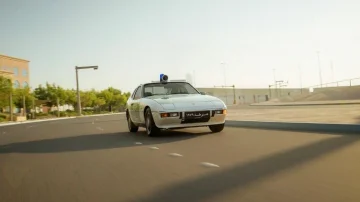
1979 Porsche 924 returns to the United Arab Emirates Police fleet
Curiosities
Restaurant in Canada bans children under 15, decision sparks debate
Curiosities
12 curiosities from around the world you shouldn’t miss
Curiosities
Why do mosquitoes prefer some people over others? The reason has been revealed

Curiosities
Father and son break Guinness record playing ‘Hungry Hungry Hippos’ blindfolded
Curiosities
Why Are Highway Direction Signs Green in Some Countries and Blue in Others?
Curiosities
What happens when there is a bomb threat on an aircraft?
Curiosities
NASA Searches for a Secret Underground Cave on the Moon

Curiosities
Wearing boxing gloves and a special costume, this dog became Halloween’s star
Curiosities
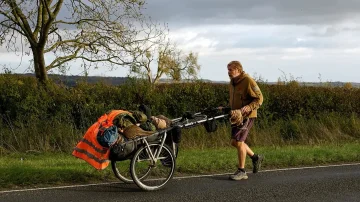
After 28 years and 50,000 kilometers, British adventurer Karl Bushby returns home





