
Columbus proved that the Earth is round If he did anything of the sort, he was about 2,000 years late. Ancient Greek mathematicians had already proved that the Earth is round and not flat. Pythagoras, in the sixth century BCE, was one of those who proposed the idea. Aristotle, in the fourth century […]
Five False Ideas About Christopher Columbus
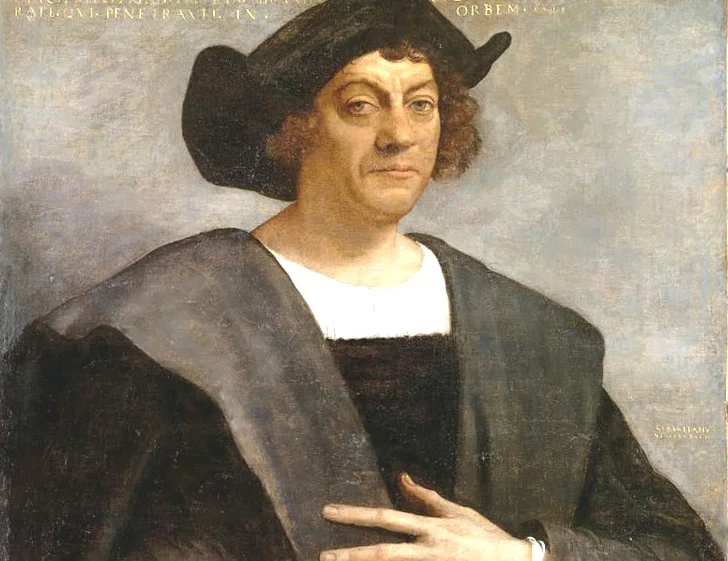
If he did anything of the sort, he was about 2,000 years late. Ancient Greek mathematicians had already proved that the Earth is round and not flat. Pythagoras, in the sixth century BCE, was one of those who proposed the idea. Aristotle, in the fourth century, offered physical evidence, such as the Earth's shadow on the Moon and the Earth's curvature, known to all sailors as they approached shore.
And beginning in the third century BCE, Eratosthenes determined the shape and circumference of the Earth using elementary geometry. In the second century, Claudius Ptolemy wrote the “Almagest,” a mathematical and astronomical treatise on planetary forms, describing the Earth as spherical. This text was known throughout educated Europe in Columbus's time.
Columbus, a self-educated man, greatly underestimated the Earth's circumference. He also thought Europe was wider than it really was, and that Japan was farther from the shores of China than it actually was. For these reasons, he thought he could reach Asia by sailing west, a notion that most educated Europeans at the time believed was true—not because the Earth was flat, but because Columbus's mathematics was so very wrong.
In fact, he was lucky to discover a place that was naturally not Asia. The Columbus flat-Earth myth probably originated with Washington Irving's 1828 biography of Columbus; nothing of the sort had ever been mentioned before. His crew was not concerned about this fact.
Columbus discovered America
Yes, let's ignore the fact that millions of people who already populated the place that would later be called America had been discovered thousands of years earlier. And let's also ignore Leif Erikson's voyage from Greenland around Canada around the year 1000 CE. If Columbus discovered America, he himself didn't know it. Until his death, he claimed he had landed in Asia, although most sailors knew this was not true.
What Columbus had “discovered” was the Bahamas archipelago and then the island later called Hispaniola, now divided between Haiti and the Dominican Republic. On his later voyages, he went farther, to Central and South America. Columbus did not come anywhere near the territory that now makes up the United States of America.
So why does the US celebrate in honor of a man thought to have discovered a new route to Asia and the lands described long ago by Marco Polo? This is because the United States was initially fighting England, not Spain.
John Cabot “discovered” Newfoundland on behalf of England around 1497, paving the way for the colonization of most of North America. Meanwhile, American colonists made Columbus their hero, rather than England's Cabot. That's why we have the capital, Washington, DC—in the District of Columbia, not Cabotia.
Columbus brought syphilis to Europe
This issue has been widely debated. Syphilis likely existed in Europe for millennia, but was simply not well understood. The ancient Greeks described lesions that were very similar to the symptoms of syphilis. Perhaps coincidentally, a syphilis epidemic struck Naples, Italy, in 1494 during the French invasion, just two years after Columbus's return. This cemented the association often made with the famous explorer.
But apart from Hippocrates' descriptions of sores, many researchers believe there was a syphilis outbreak throughout the region in the 13th century, even in an Augustinian friary for men in the English port of Kingston upon Hull.
This coastal town had a steady stream of sailors from distant lands, and you know what they can get up to. Carbon dating and DNA analysis of bones from the friary support the theory that syphilis was a global disease that existed before Columbus's voyages.
Columbus died obscure and in poverty
Columbus was not a rich man when he died in Spain in 1506 at the age of 54. But he could not be described as poor either. Columbus led a financially comfortable life in an apartment in Valladolid, although he suffered from severe pain caused by arthritis.
Columbus had been arrested years earlier on charges of tyranny and brutality toward the native peoples of the Americas. But he was freed by King Ferdinand of Spain after only six weeks in prison. He was later denied most of the profits from his discoveries, which had earlier been promised to him by King Ferdinand and Queen Isabella.
After his death, his family sued the crown in a famous lawsuit known as “Pleitos colombinos,” or the Columbian lawsuits, a case that lasted nearly 20 years. Columbus's heirs ultimately secured substantial sums of money and property from the crown. Also, by the end of the 15th century, before his death, most European sailors had realized that Columbus had discovered islands and a large landmass unknown to them.
Columbus did nothing important
With all this talk of an unlucky Columbus who accidentally discovered the New World, as well as the later genocide against native cultures, it is easy to understand the current backlash against him and the national holiday called Columbus Day, celebrated throughout North and South America. This is not entirely fair.
While Columbus was wrong about the biggest things, he helped develop knowledge about wind patterns, specifically the easterlies that blow toward the Caribbean and the westerlies that could carry ships back to Western Europe. Also, while Columbus was not the first European to reach the Western Hemisphere, he was the first to stay there.
His voyages directly prompted a permanent European presence in both Americas. News of the success of his first voyage spread like wildfire across Europe, thus preparing the way for the age of European colonization.
One can argue about whether the conquest was good or bad for humanity—that is, the spread of Christianity, the growth of modernism, the exploitation and annihilation of native cultures, and so on. But it is difficult to deny Columbus's direct role in the rapid and radical transformation of the world.
Related

Curiosities
Jordan Blocks Telegram App After Deadly Church Attack to Prevent Extremism

Curiosities
Don’t Rely Only on Mileage: When Should You Change Your Engine Oil?

Curiosities
1979 Porsche 924 returns to the United Arab Emirates Police fleet

Curiosities
Restaurant in Canada bans children under 15, decision sparks debate
Curiosities
12 curiosities from around the world you shouldn’t miss

Curiosities
Why do mosquitoes prefer some people over others? The reason has been revealed

Curiosities
Father and son break Guinness record playing ‘Hungry Hungry Hippos’ blindfolded

Curiosities
Why Are Highway Direction Signs Green in Some Countries and Blue in Others?

Curiosities
What happens when there is a bomb threat on an aircraft?

Curiosities
NASA Searches for a Secret Underground Cave on the Moon

Curiosities
Wearing boxing gloves and a special costume, this dog became Halloween’s star

Curiosities
After 28 years and 50,000 kilometers, British adventurer Karl Bushby returns home





