
A coin that looks completely ordinary at first glance may be worth far more than its face value. Collectors are willing to pay considerable sums for rare coins and those with minting errors. Most of us use coins without paying […]
Check your wallet: Some €2 coins could be worth thousands of euros
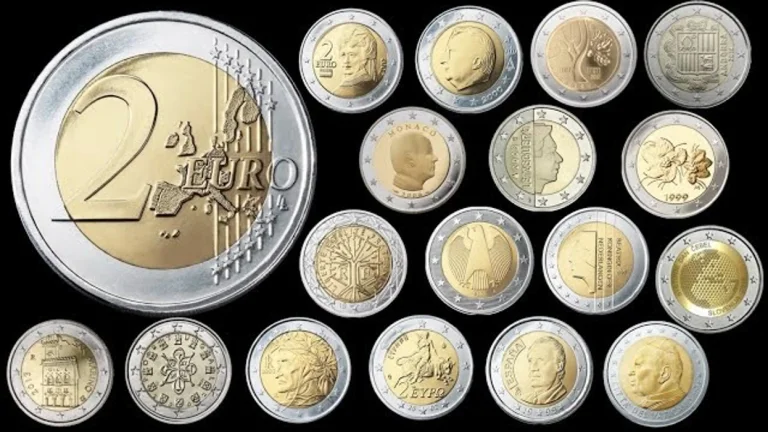
A coin that looks completely ordinary at first glance may be worth far more than its face value.
Collectors are willing to pay considerable sums for rare coins and those with minting errors.
Most of us use coins without paying much attention to them.
At the bakery, in the supermarket or when paying for parking, they pass from hand to hand without being checked.
However, it is worth taking a closer look at the coins you receive as change.
Some €2 coins may be worth a considerable amount on the collectors’ market.
But not every coin with a special design is rare and valuable, writes Euronews.
The Grace Kelly coin valued at around €3,100
One of the best-known examples is the €2 commemorative coin issued by Monaco in 2007 to mark the 25th anniversary of the death of Princess Grace Patricia, formerly known as American actress Grace Kelly.
According to data from the European Central Bank, only 20,001 examples of this coin were produced.
It can be identified by the portrait of the princess, the country name “MONACO”, the year 2007 and the signature “R.B. BARON”, which appears to the right of the portrait.
According to estimates cited by Euronews, this coin could be worth around €3,100.
However, there is an important detail: the coin was sold directly to collectors and was not released into general circulation.
For this reason, the chance of finding one by chance in your change is extremely small.
Minting errors can increase a coin’s value
In addition to rare issues, coins with errors made during the minting process are also of particular interest to collectors.
One example is the error known as the “fried egg”, in which the inner part of the coin is not properly set into the outer metal ring.
As a result, the metal of the inner part may protrude partially over the outer ring, creating an unusual appearance.
According to the values cited by Euronews, some of these errors can fetch considerable prices: up to €100 for coins with the error known as the “fried egg”.
Another case is the German €2 commemorative coin from 2021, dedicated to the state of Saxony-Anhalt.
According to the article, one example was minted on a metal blank intended for a €1 coin.
For this reason, its colours were the reverse of those on a normal €2 coin: the outer ring was gold-coloured, while the inner part was silver-coloured.
The coin weighed 7.5 grams, instead of the 8.5 grams that a €2 coin usually weighs.
A comparable minting error has been valued by coin dealer Münzen Müller at around €1,200.
Please note: These figures are reported estimates and do not guarantee that a coin will sell for that price. Its actual value depends on rarity, condition and collector demand.
The letter “S” on coins won’t make you rich
Claims often circulate online that Greek €2 coins bearing a small letter “S” inside one of the stars are extremely valuable.
But according to a website specialising in two-euro coins, this letter does not necessarily indicate a minting error.
It is linked to the Finnish word “Suomi”, which means Finland. Some of the Greek coins in question were produced in Finland.
According to the experts cited in the article, this is a common variant, with around 70 million examples. Therefore, the mere presence of the letter “S” does not give the coin any exceptional value.
Found a rare coin? Don’t clean it!
If you spot a coin that looks unusual, the first step is to check its issuing country, year and design.
The European Central Bank publishes data on official issues of €2 commemorative coins, which can serve as a starting point for identifying them.
If you suspect you have a highly valuable example, it is recommended that you have it checked by a numismatist or a dealer specialising in coins.
You can also request an appraisal from an auction house that handles numismatic collections.
If its rarity is confirmed, the coin can be sold directly or through an auction.
Before selling, it is also important to find out about any possible commissions and fees.
The most important rule: do not clean or polish the coin!
Rubbing and polishing can create fine scratches and damage the metal’s original shine. This can reduce its value to collectors.
So, the next time you receive change, it is worth taking a closer look at the coins.
You may not find a fortune, but a simple check could help you spot an example that deserves attention. /Telegrafi/
Related

Curiosities
Jordan Blocks Telegram App After Deadly Church Attack to Prevent Extremism
Curiosities
Don’t Rely Only on Mileage: When Should You Change Your Engine Oil?

Curiosities
1979 Porsche 924 returns to the United Arab Emirates Police fleet

Curiosities
Restaurant in Canada bans children under 15, decision sparks debate
Curiosities
12 curiosities from around the world you shouldn’t miss

Curiosities
Why do mosquitoes prefer some people over others? The reason has been revealed
Curiosities
Father and son break Guinness record playing ‘Hungry Hungry Hippos’ blindfolded

Curiosities
Why Are Highway Direction Signs Green in Some Countries and Blue in Others?

Curiosities
What happens when there is a bomb threat on an aircraft?

Curiosities
NASA Searches for a Secret Underground Cave on the Moon

Curiosities
Wearing boxing gloves and a special costume, this dog became Halloween’s star

Curiosities
After 28 years and 50,000 kilometers, British adventurer Karl Bushby returns home





