
Satellite images reviewed by the BBC show shrinking glaciers, areas scarred by wildfires, dry green fields and lower river levels. The EU’s climate monitoring service, Copernicus, has confirmed that Western Europe experienced its hottest June–July period on record. The immediate cause of […]
Europe’s scorched landscapes, visible even from space
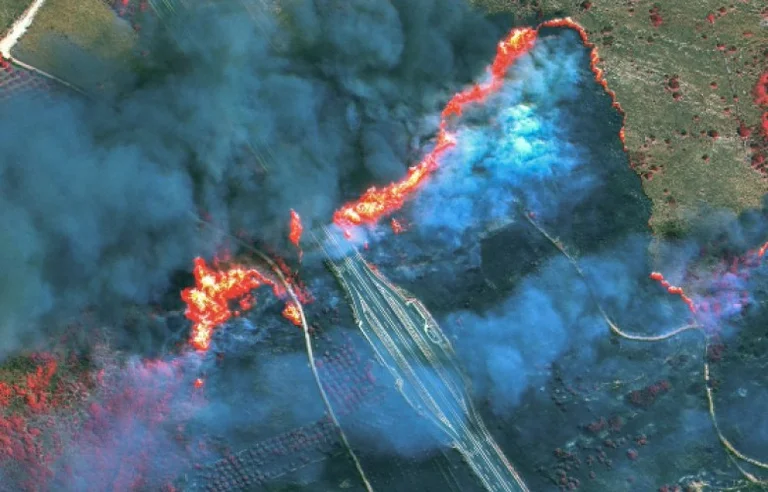
Satellite images reviewed by the BBC show shrinking glaciers, areas scarred by wildfires, dry green fields and lower river levels.
The EU’s climate monitoring service, Copernicus, has confirmed that Western Europe experienced its hottest June–July period on record. The immediate cause of the heatwaves has been persistent high-pressure weather systems bringing clear, sunny skies and allowing temperatures to rise, according to the Met Office.
But climate change, primarily caused by the burning of fossil fuels, has raised average temperatures for decades and made heat periods far more likely and intense.
Water levels on the Danube, Europe’s second-longest river, have fallen to their lowest levels in 30 years in some places. Meanwhile, in parts where the river winds through Hungary and Romania, nuclear power plants have been forced to suspend operations or run at reduced capacity for a time because they have been unable to use river water for cooling.
Meanwhile, on the River Rhine, several cargo ships have been stranded and tourist cruises have been cancelled. Even the snow-covered peaks of the Alps have not escaped the heat.
After a mild winter, glaciers had less snow cover than usual at the end of April, while an unusually early heatwave the following month accelerated snowmelt. This exposed the ice beneath, leaving glaciers vulnerable to faster melting during subsequent heatwaves.
Parts of Western Europe have also been affected by wildfires this summer. More than 90,000 hectares have burned in France. According to the European Forest Fire Information System, this is already the worst year on record. The largest fire in the Gironde region, where the city of Bordeaux is located, burned around 42,000 hectares of land.
Related

Curiosities
Jordan Blocks Telegram App After Deadly Church Attack to Prevent Extremism

Curiosities
Don’t Rely Only on Mileage: When Should You Change Your Engine Oil?

Curiosities
1979 Porsche 924 returns to the United Arab Emirates Police fleet

Curiosities
Restaurant in Canada bans children under 15, decision sparks debate

Curiosities
12 curiosities from around the world you shouldn’t miss

Curiosities
Why do mosquitoes prefer some people over others? The reason has been revealed

Curiosities
Father and son break Guinness record playing ‘Hungry Hungry Hippos’ blindfolded
Curiosities
Why Are Highway Direction Signs Green in Some Countries and Blue in Others?
Curiosities
What happens when there is a bomb threat on an aircraft?
Curiosities
NASA Searches for a Secret Underground Cave on the Moon

Curiosities
Wearing boxing gloves and a special costume, this dog became Halloween’s star
Curiosities
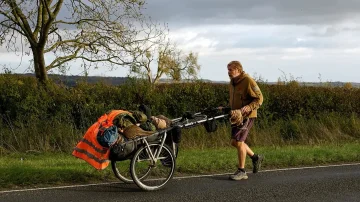
After 28 years and 50,000 kilometers, British adventurer Karl Bushby returns home





