
Extreme sea temperatures recorded in Europe during July would have been almost impossible without climate change caused by human activity, according to a study published on Wednesday. Researchers from “World Weather Attribution” (WWA) analyzed the Celtic Sea, the Bay of Biscay and the Iberian Peninsula, as well as the Western and Eastern Mediterranean […]
Human-caused climate change drives unprecedented warming of the seas
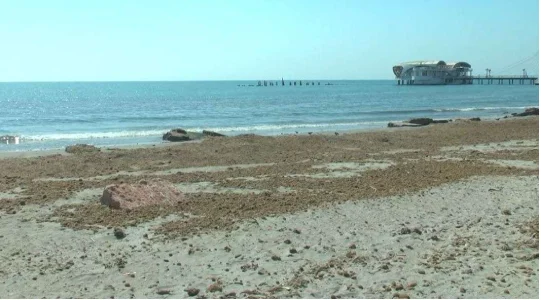
Extreme sea temperatures recorded in Europe during July would have been almost impossible without climate change caused by human activity, according to a study published on Wednesday.
Researchers from “World Weather Attribution” (WWA) analyzed the Celtic Sea, the Bay of Biscay and the Iberian Peninsula, as well as the Western and Eastern Mediterranean.
July saw the highest global sea-surface temperatures ever recorded for that month, while record levels were measured along Europe’s Atlantic coast and in the Western Mediterranean. Mediterranean waters were up to 6 degrees Celsius above normal in June.
Observations showed that temperatures rose by 1.2 degrees Celsius in the Celtic Sea region, 1.5 degrees Celsius in the Bay of Biscay and Iberian Peninsula area, 3.1 degrees Celsius in the Western Mediterranean and 2.6 degrees Celsius in the Eastern Mediterranean.
By combining observations with climate models, researchers attributed about 2 degrees Celsius of warming in the Mediterranean regions to human-caused climate change. The increase attributed to climate change was estimated at 1.4 degrees Celsius in the Bay of Biscay and Iberian Peninsula area, and 1.3 degrees Celsius in the Celtic Sea region.
In the Celtic Sea region, climate change has made this phenomenon about 30 times more likely. The study found that the observed temperatures in the other three regions would have been almost impossible in a climate 1.4 degrees Celsius cooler.
If global temperatures reach 2.8 degrees Celsius above pre-industrial levels by the end of the century, events similar to those observed in 2026 could be another 1.3 to 1.9 degrees Celsius hotter.
WWA warned that marine heatwaves can cause mass die-offs of corals, sponges and macroalgae, disrupting food chains and affecting fish, seabirds and marine mammals.
Warmer waters can also force species to move north, alter fisheries and aquaculture, increase humidity and heat stress in coastal areas, and raise the risk of waterborne diseases and beach closures due to jellyfish.
Researchers said adaptation measures can increase resilience, but cannot fully neutralize the ecological consequences of continued ocean warming, underscoring the need for a rapid transition away from fossil fuels.
Related

Curiosities
Jordan Blocks Telegram App After Deadly Church Attack to Prevent Extremism

Curiosities
Don’t Rely Only on Mileage: When Should You Change Your Engine Oil?

Curiosities
1979 Porsche 924 returns to the United Arab Emirates Police fleet

Curiosities
Restaurant in Canada bans children under 15, decision sparks debate

Curiosities
12 curiosities from around the world you shouldn’t miss

Curiosities
Why do mosquitoes prefer some people over others? The reason has been revealed

Curiosities
Father and son break Guinness record playing ‘Hungry Hungry Hippos’ blindfolded

Curiosities
Why Are Highway Direction Signs Green in Some Countries and Blue in Others?

Curiosities
What happens when there is a bomb threat on an aircraft?

Curiosities
NASA Searches for a Secret Underground Cave on the Moon

Curiosities
Wearing boxing gloves and a special costume, this dog became Halloween’s star

Curiosities
After 28 years and 50,000 kilometers, British adventurer Karl Bushby returns home





