
Sleepwalking, or somnambulism, is a condition in which a person acts as though they are awake while actually being in a deep sleep, and may involve walking, talking, or carrying out everyday activities. It can be caused by stress, lack of sleep, certain medical conditions, and medications. Even […]
Why Do Some People Walk and Talk in Their Sleep?
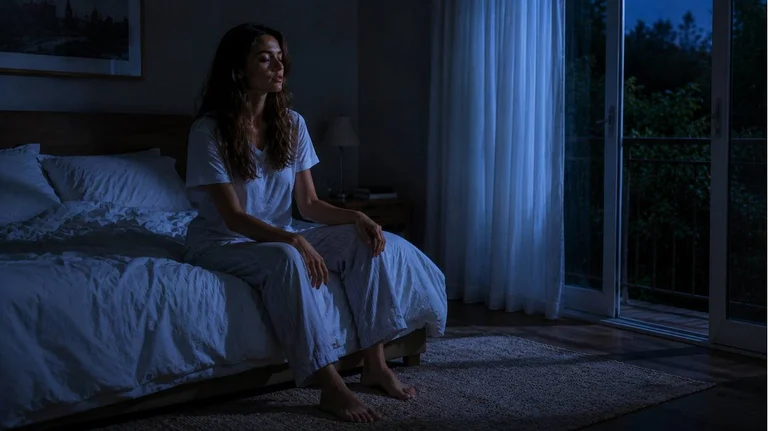
Sleepwalking, or somnambulism, is a condition in which a person acts as though they are awake while actually being in a deep sleep, and may involve walking, talking, or carrying out everyday activities. It can be caused by stress, lack of sleep, certain medical conditions, and medications.
Although it usually does not require treatment, it can cause fatigue and disrupt family members’ sleep, and in some cases, may involve dangerous activities. If it recurs or occurs with other symptoms, a visit to the doctor is recommended, writes Verywell Health.
Medications and alcohol
Sleepwalking can be triggered by alcohol and certain medications, particularly those that affect sleep and the nervous system. These include certain medications for insomnia, benzodiazepines, antidepressants, lithium, and some antipsychotics. The risk may depend on the type of medication, the dose, and the individual’s response to the medication.
If sleepwalking occurs after starting a new medication, it is important to talk to your doctor before making any changes to your medication.
Stress
Research shows that stressful events during the day are one of the main triggers of sleepwalking in adults. Living under high stress can disrupt sleep quality and increase the risk of insomnia, which may further contribute to sleepwalking in some people, reports Klankosova.tv.
Lack of sleep
A sleepwalking episode can be triggered by lack of sleep, irregular sleep schedules, and extreme fatigue. Studies suggest that lack of sleep can increase the frequency and complexity of sleepwalking episodes, particularly when a person finally falls asleep.
Migraine
Migraines and sleep disorders, such as sleepwalking, teeth grinding, and nightmares, are often associated. People who suffer from migraine with aura have been reported to have a higher frequency of sleepwalking. Scientists have not yet determined the exact mechanisms, but they believe the connection may lie in shared anatomical pathways in the brain.
Fever
Illness or fever, particularly in children, can trigger sleepwalking. Fever can also shorten the total duration of REM sleep and cause strange dreams or nightmares.
Breathing disorders during sleep
Sleepwalking is more common in people with obstructive sleep apnea, a condition in which breathing repeatedly stops during the night. This may be related to sleep disruptions and the supply of oxygen to the brain, but the exact connection is still unclear.
Gastroesophageal reflux disease (GERD)
Studies show that GERD is associated with sleep disorders, such as shorter sleep duration and poorer sleep quality. The relationship between GERD symptoms and sleep disorders appears to be bidirectional, but sleep disorders are a stronger risk factor for GERD symptoms than the other way around.
Parkinson’s disease
Some studies suggest that about 10% of people with Parkinson’s disease sleepwalk. This may be due to disease-related neurodegeneration, which disrupts the regulation of arousal during sleep.
When and why does it happen?
Sleepwalking, like other parasomnias, occurs during a partial awakening from the NREM sleep stage, most often one or two hours after falling asleep. Most episodes last five to ten minutes, but some can last longer. Research suggests that sleepwalking involves changes in brain processes that blur the dividing line between sleep and wakefulness.
How to recognize someone who is sleepwalking
There are several common signs. The person’s eyes are open, but they appear confused and do not recognize you. They may speak or respond with gibberish. Their behavior is often unusual, such as urinating in strange places, cooking food in the middle of the night, or leaving the house in their pajamas.
If you try to wake them, they may react strangely or aggressively. People who sleepwalk often have no memory of what happened.
Related

Curiosities
Jordan Blocks Telegram App After Deadly Church Attack to Prevent Extremism

Curiosities
Don’t Rely Only on Mileage: When Should You Change Your Engine Oil?

Curiosities
1979 Porsche 924 returns to the United Arab Emirates Police fleet

Curiosities
Restaurant in Canada bans children under 15, decision sparks debate

Curiosities
12 curiosities from around the world you shouldn’t miss

Curiosities
Why do mosquitoes prefer some people over others? The reason has been revealed

Curiosities
Father and son break Guinness record playing ‘Hungry Hungry Hippos’ blindfolded

Curiosities
Why Are Highway Direction Signs Green in Some Countries and Blue in Others?

Curiosities
What happens when there is a bomb threat on an aircraft?

Curiosities
NASA Searches for a Secret Underground Cave on the Moon

Curiosities
Wearing boxing gloves and a special costume, this dog became Halloween’s star
Curiosities
After 28 years and 50,000 kilometers, British adventurer Karl Bushby returns home





