
People were not endowed with a soul by God or by their genes. We created it ourselves through language – by turning sentience into something sacred. In his novel Penguin Island [Penguin Island, 1908], Anatole France weaves a wonderful story about an old, blind monk who sets out on a mission from Brittany toward the Hebrides and stops at an island inhabited only by penguins. […]
The Invention of the Soul

People were not endowed with a soul by God or by their genes. We created it ourselves through language – by turning sentience into something sacred.
In his novel Penguin Island [Penguin Island, 1908], Anatole France weaves a wonderful story about an old, blind monk who sets out on a mission from Brittany toward the Hebrides and stops at an island inhabited only by penguins. Although the birds speak a strange language, he assumes they must be human beings. So he proceeds to baptize them.
When word of this reaches Heaven, it causes a great commotion. God himself feels uncomfortable. He convenes an assembly of clerics and doctors of the Church and asks their opinion on the delicate question of whether the birds should now be given souls. It is an issue of more than merely theoretical importance. “The Christian state,” observes Saint Cornelius, “is not without serious concerns about a penguin … The birds’ habits, in many respects, conflict with the commandments of the Church …” After lengthy discussions, they settle on a compromise. The baptized penguins will indeed be given souls – but, on the recommendation of Saint Catherine, their souls will be small.
For the penguins, a soul was an unexpected bonus. As René Descartes, the seventeenth-century scientific philosopher, had explained, nonhuman animals in their natural state are, generally speaking, simply soulless machines. Here is a sketch of a Cartesian penguin, without even the tiniest speck of soul.
Descartes believed that humans, too, are a kind of machine. But he thought that, fortunately, in humans God had provided for the addition of a soul as standard practice. In early childhood, the material substance of the human brain is brought into communication, through the pineal gland, with the special substance of the mind: res extensa (extended substance) is joined with res cogitans (thinking substance). The consciousness that results from this lays the foundations for the soul.
Today we may think that “substance dualism” of this kind is ridiculous. A century and a half after Descartes, the great French essayist Denis Diderot was surely laughing. “A fairly clever man,” he wrote in 1780, “began his book with these words: Man … consists of two distinct substances, the soul and the body … I almost closed the book. Oh! ridiculous writer … you do not know what it is that you call a soul, much less how they are joined.”
Yet around 1838, Charles Darwin still seems not to have seen the joke. “The soul,” he wrote in one of his early scientific notebooks, “is by everyone’s consent added to man; animals do not have it.”
Should we laugh? Or should we, as contemporary scientists, show some understanding? As I see it, the matter is not as clear-cut as many of us would like to believe. On the contrary, anyone who looks objectively at the natural history of human beings can easily conclude that Descartes and the young Darwin were pretty close to the mark. Anthropology, psychology, religion, philosophy, art – all suggest that possessing a soul, grounded in consciousness, is integral to being human. Perhaps it was Diderot who looked ridiculous.
To begin with, we know what it is that we call a soul. By tradition, the soul, your soul – I am switching to the second person; you will understand why as I go on – is nothing less than the spirit at the core of your being. It is you, your conscious self, the subject of your private thoughts and feelings. It is the person you know as yourself – and the person others treat you as.
This soul of yours has undoubtedly come into existence along with your body. Yet it is just as obviously not made of bodily matter. It continues through the night while your body sleeps. It wanders away and leaves your body when you dream. It does not age and decay, as your body does. It is not unreasonable to hope that it might survive the death of your body.
Moreover, contrary to what Diderot said, we do have a fairly good idea of how the soul and body are joined. The soul is joined to the body precisely in the way Descartes thought: as an added source, a controlling influence. The soul is interwoven with the body while you are awake, giving your life purpose and direction. But it also has a life of its own. It is able to withdraw and take a rest. It can meet other souls, share stories and plan journeys.
People everywhere in the world have a concept of this kind. Souls are part of our manifest image of what it means to be human. Descartes undoubtedly understood something important. Yet, by agreeing with him, am I making skeptical readers nervous? Are you ready to close this essay? Here is the major qualification I want to add: this human soul was not placed within us by God, but neither was it written into the brain by genetic selection. No, the truth is that our souls were added by human culture – culture working with nature, as it always does, but free to invent extraordinary castles in the air.
Strange as it may sound, your soul does not have to be yours at all. In an important sense, it is what the human community has made of you. It is how they see who and what you are – where you belong in the order of things. To put it bluntly, it is as if you came to have a soul in much the same way as you came to have a passport. Your soul is a kind of culturally sanctioned guarantee of your spiritual identity and rights. Like your passport, it adds weight to your importance in your own eyes and those of others.
Just look at the first page of a British passport, for example: “Her Britannic Majesty’s Secretary of State requests and requires, in the name of Her Majesty, all those whom it may concern to allow the bearer to pass freely …” When I got my first passport as a young man, I spent a lot of time admiring it … what a fine fellow I am! And just as I imagined I could rely on the queen to protect my rights, people commonly believe they can rely on some form of higher magical authority to uphold their spiritual status. “The bridge of the Catholic Church to God on Earth requests and requires in the name of the Savior.” “The chief shaman of the Mohawk tribe requests and requires in the name of the ancestors.”
Your soul is also your private property. No other human being shares your consciousness and, consequently, nobody else has the same soul as you. So you have another kind of guarantee of your importance, stamped on the main page – right where your personal details are recorded. Not just the face you see in the mirror, but what lies behind it: your phenomenal self, the self founded on – indeed, constituted by – your experience of conscious sensations. This is the self that lights up each morning when you wake from sleep to rediscover what it is like to be you: when you see the dawn, hear the birds, feel the fresh sheets, smell the coffee. When sensations once again fill the lake of your being.
Your sensations are your creation, and they have biometric signatures that distinguish them from those of all other people. Nobody experiences the red of a poppy, the saltiness of a sardine or the pain of a bee sting in the way you do. “I wonder if I’ve changed during the night,” Alice wondered in Alice in Wonderland. “Let me think: was I the same when I got up this morning?” But she needn’t have worried. All she had to do was feel what her senses were doing to confirm that what it was like to be her now was a continuation of what it had been like yesterday.
“Color,” wrote the painter Wassily Kandinsky in 1911, “is a power which directly influences the soul. Color is the keyboard, the eyes are the hammers, the soul is the piano with many strings.” But I would not put it that way. It is not that sensations influence the soul; they anchor the soul to the rock of your existence. Here you are, you, living in what I have called “the dense moment of consciousness.” Here you are, a kind of central singularity within the universe. Here you are, you in this private bubble of sensations. Here you are, you, and here we are, all of us, sharing the mysterious and indivisible world of the self.
And it is precisely here that the philosophical trouble begins. Nothing is more intimate than this felt self, and yet nothing is harder to situate within a material explanation of nature.
Confusion over the nature of the conscious self goes far back in history. The phrase “the hard problem” belongs to David Chalmers. But I recently came across a passage in The Gospel of Thomas, a Coptic text dating to the second century CE, in which the formulation of the problem is attributed to Jesus: “If the flesh came into being because of the spirit, that is a wonder. But if the spirit came into being because of the body, that is a wonder of wonders. I marvel at how this great wealth made its home in this poverty.”
How does the mind come into existence because of the brain? How does the great wealth of conscious experience emerge from the poverty of the electrical activity of nerve cells?
For Descartes, it was perfectly clear: it does not. When a boy’s foot touches fire, the sensory organs in his toes pull on the threads in the brain that cause the foot to withdraw reflexively. But the sensation of pain is something else. Not physical matter, but pure mental substance.
Yet if we believe the modern scientific account, according to which mind and brain are the same thing, then we have a problem. Philosophers today tend to assume that the mind is matter: res cogitans is in fact a form of res extensa. And then the problem of explaining how this can be true drives them to despair. The philosopher Colin McGinn put it strikingly:
Is it not perfectly clear to you, as it is to us, that [the brain] is just the wrong kind of thing to give rise to consciousness … You might as well assert, without further explanation, that space emerges from time or numbers from biscuits or ethics from raven.
It is difficult. It is worth knowing the answer. And yet here is what is surprising: if you turn to the wider world, the problem that makes philosophers pull their hair out is not seen as a problem at all by most ordinary people. On the contrary, it is a reason for celebration and pride. A mystery? Yes, that is precisely me, a living wonder! What a wonderful person! And you, and you too.
Is your dog part of the expanding circle? Why not, at least to a small degree? Despite the teachings of Descartes and Christianity, for many people this is the next question. Are these unique self-impressions exclusive to human beings?
Today almost everyone takes it for granted that many species of nonhuman animals possess some degree of sensory consciousness. These animals, too, feel that they exist. Like us, they experience the sense of inner life, privacy and individuality that comes from being the subject of sensations. In my book Sentience [Sentience, 2022], I have argued that this may not extend throughout the animal kingdom: perhaps not to worms, snails or ants, for example. But certainly to all mammals and birds, let us say.
Our prehuman ancestors were phenomenally conscious – for each of them, there was “what it was like” to be me – but that alone was not enough for them to have a soul of their own. What human culture added was interpretation, prestige and the normative: it turned sentience into personhood, and personhood into something sacred. The decisive catalyst was the evolution of language, which, around 200,000 years ago, gave human beings new ways to describe their inner lives, attribute them to others and elevate them into a shared ideal.
The praise associated with the modern idea of the soul is probably, to a large extent, a projected desire: a kind of collective make-believe. But this raises a crucial question for evolutionary psychology. Could this make-believe have been useful? Did our ancestors’ thinking about themselves in this inflated way help them live better? Did the soul, however imaginary, provide an adaptive advantage?
Diderot would have mocked this suggestion. “If the union of the soul with a machine is impossible,” he wrote, “let someone prove it to me. If it is possible, let someone tell me what the effects of this union would be.” “What difference,” he asked, “is there between a sentient, living watch and a watch made of gold, iron, silver or copper? If a soul were joined to the latter, what would it produce there?” The answer he clearly expected was: nothing. It would make no observable difference.
But what a poor analogy! Diderot proposed adding a soul to a pocket watch – a machine designed for only one function, telling the time – and then mocked it because it showed no “spiritual” behavior. Yes, if you are a watch with only that one dimension of expression, with no room for love, tenderness or creativity – then add a soul and you will notice no difference. But if you are part of a human community and all the people around you also have souls, if what binds you together is friendship, cooperation and invention, then that is a very different story.
I have said that, immediately after the evolution of language, humans recreated their own species from the top down. The soul meme proved extraordinarily powerful – psychologically, ethically and politically. And from the moment it spread among our ancestors, it must have been highly adaptive, transforming human relationships, fostering new levels of mutual respect and greatly increasing the value each person places on their own life and those of others.
Theologian Keith Ward expressed this beautifully in his book In Defence of the Soul [In Defence of the Soul, 1988]:
The whole point of talking about the soul is constantly to remind ourselves that we transcend all the conditions of our material existence … We transcend them precisely by being indeterminate, always more than can be seen or described, subjects of experience and action, unique and irreplaceable.
For members of the human species to live in a world where people generally think this way about themselves is to live in what I have called “the soul niche.” I use the word “niche” here in its ordinary ecological sense: an environment to which a species is adapted and in which it is designed to flourish. Trout live in rivers, gorillas in forests, bedbugs in beds. Humans live in the land of the soul.
The land of the soul is territory of the spirit. It is a place where the magical interiority of human minds is felt on every side. A place where we naturally assume that every other human being lives, as we do, in the extended present of phenomenal consciousness. Where we acknowledge and honor the personhood of others, treating each one as an independent, sentient, respectable, responsible and free-willed being. Where we recognize and cherish the astonishing possibilities of individual and private joy and suffering.
It is a place where the fate of our own souls and the souls of others is a constant topic of conversation. Where souls are the subject of gossip, compassionate care, malicious speculation, manipulation through prayers and spells. It is a place where the claims of the soul begin to matter as much as the claims of the flesh.
I could go on like this, but I don’t need to. You live there. You know.
And what was the consequence? The consequence is that we humans are destined to meditate on the eternal questions: Where have we come from, what are we, where are we going? And it is precisely by asking and answering these questions that our species – as a biological entity – has raised itself almost to the level of gods.
Do people really need to rise to the level of gods? Evolution theorists may object that this idea seems functionally extravagant. It would imply that the soul evolved in response to a need that did not exist.
I think this turns things upside down. One might just as well object that birds had no need to fly. Their land-dwelling ancestors were surviving quite well before any of them took to the air. Flight, in this respect, was a solution to a problem that did not exist. And yet wings and flight opened up a new world for birds to exploit. And perhaps, in the history of our species, consciousness has enabled us to rise above ourselves in an even more wondrous way.
Still, a problem remains. Wings can be dangerous when their construction is unsound. Fly too close to the Sun and they melt. What if the conscious self is a mental illusion that cannot bear the weight we place on it?
In recent years, one of the most promising attempts to solve the explanatory mystery of consciousness has been a theory that, to many people, has seemed utterly unpromising: the theory that consciousness exists only in the imagination.
The starting point for “illusionism” – as this theory has been called – is the understanding that conscious experience is nothing more and nothing less than a set of ideas. It is how each of us represents in our own mind what is happening around us, to us and because of us.
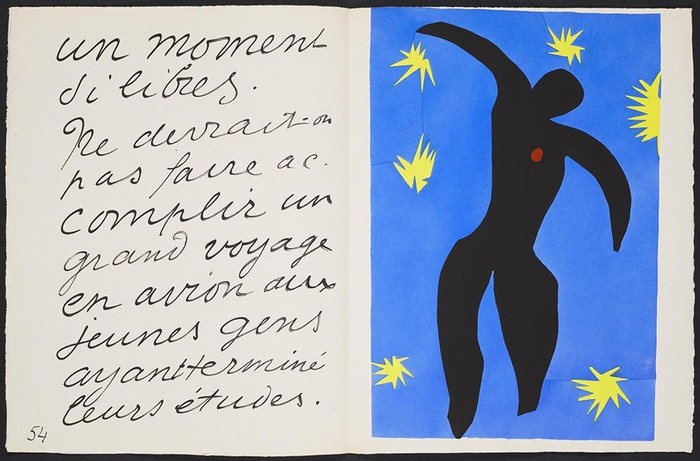
“Icarus” (1949) Henri Matisse
Mental representation involves invention and construction. As Daniel Dennett wrote in Content and Consciousness [Content and Consciousness, 1969]:
No afference [incoming sensory signal] can be said to mean ‘A’ until it is ‘taken’ to mean ‘A’ by the efferent [action-generating and outgoing] side of the brain.
Sensations are what you, as a subject, do with the sensory stimuli acting on your body: the pain in your toe is terrible; the sweet taste on your tongue is intense; the red light before your eyes stirs your emotions.
You are never merely a passive receiver; you are an agent. And the way you create sensations has evolved to be something quite special. I have argued, for example in Seeing and Somethingness [Seeing and Somethingness, 2022], that it works like this: when red light reaches your eyes, the brain does not simply register it like a camera recording a wavelength. Instead, something more active and interesting happens. It builds a subtle, embodied response to the stimulus, which I have called “redding” – a response that expresses what is happening to you and how you feel about it. What makes this consciousness is a further step: the brain generates a continuous commentary on its own activity, a feedback signal that loops back and tells you what it is doing as it does it. As it were, your mind sees itself reaching toward red, and this very self-monitoring constitutes conscious sensation. Sensation is, in a sense, always a self-portrait. It is not a reading of the world; it is your reading.
This means – you may be shocked now – that Descartes was essentially right: sensations have no material substance; they really are only mental substance.
Of course, as scientists see it today, it is the material brain that, functioning as a computer-like “semantic engine,” creates this picture of its own actions. Nobody today believes, as Descartes did, that the brain receives fully formed thoughts from outside, transmitted as encoded messages through the pineal gland. But before dismissing Descartes’s telegraphic model as entirely naïve, let us note that neuroscientists today are actively investigating the possibility of implanting externally generated thoughts in the brain – through a physical “Neuralink.” Descartes’s model of how the soul might be added to the body no longer seems scientifically ridiculous.
What theoretical benefit does illusionism bring us? The crucial point is that mental representations, even if created by matter, are not made of matter and are therefore not restricted to having properties that correspond to physical reality. And in this case, much of the difficulty and mystery of explaining consciousness disappears. We do not need to explain the existence of brain states that possess strange, nonphysical properties, such as phenomenal redness, but only the existence of brain states that create the idea of these properties. As Dennett put it: the phenomenal quality of a purple sensation may be like “a beautiful discussion about purple, simply about a color, without being colored itself.”
In short – forgive me if this sounds heavy, but I would rather be clear – we only need to explain how the brain places a person, propositionally, as the holder of a certain kind of belief about redness, sweetness, cold, pain or anything else. I say “only” – it certainly will not be easy; it is indeed an extraordinary kind of belief – but there is no reason to think it will be impossibly difficult.
Should we be troubled by the implied claim that this conscious self, built on a discussion of imaginary properties, “does not really exist”? The philosopher Galen Strawson has called this “the silliest claim ever made.” I agree that if illusionists really said this, Strawson might be right. But the great denial, as he calls it, is not what genuine illusionism, as I understand it, entails. To say that sensations are representations is not to deny that they exist: they exist precisely as representations.
Still, the unease many people feel about illusionism is understandable. Our language matters. Dennett’s analogy – as a beautiful “discussion” – seems to me a little too cold. Philosophers may “discuss” sensations. I would rather say that ordinary people sing and dance them. One could argue that sensations are an evolved work of art, designed to lift our spirits. In the words of the artist Pablo Picasso: “Nature and art, being different things, cannot be the same thing.”
We tend to confuse “illusory” with “false” and “imagined” with “imaginary.” In many areas of life, imaginings are indeed suspect. If you imagine there is a lion under the table (when there isn’t), you risk behaving inappropriately. If you imagine your leg is injured (when it isn’t), likewise. But conscious experience belongs to a different category. If you respond to an injury to your leg by creating the sensation of pain, then there is no possibility of your being wrong about it. This is precisely “what it is like to be you.” And, as I see it, if you act on the conception of yourself that arises from it, you are very likely to succeed in life where a zombie without phenomenal consciousness would fail. That is precisely why it evolved.
Illusionism as a theory is liberating. It means we can escape the quagmire in which a generation of modern philosophers and neuroscientists have become stuck by starting from the wrong place. If, like the scientist Francis Crick, you set out to look for “the neural correlate of consciousness,” you are very likely to become fixated on the possible existence of a kind of mind-brain identity that is impossible. But the truth is that sensations – as thoughts – do not belong to that substance over there in the brain.
This is not to disparage cognitive neuroscience. On the contrary, it means recognizing that the workings of the mind go beyond the workings of nerve cells. Thomas Nagel wrote in his book Mind and Cosmos [Mind and Cosmos, 2012]:
The existence of consciousness seems to imply that the physical description of the universe, for all its richness and explanatory power, is only part of the truth, and that the natural order is much less rigid than it would be if physics and chemistry explained everything.
But although he is not wrong, he has taken the very point at issue for granted. Who ever said that physics and chemistry explain everything? Physics does not explain ideas in general. It does not explain prime numbers, justice or cubism – let alone the soul. In fact, it does not even explain physics and chemistry themselves. At best, it specifies the preconditions for these ideas to come to exist in our minds.
Illusionists have an unusual ally in the psychoanalyst Carl Jung, who insisted that living in a dream, far from being a lower form of existence, is perhaps the highest achievement of the human mind.
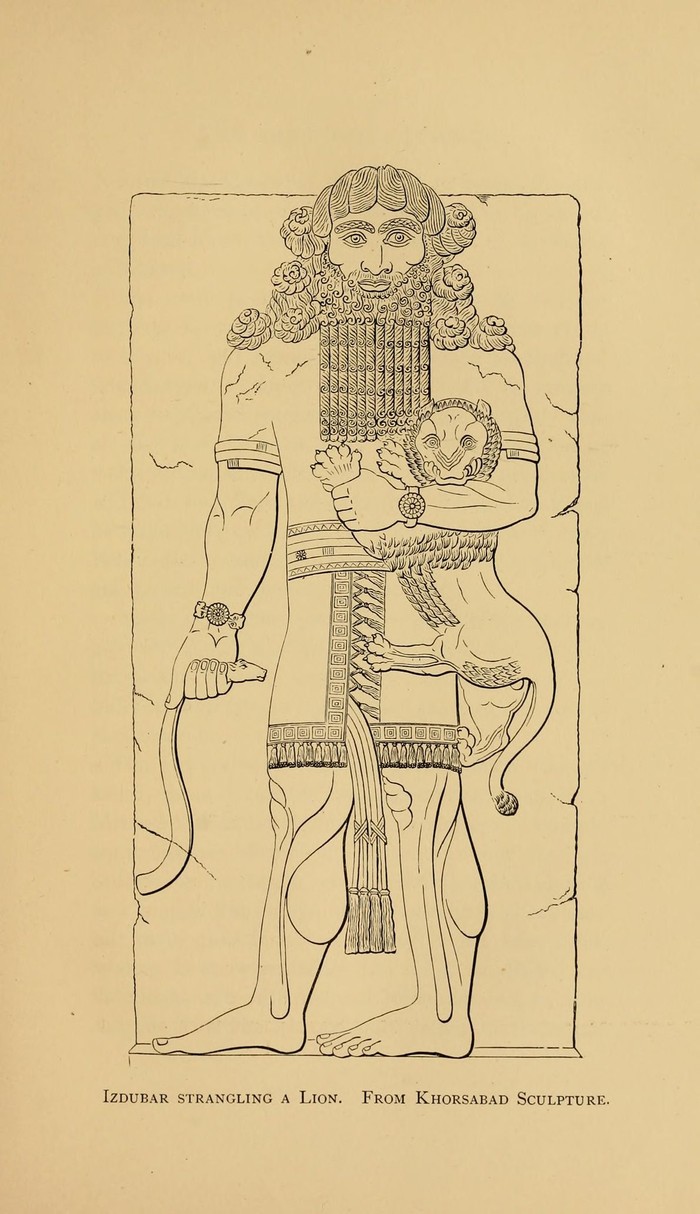
The giant Izdubar, also known as Gilgamesh George Smith
In his Red Book – his diary of philosophical meditations, published posthumously – Jung recounts his encounter with the Sumerian god-king, the giant Izdubar. Jung explains to him the discoveries of science that have reduced the wonders of the natural world – including the giant himself – to physics and chemistry. The more Izdubar hears, the weaker he becomes – rational explanations strike him like poisoned arrows. But as the story unfolds, Jung heals Izdubar. He does this by persuading the giant to recognize himself as a fantasy, a true inhabitant of the imaginary world. “Thus my god found salvation,” Jung writes. “He was saved precisely by what would usually be considered fatal, namely, by declaring him a product of the imagination.”
But why call him a product of the imagination? When such great wealth makes its home in such poverty, that is a wonder of wonders.
Related

Curiosities
Jordan Blocks Telegram App After Deadly Church Attack to Prevent Extremism

Curiosities
Don’t Rely Only on Mileage: When Should You Change Your Engine Oil?

Curiosities
1979 Porsche 924 returns to the United Arab Emirates Police fleet

Curiosities
Restaurant in Canada bans children under 15, decision sparks debate

Curiosities
12 curiosities from around the world you shouldn’t miss

Curiosities
Why do mosquitoes prefer some people over others? The reason has been revealed

Curiosities
Father and son break Guinness record playing ‘Hungry Hungry Hippos’ blindfolded

Curiosities
Why Are Highway Direction Signs Green in Some Countries and Blue in Others?

Curiosities
What happens when there is a bomb threat on an aircraft?
Curiosities
NASA Searches for a Secret Underground Cave on the Moon

Curiosities
Wearing boxing gloves and a special costume, this dog became Halloween’s star

Curiosities
After 28 years and 50,000 kilometers, British adventurer Karl Bushby returns home





