
A daily action may be dispersing microscopic particles into the air we breathe. Scientists now have a simple piece of advice: close the lid before pressing the flush button. A new study by researchers at Flinders University has found that flushing the toilet can create aerosols and bioaerosols […]
The study making headlines around the world: What happens in the air every time we flush the toilet?
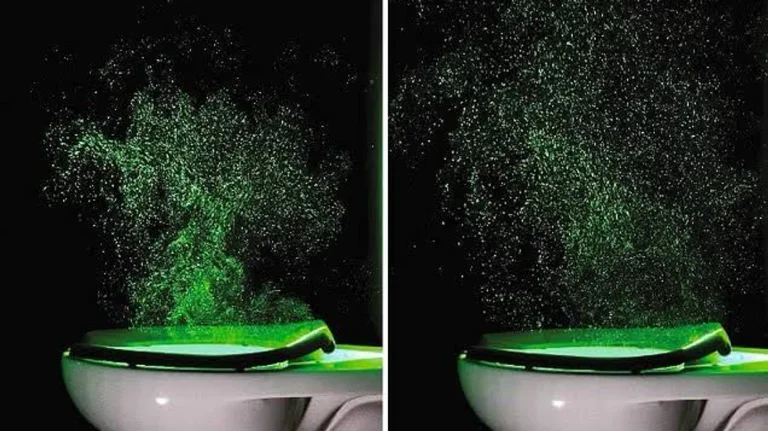
A daily action may be dispersing microscopic particles into the air we breathe. Scientists now have a simple piece of advice: close the lid before pressing the flush button.
A new study by researchers at Flinders University has found that flushing the toilet can create aerosols and bioaerosols that spread into the surrounding air and, in some cases, reach the breathing height of an adult.
The researchers analyzed 22 previous studies to understand how these particles are generated and dispersed during flushing. According to the analysis, turbulence created by the flow of water can cause very fine droplets to become airborne and remain suspended for a period of time.
In some of the studies reviewed, particles were detected at heights of up to about 1.63 meters, within the breathing zone of a person standing up. Aerosols have also been reported to remain suspended in the air for at least 20 seconds after flushing.
According to the researchers, the particles may contain microorganisms originating from water contamination or from the surface of the toilet bowl itself, Telegrafi reports.
The studies included in the analysis examined various microorganisms, including bacteria and viruses, while the amount of aerosols appears to be affected by the level of contamination and the volume of water used during flushing. In general, the greater the volume of water and the higher the microbial load, the more aerosols may be generated.
The study’s lead author, Lira Adiyani, explains that flushing creates turbulence, which can lead to aerosols being released into the surrounding space.
The researchers recommend closing the lid before flushing, if the toilet has one, as a simple precaution to reduce potential exposure.
But there is an important detail: the lid does not guarantee that aerosols will remain entirely inside the toilet. The authors emphasize that evidence on the direct effect of the lid’s position is still limited and not always consistent across studies.
For this reason, the researchers also stress the importance of good bathroom ventilation and safer toilet design, particularly in hospitals, shared facilities and healthcare centers.
So, the next time you’re about to press the flush button, it may be a good idea to take one small step: close the lid before flushing.
Related

Curiosities
Jordan Blocks Telegram App After Deadly Church Attack to Prevent Extremism

Curiosities
Don’t Rely Only on Mileage: When Should You Change Your Engine Oil?

Curiosities
1979 Porsche 924 returns to the United Arab Emirates Police fleet

Curiosities
Restaurant in Canada bans children under 15, decision sparks debate

Curiosities
12 curiosities from around the world you shouldn’t miss
Curiosities
Why do mosquitoes prefer some people over others? The reason has been revealed

Curiosities
Father and son break Guinness record playing ‘Hungry Hungry Hippos’ blindfolded

Curiosities
Why Are Highway Direction Signs Green in Some Countries and Blue in Others?

Curiosities
What happens when there is a bomb threat on an aircraft?

Curiosities
NASA Searches for a Secret Underground Cave on the Moon

Curiosities
Wearing boxing gloves and a special costume, this dog became Halloween’s star

Curiosities
After 28 years and 50,000 kilometers, British adventurer Karl Bushby returns home





