
In the Eyyubiye district of Sanliurfa, Turkey, the “Judi” olive tree, around 1,332 years old, continues to bear fruit. Long regarded as part of the “Fertile Crescent,” the area has a longstanding tradition of olive cultivation. The “Judi” tree, which stands on a prominent hill in the rural area of Altinbasak, was registered as a natural asset of […]
Turkey’s olive tree, over 13 centuries old, still bears fruit
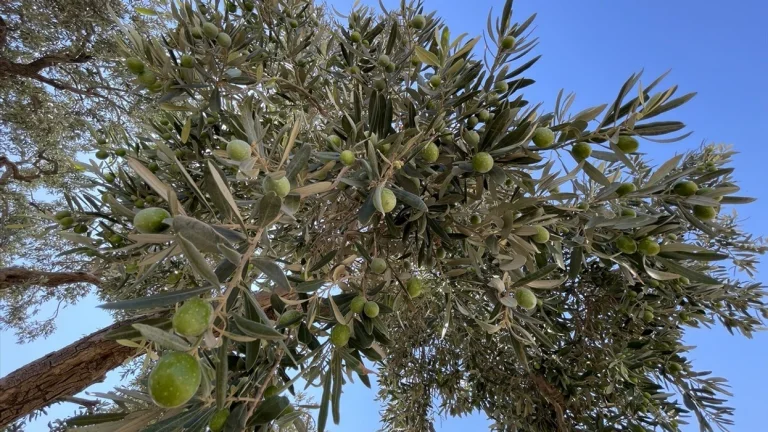
In the Eyyubiye district of Sanliurfa, Turkey, the “Judi” olive tree, around 1,332 years old, continues to bear fruit.
Long regarded as part of the “Fertile Crescent,” the area has a longstanding tradition of olive cultivation.
The “Judi” tree, which stands on a prominent hill in the rural area of Altinbasak, was registered as a protected natural asset in 2007.
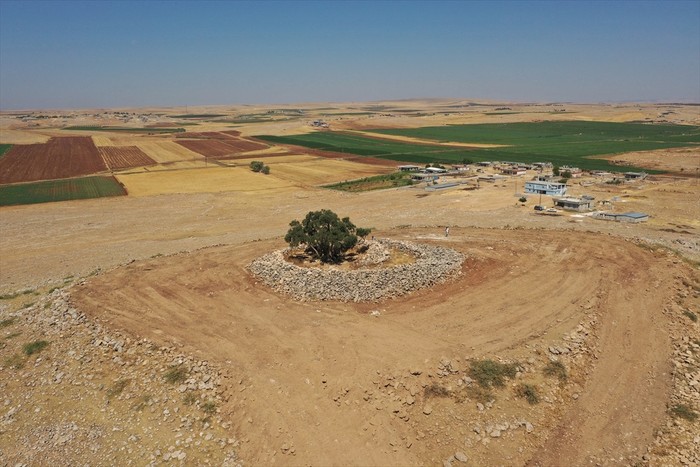
The historic tree, which has survived for centuries, produces an average of 50 kilograms of olives a year and has become a symbol of the area, attracting visitors as well.
Isa Izgi, Director of Agriculture and Forestry for Eyyubiye, said that olive cultivation had been widespread in the region throughout history.
“That tree has been living atop the hill for a full 13 centuries. The Judi olive tree is a symbol of fertility. It is proof of the fertility of other agricultural products in the region. For 13 centuries it has grown here without being irrigated, and we hope to see it for many more years,” Izgi said.
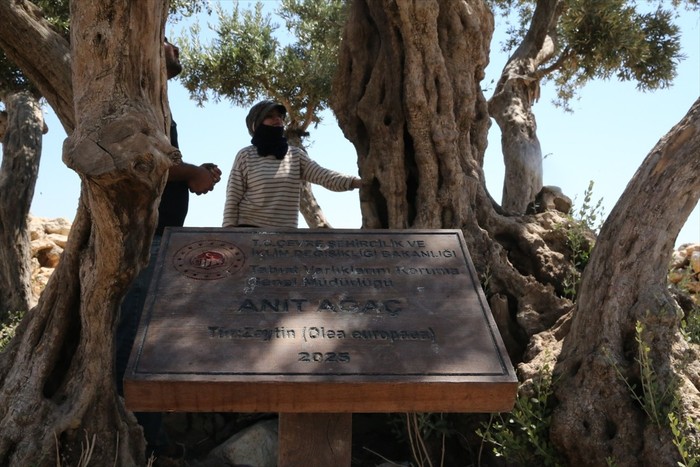
Resident Osman Kilic said that they have been resting in the shade of the historic tree for years.
“We have seen this tree, just as our great-grandparents saw it. It is our symbol. We protect it. It has borne olives for years, and we consume them,” he said.
Sude Nur Ertuga said that the olives from this tree have a distinctive taste and that they look forward to the harvest every year. She added that the tree’s olives are also served to special guests. /AA/
Related

Curiosities
Jordan Blocks Telegram App After Deadly Church Attack to Prevent Extremism

Curiosities
Don’t Rely Only on Mileage: When Should You Change Your Engine Oil?

Curiosities
1979 Porsche 924 returns to the United Arab Emirates Police fleet

Curiosities
Restaurant in Canada bans children under 15, decision sparks debate

Curiosities
12 curiosities from around the world you shouldn’t miss

Curiosities
Why do mosquitoes prefer some people over others? The reason has been revealed

Curiosities
Father and son break Guinness record playing ‘Hungry Hungry Hippos’ blindfolded

Curiosities
Why Are Highway Direction Signs Green in Some Countries and Blue in Others?

Curiosities
What happens when there is a bomb threat on an aircraft?

Curiosities
NASA Searches for a Secret Underground Cave on the Moon

Curiosities
Wearing boxing gloves and a special costume, this dog became Halloween’s star

Curiosities
After 28 years and 50,000 kilometers, British adventurer Karl Bushby returns home





