
.
Things That Cannot Coexist
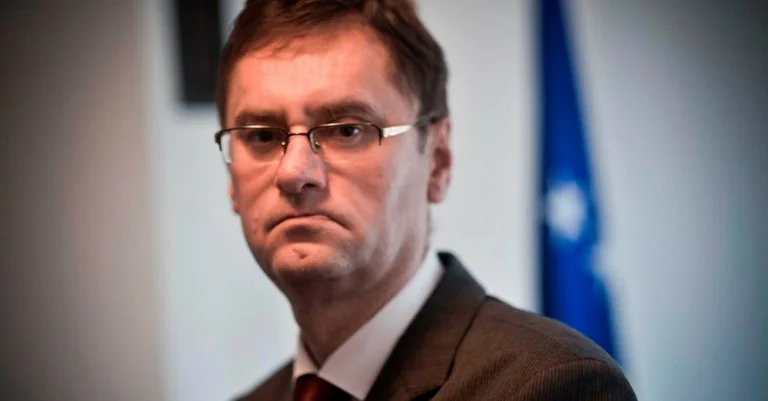
Two political realities, two concepts, two civilizational worldviews clashed in Serbia on October 25, in the snap parliamentary elections.
Two worlds, in fact.
There could be no coexistence between these two worlds. Moreover, they have been deeply antagonistic, and remain so to this day, despite the convincing victory of the ‘Student List’.
There is no reason to expect comfort in Serbian politics and society in the near future.
Electoral defeat is not enough in cases such as this one in today’s Serbia.
A complete civilizational awakening must take place, all institutions of power must be cleansed, the judiciary and prosecution service must be rebuilt, and the country’s media landscape must change.
It is in Kosovo’s interest for Serbia to become an ordinary liberal democratic state, finally moving beyond its ‘status’ as a state that does not recognize its own borders, does not respect the regional order in this part of Europe, does not accept the history of the 1990s and all its tragic consequences, and does not know its place here, in Europe and in the world.
With a Serbia focused on its own affairs and pursuing a comprehensive and radical transformation to qualify itself to become a member state of the European Union in the near future, Kosovo could enjoy good neighborly relations with it, as the final stage of the process that, for the past 16 years, under EU facilitation, has sought to normalize relations between these two states.
So there is no doubt among us about the direction in which relations between Kosovo and Serbia should move.
Nevertheless, while differences worthy of an abyss emerged on every other topic and issue between the outgoing government of Aleksandar Vučić’s Serbia and the incoming ‘Student List’, when it comes to Serbia’s relations with Kosovo, complete continuity between them stands out.
Here, they are the same world. Identical.
Those of the ‘Student List’ also invoke Serbia’s Constitution and international law; they too claim that ‘Kosovo is part of Serbia’, along with similar nonsense from the catalogue of political absurdities that have never had any validity or stood up to scrutiny.
Kosovo has long been an independent state, and this fact was decisive (after all) in launching the 2011 Brussels dialogue, as well as the 2022 Franco-German initiative.
If it were not so, there would be no talks at all on normalizing relations between Kosovo and Serbia.
The sooner the ‘Student List’ and the politicians who will lead Serbia from now on understand this, the better it will be for them and for the entire region, and for the EU’s and US’s goals of turning the Western Balkans into a region where long-term stability prevails.
Otherwise, if everything in Serbia is to change, as those of the ‘Student List’ say, while the current policy of Aleksandar Vučić’s government is to remain in force in relations with Kosovo, then sooner or later the List’s grand ambition to truly transform Serbia from the ground up will be called into question.
These two things are deeply contradictory. They have been so in the past, throughout the political history of recent decades in Serbia—we know this better than anyone—and they will remain so under the new rulers if they continue with the old approach to Kosovo.
Simply put, these two things cannot coexist.
Related
Opinions
Hello, Albin.
Opinions
Why Does Emotion Overwhelm Logic?!
Opinions
Serbian Nationalism on the EU Stage: Stabilitocracy at Kosovo’s Expense
Opinions
A market without a “guardian”: the vital role of the Competition Authority and the cost of its paralysis in Kosovo
Opinions
Speaking and reading Albanian badly has now attained official status in Kosovo

Opinions
The Mirror We Refuse to See Ourselves In
Opinions
The Ohrid Agreement: Normalization Without Recognition and an Endless Dialogue
Opinions
A PDK MP rightly raised concerns today, on World Urbanism Day
Opinions
Kosovo is growing in percentage terms, but remains behind in the economic strength of the Western Balkans
Opinions
The Legal Battle to Defend the KLA Leaders in the Appeals Chambers of the Specialist Chambers

Opinions
USA: The Supreme Power of the Free Vote
Opinions
The number-one risk for the diaspora is denationalization fueled by extremist Islamism





