
The Kosovo Business Alliance (AKB), based on data and projections from international institutions for 2026, has prepared a comparative analysis of Western Balkan economies, highlighting differences in the size of economies, GDP per capita and economic growth rates. According to the International Monetary Fund (IMF) projections for 2026, the economy […]
Kosovo is growing in percentage terms, but remains behind in the economic strength of the Western Balkans
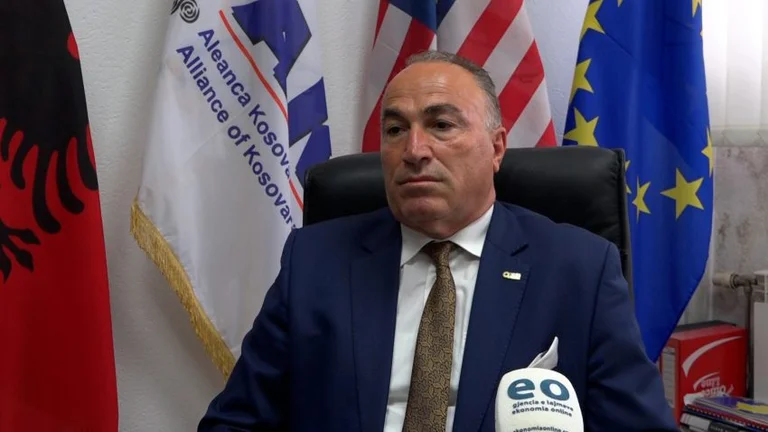
The Kosovo Business Alliance (AKB), based on data and projections from international institutions for 2026, has prepared a comparative analysis of Western Balkan economies, highlighting differences in the size of economies, GDP per capita and economic growth rates.
According to the International Monetary Fund (IMF) projections for 2026, Kosovo’s economy is estimated at around 14.15 billion dollars, while Serbia’s reaches 111.2 billion, Bosnia and Herzegovina’s 37.26 billion, Albania’s 32.77 billion, North Macedonia’s 21.24 billion and Montenegro’s 10.12 billion dollars.
In nominal GDP per capita, too, Kosovo remains at the lowest level among the region’s six economies, at around 8,900 dollars according to IMF projections for 2026.
On the other hand, according to the World Bank, Kosovo is expected to record real economic growth of 3.6% during 2026, demonstrating its growth potential. However, percentage economic growth should not be confused with the real strength of the economy, the size of output, productivity and the level of well-being.
AKB assesses that Kosovo’s main challenge is not only GDP growth, but turning that growth into sustainable development, domestic production and economic competitiveness.
For this reason, AKB calls on Kosovo’s institutions to orient economic policies towards:
– Increasing domestic production and strengthening the manufacturing industry.
– Expanding exports and reducing the trade deficit.
– Encouraging domestic and foreign investment.
– Ensuring sustainable energy at competitive prices.
– Increasing productivity and providing vocational training for the workforce.
– Digitizing and modernizing businesses.
– Facilitating trade and removing regional barriers.
The World Bank estimates that eliminating half of the remaining trade barriers in the region could increase GDP by up to 12.5% over the medium term. This potential must be turned into concrete opportunities for Kosovo’s businesses and economy.
AKB’s message is clear: Kosovo needs more production, more exports, more investment and greater productivity!
It is not enough to record economic growth in statistics if that growth is not reflected in stronger businesses, the creation of new jobs, higher incomes and improved citizens’ well-being.
AKB calls for a genuine partnership between the Government, institutions and the private sector to develop a development program through 2030, with measurable objectives and concrete support for businesses.
Kosovo must move from an economy of consumption and imports towards an economy of production, exports and competitiveness.
Related

Opinions
Hello, Albin.

Opinions
Why Does Emotion Overwhelm Logic?!

Opinions
Serbian Nationalism on the EU Stage: Stabilitocracy at Kosovo’s Expense
Opinions
A market without a “guardian”: the vital role of the Competition Authority and the cost of its paralysis in Kosovo

Opinions
Things That Cannot Coexist

Opinions
Speaking and reading Albanian badly has now attained official status in Kosovo

Opinions
The Mirror We Refuse to See Ourselves In
Opinions
The Ohrid Agreement: Normalization Without Recognition and an Endless Dialogue
Opinions
A PDK MP rightly raised concerns today, on World Urbanism Day

Opinions
The Legal Battle to Defend the KLA Leaders in the Appeals Chambers of the Specialist Chambers
Opinions
USA: The Supreme Power of the Free Vote

Opinions
The number-one risk for the diaspora is denationalization fueled by extremist Islamism





