
The law adopted by the Assembly of Kosovo to amend the law on the Special Court is not intended to abolish this court. Kosovo respects its international obligation to maintain this court. With this law, Kosovo emphasizes that it respects its obligations under international law to investigate and prosecute all […]
Clarifying the Special Court’s jurisdiction does not violate Kosovo’s international obligations
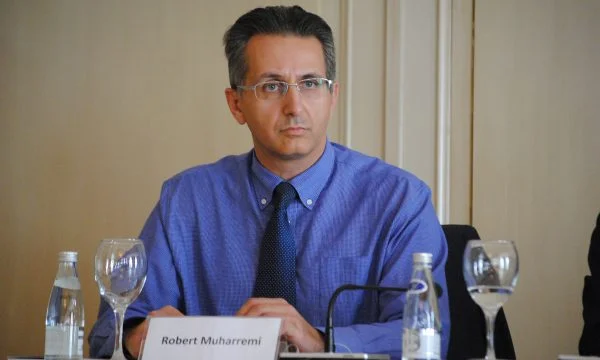
The law adopted by the Assembly of Kosovo to amend the law on the Special Court is not intended to abolish this court. Kosovo respects its international obligation to maintain this court. With this law, Kosovo emphasizes that it respects its obligations under international law to investigate and prosecute all suspicions and allegations of war crimes and crimes against humanity. However, with this law Kosovo clarifies that it does so only to the extent that it truly has international obligations, and in accordance with the Constitution of the Republic of Kosovo—nothing more and nothing less. The law adopted by the Assembly of Kosovo merely limits and clarifies the jurisdiction of the Special Court, taking into account precisely the international obligations Kosovo has undertaken. Recent statements by the European Union, according to which this law constitutes a violation of the 2014 Exchange of Letters and Kosovo’s international obligations, call for a measured but clear legal response. The EU’s claims are inaccurate and, indeed, not even sincere.
The truth is simple. Limiting the jurisdiction of the Special Court to the specific allegations raised in the 2011 Council of Europe report, known as the Dick Marty Report, and protecting domestic constitutional oversight do not constitute a violation of the agreement with the EU on establishing the Special Court. On the contrary, limiting the court’s jurisdiction to the specific allegations raised in the Dick Marty Report represents a return to the original and authentic purpose of this agreement, preventing an unauthorized departure beyond what Kosovo committed itself to.
To understand the nature and scope of Kosovo’s international obligation, one must recall the origins of the request to establish the Special Court. In January 2011, immediately after the Council of Europe Parliamentary Assembly adopted the Dick Marty Report, the EU mission, EULEX, publicly stated that it took these allegations very seriously. EULEX explicitly stated that it had the capacity and authority to address these allegations and called for concrete facts and evidence regarding these specific accusations to be presented.
When the Special Investigative Task Force (SITF) was established in August 2011 and Clint Williamson was appointed chief prosecutor, its mandate was limited to an independent criminal investigation into the specific allegations contained in the Dick Marty Report. These concerned only allegations and suspicions of illegal trafficking in human organs and inhumane treatment purportedly carried out at several locations, primarily in northern Albania. This was the main diplomatic and political reason that mobilized Brussels and the United States and compelled Kosovo to accept such a body. At the time, nobody in the EU or the United States was talking about establishing a court that would try the entire 1998–2000 war, including matters beyond the specific allegations raised in the Dick Marty Report.
When President Jahjaga and the EU High Representative, Catherine Ashton, exchanged letters on 14 April 2014, which were subsequently ratified by the Assembly of Kosovo as an international agreement (Law No. 04/L-274), but not by the EU, the elements of the agreement were clear. The Special Court was to be used only for judicial proceedings “arising from the SITF investigation.” This means that the Special Court’s jurisdiction derives from the scope of the SITF’s authorized investigation, which was limited to the specific allegations raised in the Dick Marty Report, and not the entire KLA war.
Advertisement
Under the Vienna Convention on the Law of Treaties, every international agreement must be interpreted in good faith, in accordance with the ordinary meaning of its terms, in the light of its context and its “object and purpose.” The purpose of the 2014 Exchange of Letters was never to create a general parallel court that imitates the Hague Tribunal for the former Yugoslavia (ICTY), or to revise the findings of the Hague Tribunal, but to address the specific allegations raised in the Dick Marty report, which also defined the limits of the SITF investigation.
When the Special Court tries the entire KLA as a “joint criminal enterprise”—something the Hague Tribunal established by the United Nations rejected—and does so for actions at locations not even mentioned in the Dick Marty Report, this constitutes a substantial overreach beyond the consent Kosovo gave to establish the Special Court. Consequently, clarifying the Special Court’s jurisdiction by amending the law does not violate the 2014 agreement, but prevents an overreach beyond what Kosovo committed itself to when it accepted the 2014 Exchange of Letters. The international principle of pacta sunt servanda requires faithful implementation of what the parties agreed, and cannot be used to justify EU demands that go beyond Kosovo’s will as expressed in this agreement.
Furthermore, public international law recognizes the fundamental principle that limitations on state sovereignty cannot be presumed (the Lotus principle). Criminal justice is one of the key elements of a state’s sovereignty. When a state delegates part of its criminal jurisdiction to a body that is essentially foreign, that delegation must always be interpreted narrowly. If there is doubt about the scope of the delegation, that doubt must be interpreted in favor of state sovereignty.
In the 2014 agreement, the Assembly of Kosovo did not relinquish its general jurisdiction over war crimes, which, under the Constitution, belongs to Kosovo’s regular courts. Expanding the Special Court’s jurisdiction beyond the specific allegations set out in the Dick Marty Report interferes with the constitutionally guaranteed jurisdiction of the regular judiciary and violates the principle of a “court established by law” and the principle of legal certainty guaranteed by the European Convention on Human Rights.
Kosovo is not seeking to evade any international obligation it has undertaken. Kosovo demonstrated political maturity and trust in its international partners and in international justice when it delegated specific judicial powers to the EU for specific charges. But international partnership cannot be built on the premise that the EU has the right to exceed Kosovo’s sovereign will, expressly limited to the allegations raised in the Dick Marty Report, and to steer a judicial body that tries and criminalizes Kosovo’s entire war, regardless of the empty, dogmatic arguments that trials concern individual responsibility.
The 2014 agreement was a special and limited agreement, not an unconditional surrender of judicial sovereignty. The EU should recall its own statements from 2011 when it established the SITF, as well as Kosovo’s actual commitments in the 2014 agreement. Moreover, the EU is hypocritical when it invokes international obligations that the EU itself has never ratified as such. In fact, the EU should explain why it imposed a law on Kosovo that gave the Special Court powers beyond what Kosovo and the EU agreed to in the 2014 agreement, read in context and in light of its purpose. The Special Court’s own Constitutional Panel has affirmed that the Special Court’s jurisdiction is defined neither by the Constitution nor by the 2014 Exchange of Letters, but only by the law drafted by the EU and imposed on Kosovo through political and diplomatic pressure. The Assembly of Kosovo’s request to limit the Special Court’s jurisdiction to the specific allegations raised in the Dick Marty Report and in accordance with the SITF mandate set by the EU itself is therefore not a violation of the agreement. On the contrary, it is the only way to respect the legitimacy of this court and to protect the rule of law and Kosovo’s Constitution. But this requires coordinated action by the state, and the adoption of the law is only the first step. To conclude, I emphasize that the law’s adoption is not intended to do any individual a favor, but to protect Kosovo’s sovereign dignity. If someone is convicted in our name, let them be convicted for what we, as a sovereign, consented to.
Related

Opinions
Hello, Albin.

Opinions
Why Does Emotion Overwhelm Logic?!

Opinions
Serbian Nationalism on the EU Stage: Stabilitocracy at Kosovo’s Expense
Opinions
A market without a “guardian”: the vital role of the Competition Authority and the cost of its paralysis in Kosovo

Opinions
Things That Cannot Coexist

Opinions
Speaking and reading Albanian badly has now attained official status in Kosovo

Opinions
The Mirror We Refuse to See Ourselves In
Opinions
The Ohrid Agreement: Normalization Without Recognition and an Endless Dialogue

Opinions
A PDK MP rightly raised concerns today, on World Urbanism Day
Opinions
Kosovo is growing in percentage terms, but remains behind in the economic strength of the Western Balkans

Opinions
The Legal Battle to Defend the KLA Leaders in the Appeals Chambers of the Specialist Chambers

Opinions
USA: The Supreme Power of the Free Vote





