
A diplomat accredited to a host country has a duty, in accordance with the instructions of their own country, to promote and protect the interests of the country they represent, and to cooperate with the authorities of the host country in order to preserve and strengthen relations between the two countries. The statement by the Ambassador of the United Kingdom in […]
Kosovo Does Not Need to Fuel Anti-Western Sentiment! Let’s Not Burn All Our Bridges
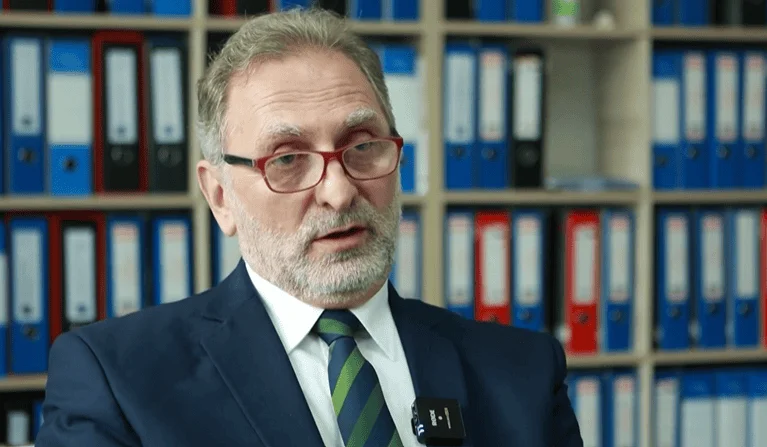
A diplomat accredited to a host country has a duty, in accordance with the instructions of their own country, to promote and protect the interests of the country they represent, and to cooperate with the authorities of the host country in order to preserve and strengthen relations between the two countries.
The statement by the United Kingdom’s Ambassador to Kosovo, Jonathan Hargreaves, has been taken out of the context of the September 16 judgment by the trial panel of the Specialist Chambers against former senior state officials of Kosovo. We cannot expect a state, however friendly it may be, to express the same sentiment or emotion that may be manifested in the political spectrum, civil society, or among citizens.
In this particular case, the United Kingdom respects the court established by the Assembly of Kosovo in cooperation with the international community, as well as the first-instance judgment, without entering into an assessment of whether that judgment is fair or not.
What should be pointed out, and what the public in Kosovo should understand clearly, is that incorporating this issue into Albin Kurti’s political narrative, which he has built over six consecutive years in relation to the Western factor, risks knowingly leading the country toward a further loss of political and diplomatic space. This could turn into a process of isolation, whether intentional or not, and a journey toward political and diplomatic marginalization.
Fostering and strengthening an anti-Western mindset is strategically misguided. Such an approach risks closing even the few channels of communication Kosovo still has with the West.
Therefore, I believe there is room for criticism, debate, and disagreement. But debate with friendly countries should not affect the foundations of the state’s and institutions’ value system, nor the shared values of our society.
A constructive debate, with a cool head, options, and concrete demands for overcoming the situation in which the state and society find themselves, through cooperation and coordination, could offer an acceptable solution.
Reactions, and even more so emotional or even instinctive actions, are not a means of addressing or solving problems.
Just as the substantive goals of freedom, independence, and state-building were achieved, I believe this extremely important issue—the preservation of the independence of the Specialist Court, as well as confronting the deep scar it has left on the state’s history and future—should also be addressed through coordination with the West.
Creating an anti-Western atmosphere would amount to capitulating to those projections that have advocated confrontation and Kosovo’s separation from the West.
This is not the time to burn all our bridges. Kosovo needs communication, coordination, and political prudence—especially with those who are still considered its strategic partners.
Related

Opinions
Hello, Albin.
Opinions
Why Does Emotion Overwhelm Logic?!
Opinions
Serbian Nationalism on the EU Stage: Stabilitocracy at Kosovo’s Expense
Opinions
A market without a “guardian”: the vital role of the Competition Authority and the cost of its paralysis in Kosovo

Opinions
Things That Cannot Coexist
Opinions
Speaking and reading Albanian badly has now attained official status in Kosovo

Opinions
The Mirror We Refuse to See Ourselves In
Opinions
The Ohrid Agreement: Normalization Without Recognition and an Endless Dialogue
Opinions
A PDK MP rightly raised concerns today, on World Urbanism Day
Opinions
Kosovo is growing in percentage terms, but remains behind in the economic strength of the Western Balkans
Opinions
The Legal Battle to Defend the KLA Leaders in the Appeals Chambers of the Specialist Chambers
Opinions
USA: The Supreme Power of the Free Vote





