
The instigators are in Belgrade and Moscow. It is quite simple: only Russia, Serbia and their satellites in the region benefit from this hell of the past three days. And every Albanian speaker who rejoices at this hooliganism and barbarism in the streets of Tirana should know that they are serving the interests of the enemies of Albanians, […]
Who is orchestrating the violence in Albania?
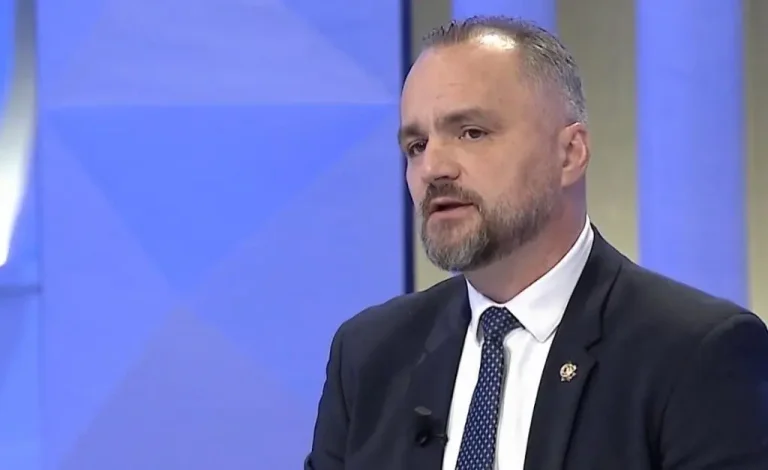
The instigators are in Belgrade and Moscow. It is quite simple: only Russia, Serbia and their satellites in the region benefit from this hell of the past three days. And every Albanian speaker who rejoices at this hooliganism and barbarism in the streets of Tirana should know that they are serving the interests of the enemies of Albanians, Albania and Kosovo.
This is not just an opinion or analysis. It is an assessment based on more than 27 years of experience leading highly sensitive international democratization programs and missions and combating violent extremism and terrorism in some of the world’s most challenging conflict and destabilization zones, including Ukraine, Gaza and the West Bank, Egypt, Jordan, Syria, Lebanon, Iraq, Yemen and Afghanistan.
The violence of recent days in Albania follows a familiar destabilization playbook: a real concern that resonates with citizens is taken, discontent is turned into general distrust of institutions, the space for legitimate protest is exploited by violent individuals or groups and, ultimately, the aim is to portray chaos in the streets as a failure of the state itself. Concerns about education, corruption, the cost of living or the future of young people are legitimate and must be addressed institutionally, but burning institutions and attacking police, banks and private property are not democracy.
For decades, Belgrade and Moscow have invested in portraying Kosovo as a failed state and undermining trust in the region’s Western orientation, including Albania’s. The European Parliament has documented narratives disseminated through Sputnik Serbia and other actors that seek to delegitimize Kosovo’s statehood, destabilize institutions and undermine trust in the EU and the West, while the influence of Russian disinformation in the Balkans has been widely documented by Euro-Atlantic institutions. The broader aim is clear: to fuel the perception that democracy, NATO, the EU and partnership with the US do not work for Albanians, and that our Euro-Atlantic project cannot succeed. Therefore, the success of Kosovo and Albania is not only a matter of economic development or good governance, but also the most powerful strategic response to those who have for years invested in our failure, division and isolation.
Students’ demands must be heard, taken seriously and met with concrete responses from institutions. The right to protest, oppose the government and demand accountability is a cornerstone of democracy and must be protected without compromise. Students have the right to be critical, angry and persistent, but no one has the right to hijack their voice and turn their protest into violence. Attacking people, the police, institutions or property does not strengthen the cause; it harms it. A strong democracy must have the courage to listen to protesters and the strength to protect peaceful protest from those seeking to turn it into chaos.
A protest does not wake up one morning and suddenly turn violent. In many destabilization scenarios, violence is fueled, incited and organized by individuals or groups with political, economic or strategic interests in chaos. They identify citizens’ genuine anger, amplify it, try to radicalize the crowd and redirect frustration away from legitimate demands and toward confrontation with institutions. Citizens protesting over a genuine concern must not become instruments of those who benefit from violence. For precisely this reason, security institutions must clearly distinguish protesters from provocateurs and, above all, identify who is organizing, funding and inciting the violence, and who is benefiting from it.
Albania’s progress is undeniable, but the challenges that continue to face the country are just as real. Allegations of corruption, concerns about transparency in decision-making and public procurement, perceptions of nepotism and favoritism, and the need for stronger, more accountable institutions all require serious and sustained responses. These problems must neither be minimized nor used to deny everything Albania has achieved.
The government must immediately open a direct, serious and transparent dialogue with students, listen to their demands and provide concrete responses where those demands are justified and feasible. But students also have a responsibility to clearly and unequivocally distance themselves from violence and from anyone seeking to use their cause for other purposes. Peaceful protest, criticism and demands for accountability are the essence of democracy; violence is not. In a democracy, governments are challenged with ideas, alternatives and peaceful protests, while power is changed through the free vote and fair elections, not through stones, fire or chaos in the streets. This line must be defended equally by the government, the opposition, students and every citizen who believes in democracy.
Albania will overcome this period of tension and imposed chaos as well. Neither violence, nor division, nor the interests that benefit from them will be able to divert the country from the path of reform, development and European integration. No force can replace the democratic will of the citizens. Albania’s future is determined by Albanians, through their vote.
The author of the article is Executive Director of the American Center for Combating Extremism and Terrorism, USA
Related
Opinions
Hello, Albin.
Opinions
Why Does Emotion Overwhelm Logic?!
Opinions
Serbian Nationalism on the EU Stage: Stabilitocracy at Kosovo’s Expense
Opinions
A market without a “guardian”: the vital role of the Competition Authority and the cost of its paralysis in Kosovo
Opinions
Things That Cannot Coexist
Opinions
Speaking and reading Albanian badly has now attained official status in Kosovo

Opinions
The Mirror We Refuse to See Ourselves In
Opinions
The Ohrid Agreement: Normalization Without Recognition and an Endless Dialogue
Opinions
A PDK MP rightly raised concerns today, on World Urbanism Day
Opinions
Kosovo is growing in percentage terms, but remains behind in the economic strength of the Western Balkans
Opinions
The Legal Battle to Defend the KLA Leaders in the Appeals Chambers of the Specialist Chambers
Opinions
USA: The Supreme Power of the Free Vote





