
Is it utopian to expect a change in discourse? The prospect of Vučić accepting the election results was not very credible. It seems that the decisive election result forced him to accept defeat in order to curb possible violence—“to preserve calm.” Belgrade has gone through a relatively calm period during the years of the “Pumpaj” protests, […]
Serbia and the EU’s options after the Student List’s victory
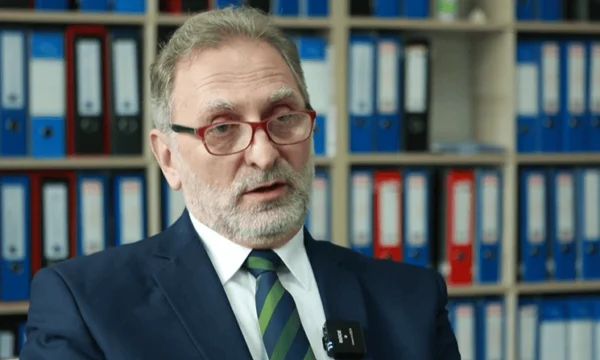
Is it utopian to expect a change in discourse?
The prospect of Vučić accepting the election results was not very credible. It seems that the decisive election result forced him to accept defeat in order to curb possible violence—“to preserve calm.”
Belgrade has gone through a relatively calm period during the years of the “Pumpaj” protests, with no violence against state institutions and no destruction of public or private property, unlike what we are witnessing in Paris and Tirana.
Having no well-known public figures who could represent it in forming a government, the Student List maintained the traditional Serbian ethno-nationalist line during the campaign, thereby competing with former President Vučić’s discourse. This was a strategy to adapt to the mindset of the majority of voters and win the election.
The election program and media appearances did not envisage a policy of rapprochement with the EU or the imposition of sanctions on Russia, although Vučić announced that sometime in March next year, the Student List would impose sanctions on Russia.
As regards Kosovo, the Serbian Student List holds the same position as former President Vučić. Along the way, we will see variations in positions and actions.
How will Serbia’s new government approach dialogue with Kosovo at a time when the EU, as well as official Washington, are trying to steer Serbia’s state strategy—based on four pillars, Moscow, Beijing, Brussels and Washington—back toward the European, or Atlantic, geopolitical trajectory?
Will Serbia be offered more “carrots,” as when Milošević’s regime fell and Đinđić, considered pro-Western, came to power? When Vučić came to power, he too played the pro-European card, using it to maintain neutrality as a means of strengthening Serbia’s position.
Is it utopian to expect a change in the Serbian state’s discourse toward its neighbors, as a prerequisite for reopening its path toward EU integration?
Will Serbia’s approach to Kosovo, Bosnia and Herzegovina, Montenegro and North Macedonia change?
Will Serbia overtake Albania in this process, given that the latter risks remaining deadlocked through violence and its refusal to engage in internal dialogue?
Related
Opinions
Hello, Albin.
Opinions
Why Does Emotion Overwhelm Logic?!
Opinions
Serbian Nationalism on the EU Stage: Stabilitocracy at Kosovo’s Expense
Opinions
A market without a “guardian”: the vital role of the Competition Authority and the cost of its paralysis in Kosovo
Opinions
Things That Cannot Coexist
Opinions
Speaking and reading Albanian badly has now attained official status in Kosovo
Opinions
The Mirror We Refuse to See Ourselves In
Opinions
The Ohrid Agreement: Normalization Without Recognition and an Endless Dialogue
Opinions
A PDK MP rightly raised concerns today, on World Urbanism Day
Opinions
Kosovo is growing in percentage terms, but remains behind in the economic strength of the Western Balkans
Opinions
The Legal Battle to Defend the KLA Leaders in the Appeals Chambers of the Specialist Chambers
Opinions
USA: The Supreme Power of the Free Vote





