
After the PISA results, mockery began alongside concern. Questions that seemed easy were circulated; people joked about the answers, and our students became targets of ridicule. Our children are not stupid. If many of them struggle to understand a text, use mathematics in an everyday situation, or apply what they have learned […]
Our Children Are Not Stupid
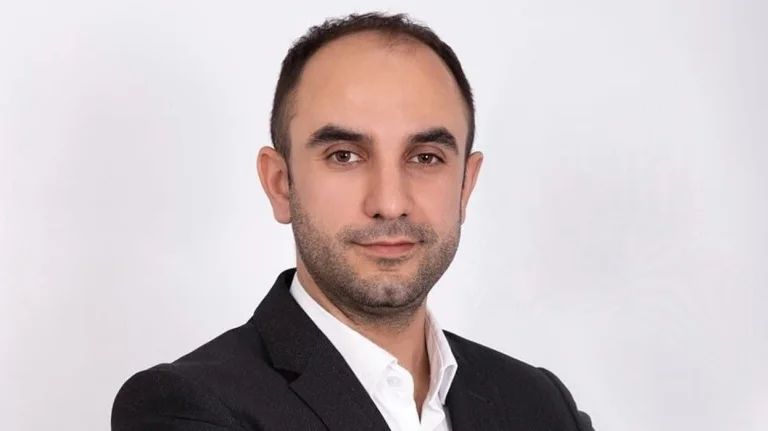
After the PISA results, mockery began alongside concern. Questions that seemed easy were circulated; people joked about the answers, and our students became targets of ridicule.
Our children are not stupid.
If many of them struggle to understand a text, use mathematics in an everyday situation, or apply what they have learned, responsibility cannot be placed on them alone. Children did not build the system. We built it for them.
I am not an education expert. I am a parent and a citizen. Some things are clear even without being a specialist.
As parents, we have great ambitions for our children. We want them to get an education, have a profession, and live better than we do. We work hard to provide them with the opportunities we may not have had ourselves.
But we often think of opportunities as things that can be bought.
You hear a parent say they have provided their child with everything. They have their own room, books, a computer, a tablet, a phone, and lessons. When you ask how much time they spend with the child, whether they know what the child is learning, where they are struggling, and when they last sat down to work together, the answer changes.
I see myself in this criticism, too. It is much easier to buy a child something than to give them your time. I have also let my child use a phone because it was easier than sitting down with them.
In trying to raise our children differently from how we were raised, we have sometimes gone to the other extreme. We give them a lot of freedom at an age when they still need boundaries, guidance, and expectations. A child cannot have an adult’s freedom without an adult’s responsibility. A parent is not only someone who provides opportunities. A parent also sets boundaries, expects effort, and, when necessary, says no.
If we have ambitions for our children, it is not enough to buy them the tools. We must expect something from them, too.
But responsibility does not end at home.
For years, we have diminished the standing of teachers. We have mocked the profession, politicized hiring, and talked about teachers as though they were part of a problem we had to put up with. Now, after PISA, we have begun mocking students, too.
Teachers should have the authority they deserve. But respect for the profession does not mean that we should not demand quality. A good teacher should be valued, while those who do not do their job should be held accountable.
A friend of mine had helped equip a vocational school with a laboratory. The equipment had been brought from Germany, and his company had begun taking students on for internships.
Later, he learned that the laboratory was being kept locked. When he raised the issue, the school’s response was roughly this: “We’ve inventoried it. The equipment is here.”
If the ambition was to have a laboratory, the job was done. The equipment was there and listed in the inventory.
If the ambition was for students to learn a profession, the locked laboratory was a failure.
This distinction says a lot about how we measure education. We know how to count schools, laboratories, computers, diplomas, and investments. But education is not about inventory. It is for the student who should leave school knowing how to do something they could not do when they arrived.
This is precisely why PISA should concern us. Not because it ranks us poorly, and certainly not because it gives us a reason to mock a fifteen-year-old. It should concern us because it shows that what we are getting from school is less than what we should expect from it.
For years, we have had great ambitions for education and titles. Now we need greater ambition for knowledge.
We need young people who understand what they read, know how to think, solve problems, learn a profession, and apply knowledge. A stronger economy, a better administration, a more professional court, a more competitive company, or a new industry cannot be built with money alone. They are built by people who know what they are doing.
But before we ask children to take knowledge seriously, we must also look at what we are showing them is worth striving for.
We tell them to study, while they see that it is not always the most capable who get ahead. They see people advance faster through connections than through knowledge. They see fame without any particular achievement. They see that sometimes those who have made money are admired more than those who know something. Even at home, we often ask a child what grade they got before asking what they learned.
Children see these things more clearly than we think.
Their ambitions are also shaped by what they see being valued around them. If we want a young person to invest years in knowledge, we have to give them reason to believe that knowledge and ability matter in this country.
Here, the question is no longer just about PISA. Nor is it only about school.
Kosovo, what ambitions do you have for your children?
If our ambition is for a child to pass their grade, get a diploma, and for the school to have its laboratory listed in the inventory, we can carry on like this.
If we want a Kosovo with a stronger economy, competitive businesses, industry, technology, and institutions that know what they are doing, then we must demand more from education.
Not just more money, buildings, and equipment. We must demand that children learn.
PISA is not a reason to bully our children. It is a reason to raise our ambitions for school, for knowledge, and for what we expect of them.
Because the Kosovo of twenty years from now is sitting at school desks today.
Related

Opinions
Hello, Albin.
Opinions
Why Does Emotion Overwhelm Logic?!
Opinions
Serbian Nationalism on the EU Stage: Stabilitocracy at Kosovo’s Expense
Opinions
A market without a “guardian”: the vital role of the Competition Authority and the cost of its paralysis in Kosovo

Opinions
Things That Cannot Coexist
Opinions
Speaking and reading Albanian badly has now attained official status in Kosovo

Opinions
The Mirror We Refuse to See Ourselves In
Opinions
The Ohrid Agreement: Normalization Without Recognition and an Endless Dialogue
Opinions
A PDK MP rightly raised concerns today, on World Urbanism Day
Opinions
Kosovo is growing in percentage terms, but remains behind in the economic strength of the Western Balkans

Opinions
The Legal Battle to Defend the KLA Leaders in the Appeals Chambers of the Specialist Chambers
Opinions
USA: The Supreme Power of the Free Vote





