
There are moments when a society, despite its internal differences, feels that it has been touched in a place shared by all. At such times, divisions fade, emotions become collective, and people who until yesterday may have disagreed on many things suddenly find themselves close to one another. Something like this is happening in Kosovo today as well. The judgment […]
When Evil Awakens Good
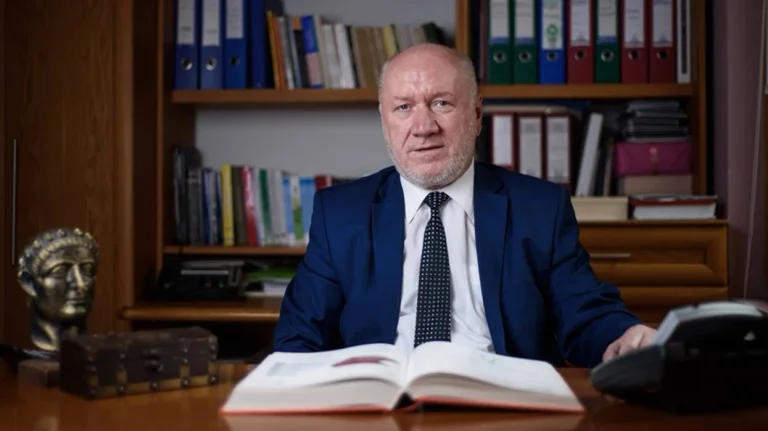
There are moments when a society, despite its internal differences, feels that it has been touched in a place shared by all. At such times, divisions fade, emotions become collective, and people who until yesterday may have disagreed on many things suddenly find themselves close to one another.
Something like this is happening in Kosovo today as well.
The judgment of September 16 against Hashim Thaçi, Kadri Veseli, Jakup Krasniqi and Rexhep Selimi has prompted widespread reactions in Kosovo. Gatherings, public reactions and the call “Not in my name” show that, for a large part of the public, this is not being experienced merely as a court ruling, but as something that touches their memory, emotions and the way they understand a decisive period in Kosovo’s history.
And it is precisely here that an old human paradox emerges: what is experienced as evil or injustice can awaken the good in people.
Not because suffering is good. Not because injustice is necessary.
But because difficult moments reveal something that we often forget in ordinary days: the ability to stand by one another.
In ordinary times, political differences seem significant to us. We debate, divide, oppose one another and sometimes forget everything we have in common. But there are moments when party affiliation loses its weight, and a broader sense of belonging and solidarity rises above it.
A society has the right to reflect on justice, on its own historical memory and on how it experiences decisions connected to people and events of particular importance to its history.
But perhaps the most important question is not only why we come together today.
The question is: why should we have to wait for a blow to remember that we can be together?
Why can’t we preserve the solidarity we discover in difficult days in ordinary days as well?
If we can overcome our differences when our collective memory is affected, then we should be able to overcome them when Kosovo’s development is at stake, too. For education. For justice. For welfare. For institutions. For our children’s future.
Because the unity of a society gains its full meaning only when it does not remain a one-day reaction.
The strength of a people is not measured only by its ability to unite in the face of what it considers unjust. It is also measured by its ability to turn that shared feeling into responsibility, understanding and work for the future.
Thus, perhaps this is the deepest lesson of these days:
Evil does not create good. But sometimes it awakens it.
It reminds us that beneath our differences, a shared feeling still exists. It reminds us that we can draw closer. That we can listen to one another. That we can come together.
But the real challenge begins after the moment has passed.
Let us not allow solidarity to last only as long as anger does.
Let us not always need a crisis to discover one another.
Let us not wait for a shared pain to remind us that we have a shared future. /The author is the founder of “Peja Peace Forum”/
Related

Opinions
Hello, Albin.
Opinions
Why Does Emotion Overwhelm Logic?!
Opinions
Serbian Nationalism on the EU Stage: Stabilitocracy at Kosovo’s Expense
Opinions
A market without a “guardian”: the vital role of the Competition Authority and the cost of its paralysis in Kosovo

Opinions
Things That Cannot Coexist
Opinions
Speaking and reading Albanian badly has now attained official status in Kosovo

Opinions
The Mirror We Refuse to See Ourselves In
Opinions
The Ohrid Agreement: Normalization Without Recognition and an Endless Dialogue
Opinions
A PDK MP rightly raised concerns today, on World Urbanism Day
Opinions
Kosovo is growing in percentage terms, but remains behind in the economic strength of the Western Balkans
Opinions
The Legal Battle to Defend the KLA Leaders in the Appeals Chambers of the Specialist Chambers
Opinions
USA: The Supreme Power of the Free Vote





