
The Hague, unfortunately, did not fulfill the mission for which it was created; in fact, it served to appease Serbia and Russia, all at the expense of Albanians. UNMIK and EULEX were The Hague’s vanguard, working day and night to send fabricated files and materials against people who had fought in the war […]
The Hague and the Murder of Justice – For Those Who Still Believe in International Justice
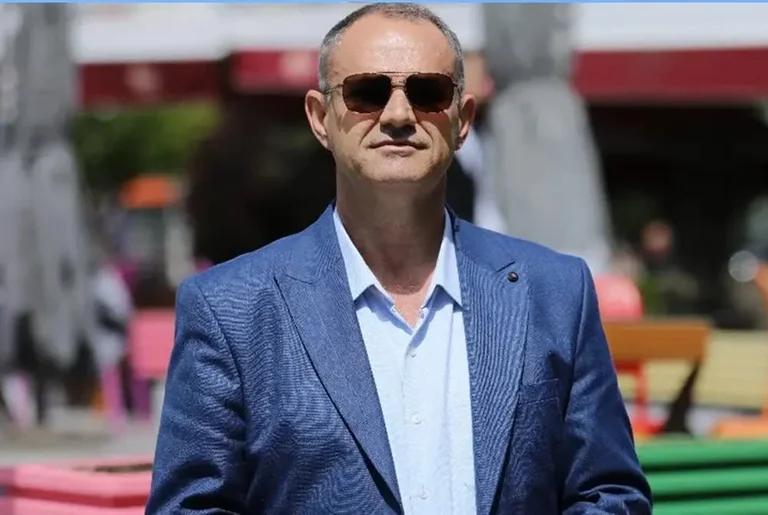
The Hague, unfortunately, did not fulfill the mission for which it was created; in fact, it served to appease Serbia and Russia, all at the expense of Albanians. UNMIK and EULEX were The Hague’s vanguard, working day and night to send fabricated files and materials against people who had fought in the war and against those who thought they could be Kosovo’s living heroes even after the war. Instead of demonstrating an uncompromising standard of justice, The Hague was perceived by a large part of Albanian society as a process that itself brought justice face to face with a profound crisis of trust. In my view, the sentence handed down was not only a blow against the individuals tried, but a severe blow to the memory of a people who experienced the war, lost thousands of lives, saw thousands of women raped, and thousands of people wounded and expelled.
How can one speak of international justice when the silence of justice still weighs upon thousands of victims of the war in Kosovo?
When thousands of victims waited for justice and justice remained silent
For the families of more than 13,000 Albanians who were killed and of thousands of women who were raped and abused, justice was not an abstract concept, but a wait left unresolved for decades.
Testimonies, complaints, files and materials concerning war crimes have passed through the archives of international institutions, while a large number of these cases did not receive the criminal justice response that the victims’ families had expected.
This is precisely where the most serious and uncomfortable question arises: why was international justice so slow and so limited in addressing crimes against Kosovo Albanians, while later it was set in motion with extraordinary intensity to investigate allegations against members of the KLA?
For UNMIK, EULEX and, later, The Hague, this is not merely a matter of procedures; it is a question about the equal treatment of victims, investigative standards and the credibility of international justice itself. Because justice that demands accountability in only one direction risks being perceived not as universal justice, but as selective justice.
When international justice forgets the victim and follows the narrative, justice ceases to be justice.
The Hague was not just a courtroom; it became the arena in which the credibility of international justice itself was put to the test. For those of us who experienced postwar Kosovo at close quarters, the question is not only what The Hague decided, but whether the path that led to that decision was fair, impartial and based on the same standard of justice for everyone.
And now, those who still think The Hague delivered justice should understand that justice was the thing it offered least. What was demonstrated and played out there was the vilest and most intriguing game that could have befallen the people of Kosovo. It will take years and years to repair this injustice caused by The Hague.
Afrim Zeqiri and The Hague: two periods, one question about justice
In 2003, I published the book “The Murder of Justice in Kosovo,” a testimony written at a time when the wounds of war were still fresh and when, under international administration, justice in postwar Kosovo was facing major challenges.
In that book, I addressed the case of the young Afrim Zeqiri from Cërrnicë, Gjilan, who, according to the position I expressed at the time, was placed at the center of a serious prosecution without a convincing evidentiary basis. KFOR and UNMIK publicly presented him as a suspect in the triple murder of May 28, 2000, in Cërrnicë, in which Tihomir Simjonoviqi, Millosh Vasiqi and the four-year-old child Millosh Petroviqi lost their lives.
Such a tragedy, of course, demanded a thorough, professional and impartial investigation; but the way the case was handled created a climate in which the accusation took on public proportions before responsibility had been legally established.
The case quickly became a politically and ethnically charged issue, also being used in Belgrade’s public discourse to promote a narrative about violence against Serbs in postwar Kosovo.
In this atmosphere, the presumption of innocence was confronted with a public judgment that had begun before the legal trial was over. Posters distributed in Gjilan alleging the accused had a “criminal history” made the situation even worse: a man was facing the public stigma of guilt, while his guilt still had to be proven.
The core of the accusation, according to the materials I examined, rested primarily on the testimony of a single eyewitness, Zoran Stoliq, who claimed to have seen someone resembling Afrim firing a weapon. But such testimony, particularly in a criminal trial with consequences this serious, cannot stand apart from the requirement for objective verification.
It must be consistent with the physical evidence, forensic data, the chronology of events and other testimony. According to what I documented, these elements failed to establish a reliable link between Zeqiri and the crime.
The circumstances at the time, according to the documented testimony, also did not match the prosecution’s scenario. On May 27 and 28, 2000, Zeqiri was in Gjilan, had been involved in a traffic accident, had been at the “Morea” café and had then stayed at a friend’s home because of the curfew. These circumstances, taken together with the lack of technical evidence directly linking him to the crime scene, created a serious gap between the accusation and the standard of proof required by criminal justice.
Nevertheless, he spent 617 days in pretrial detention, including 90 days under an executive order issued by Bernard Kouchner. He was held at Bondsteel and in the prisons of Mitrovica, Pristina and Gjilan and, according to the documented account, was subjected to repeated interrogations. Meanwhile, after 23 court sessions, the hearing of dozens of Albanian and Serb witnesses, and the examination of forensic evidence, the District Court in Gjilan concluded that there was insufficient evidence to link him to the crime. On June 14, 2002, Afrim Zeqiri was acquitted.
For me, this case is not simply a chapter from the past. It is a legal and human lesson about the price a person can pay when accusation precedes evidence and public judgment precedes a court ruling. An acquittal after 617 days in pretrial detention cannot bring back lost time, restore a damaged reputation or undo the consequences of a grave accusation. Therefore, when we speak of justice, we must remember that behind every court file is a person, a family and a life that cannot always be made whole by a delayed ruling.
Fortunately, Afrim Zeqiri had a defender like Bajram Kadriu by his side, a professional of great integrity, extraordinary legal expertise and rare professional courage. In a trial where the weight of the accusation was great and public and institutional pressure was considerable, Kadriu did not retreat in the face of difficulties and did not allow political and public noise to replace legal argument.
With persistence, professionalism and courage, he defended the fundamental principle that no person can be found guilty without evidence, and that justice must prevail over accusation, however serious it may be. His contribution to this case remains an example of what it means to be a lawyer not only by profession, but also with conscience, character and a commitment to justice.
It was precisely for this reason that I titled the book “The Murder of Justice in Kosovo”: not to deny the need for justice, but to raise the question of what happens when the very process of seeking justice becomes a source of a new injustice.
Why did I tell this story?
I am hearing and reading a flood of articles, comments and analyses from analysts, columnists, self-proclaimed journalists and various groups who, instead of analyzing The Hague’s judgment with legal and historical responsibility, are welcoming it with dangerous cynicism, according to the old logic: “if you haven’t eaten garlic, you won’t smell of it.”
As if every judgment were automatically the absolute truth, and as if a court’s seal could forever close every debate about evidence, testimony, circumstances and standards of justice. This approach is all the more troubling when it is embraced without reservation by a part of the diaspora, which seems still to believe that every international institution is infallible by definition and that international actors simply “apply the law.”
This naive faith is not a legal argument; it is a surrender of critical judgment. Justice does not require blind faith, but evidence, transparency, reasoning and an equal standard for everyone. And for precisely this reason, no one should be ashamed to raise questions about a judgment, regardless of who issued it.
In my view, The Hague did the least to convince people that it was offering equal, transparent justice, free from the influence of political narratives. A lengthy process, with enormous human, institutional and financial costs, cannot replace the fundamental standard of justice: concrete evidence, individual responsibility and a clear link between the accused and the criminal act.
Instead, parts of the process created the impression of excessive reliance on contested testimony and interpretations such as “Thaçi was aware,” “Thaçi knew what was happening”—formulations that, without being accompanied by direct and verifiable evidence of individual responsibility, cannot by themselves become a convincing basis for criminal liability. Justice cannot be built on conjecture; it must be founded on evidence.
When justice condemns liberators and remains silent about the wounds of war
Instead of demonstrating an uncompromising standard of justice, The Hague was perceived by a large part of Albanian society as a process that itself brought justice face to face with a profound crisis of trust.
In my view, the sentence handed down was not only a blow against the individuals tried, but a severe blow to the memory of a people who experienced the war, lost thousands of lives, saw thousands of women raped, and thousands of people wounded and expelled.
In the face of this collective pain, the way some of the testimony was treated in the trial raises serious questions: is contested testimony, a partial claim or an interpretation of circumstances enough to establish criminal responsibility of such gravity?
For me, no. Justice cannot rest on peripheral accounts, isolated episodes or claims that fail to establish a clear and proven link between the individual and the criminal act.
And the consequences do not end in the courtroom. Justice that fails to convince society of its impartiality does not produce only a ruling; it produces distrust.
Instead of serving as a bridge to reconciliation, security and the consolidation of a European Kosovo, The Hague has left behind new divisions, new wounds and a profound crisis of trust, felt not only in Kosovo but wherever Albanians live. Because, ultimately, justice is measured not only by what is written in a judgment, but also by whether the people who read it believe that the truth was sought according to the same standard for everyone.
The Hague offered neither stability, guarantees nor a future for a European Kosovo. The Hague created divisions and rifts among Kosovo Albanians and wherever Albanians live around the world.
These thousands of young people taking to the streets, in Kosovo and around the world, in defense of the liberators, are not merely crowds of protesters: they are a generation shaping today how it will view Kosovo’s tomorrow.
They are children of families who experienced the war, its consequences and the entire difficult journey of state-building. And for precisely this reason, the way this generation perceives justice, the war and relations with the Serb community will directly affect the prospects for coexistence in Kosovo.
In this context, I see Hashim Thaçi’s contribution as an important factor in the postwar period, particularly in efforts to create an institutional and political environment in which all citizens, regardless of ethnicity, could live in safety.
If wounds that were thought to be healing are being reopened today, then the consequences of such a process cannot be measured only in years of imprisonment; they are also measured in the trust of generations, relations between communities and the difficulty of preserving the peace built with such great sacrifice.
The war ended in 1999, but the real challenge of the postwar period was to build peace—and it is precisely there that today we risk returning to a point where distrust becomes stronger than reason and coexistence more fragile than before.
Integrity cannot be bought, and history cannot be rewritten
My message comes from the standpoint of a professional who has built his entire life on integrity, ethics and public responsibility; a person who has never lived off the sweat, labor or privileges of others. I have received no personal benefit from any of those who are now in The Hague and, for precisely this reason, my position does not stem from debt, self-interest or dependence. It stems from what I have seen, experienced and analyzed in Kosovo before and after the war.
In the face of Serbia’s policies and the many developments that have shaped Kosovo’s path, and taking into account the contribution this group has made to important state-building processes, I will continue to defend with dignity what I consider right and historically significant.
I have never worked to create divisions, written out of a desire for revenge or based any of my positions on personal interests. But that does not oblige me to remain silent when the values of the war and the contribution of people who, in my conviction, played an important part in Kosovo’s path to freedom and independence are at stake. I bow respectfully to these values, to that generation and to the sacrifice associated with it—not to an individual as a privilege, but to the history I have witnessed and experienced.
And those of you who write, label and judge from a distance, particularly on social media, must understand the weight of every word. History is not a Facebook status, justice is not a comment and the victim is not an instrument for political battles.
Before throwing the next stone, think carefully about whom that stone serves and what you will leave behind. Do not let anger, ignorance or the interests of the day turn you, unwittingly, into voices serving the narratives of those who have worked against Kosovo’s freedom for decades. Criticism is a right; denying history and relativizing crimes is not. Because a society that forgets where it came from risks losing not only its memory, but also the reason why it had to fight for freedom.
The facts that will come to light over time will prove that the accusations against Hashim Thaçi and the others were not the product of an impartial search for the truth, but a construct expertly fabricated and fueled by the political kitchens of Belgrade and Moscow.
Time will strip away these constructs one by one, expose their sources and show how many were real evidence and how many were part of a scenario devised against the central figures of Kosovo’s war and state formation.
History is not determined by an indictment, nor is it forever sealed by a judgment; it is reassessed through documents, evidence and time. Therefore, our struggle today must above all be a struggle to preserve Kosovo’s international credibility, defend historical truth and ensure a fair process in which individual responsibility is clearly distinguished from collective responsibility.
In this effort, we must not forget for a moment that, alongside the claims and narratives emanating from Serbia, there is also an unresolved chapter in the history of our war, while Thaçi and his fellow fighters continue to face a process with consequences beyond their individual fate—consequences that affect how Kosovo’s war, its victims and Kosovo’s very statehood will be viewed in international memory.
Our main battle now is the struggle to preserve Kosovo’s international credibility, without forgetting for a single second the collective battle that Thaçi and his group are waging in relation to Serbia.
We who live in Kosovo and have known the postwar processes at close quarters, including developments under UNMIK and EULEX, have no reason to be ashamed of having written, argued and raised our voices against what we considered an injustice.
On the contrary, I believe time will vindicate our call for a deeper assessment of the testimony given in The Hague and the motives behind it: some may have testified for personal gain, some out of resentment and personal conflicts, some at the instigation or direction of Serbia’s handlers, while very few, or hardly any, may have testified on the basis of having been direct victims of KLA leaders.
This distinction is precisely what is essential and, in my opinion, deserves to be examined seriously, because only such an analysis can distinguish testimony based on real experience from the motives, interests or influences that may have affected such an important process./rajonipress/
Related
Opinions
Hello, Albin.
Opinions
Why Does Emotion Overwhelm Logic?!
Opinions
Serbian Nationalism on the EU Stage: Stabilitocracy at Kosovo’s Expense
Opinions
A market without a “guardian”: the vital role of the Competition Authority and the cost of its paralysis in Kosovo
Opinions
Things That Cannot Coexist
Opinions
Speaking and reading Albanian badly has now attained official status in Kosovo

Opinions
The Mirror We Refuse to See Ourselves In
Opinions
The Ohrid Agreement: Normalization Without Recognition and an Endless Dialogue
Opinions
A PDK MP rightly raised concerns today, on World Urbanism Day
Opinions
Kosovo is growing in percentage terms, but remains behind in the economic strength of the Western Balkans
Opinions
The Legal Battle to Defend the KLA Leaders in the Appeals Chambers of the Specialist Chambers

Opinions
USA: The Supreme Power of the Free Vote





