
How the International Agenda risks equating Serbian genocide and crimes with the just liberation struggle of the KLA and the people of Kosovo! With the establishment of an international presence in Kosovo in 1999, the investigation of war crimes was the exclusive competence of UNMIK. With the declaration of the independence of the Republic of Kosovo in 2008, all powers in […]
The International Agenda risks equating Serbian genocide with the just liberation struggle of the KLA
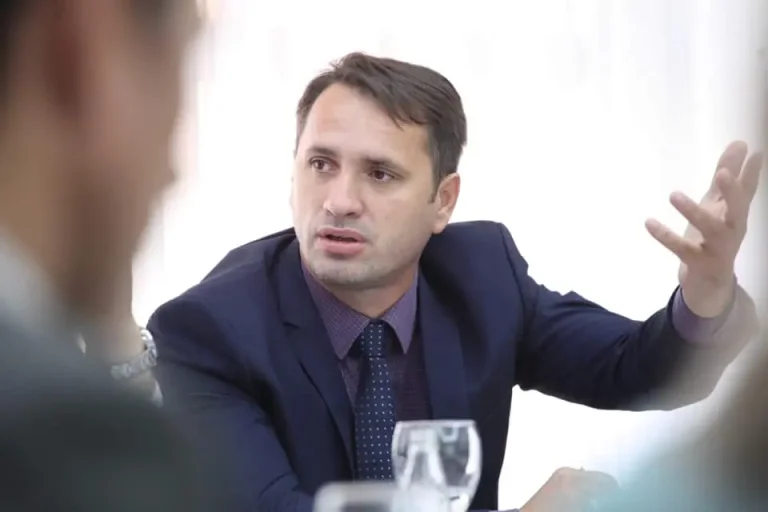
How the International Agenda risks equating Serbian genocide and crimes with the just liberation struggle of the KLA and the people of Kosovo!
With the establishment of an international presence in Kosovo in 1999, the investigation of war crimes was the exclusive competence of UNMIK.
With the declaration of the independence of the Republic of Kosovo in 2008, all powers in the field of justice were transferred to Kosovo’s justice institutions, with the exception of the investigation and trial of war crimes, which were transferred to EULEX, a mission established after the declaration of independence.
In 2011, foreign agendas aimed at contaminating the justness of the KLA’s war and undermining the international narrative of a just and humanitarian liberation war produced Dick Marty’s report at the CoE. At that time, the Russian Federation had great influence in the CoE.
In 2013, the Legal Package for the Conclusion of Supervised Independence was approved, which consequently began the countdown to the end of the EULEX mission in the Republic of Kosovo.
In 2014, the report of the Special Investigative Task Force, led by American prosecutor Clint Williamson, was published, concerning the allegations raised in Dick Marty’s report. That report dismissed the horrific allegations of organ trafficking, but at the same time stated that there were findings of war crimes that had to be investigated and addressed in court.
Under these circumstances, international pressure emerged to establish a court that would investigate these allegations.
In 2015, faced with extraordinary international pressure, and with the aim of addressing fabricated accusations, Kosovo was forced to establish the Specialist Chambers, whose purpose was to investigate the findings of the Task Force led by Williamson.
The establishment of the Specialist Chambers is linked exclusively to the fact that the EULEX mission was nearing its end.
More specifically, as provided for in the “timetable” for reducing the mission, starting in 2016, EULEX was not permitted to initiate new investigations.
Consequently, in 2018, in accordance with the “timetable,” EULEX’s executive mandate was removed.
The first indictments by the Specialist Chambers were issued in 2020.
As a result, we have:
A process in which Kosovo, as the injured party and a victim of genocide and war crimes by Serbia, has been kept under constant pressure with fabricated accusations for 27 years. Accusations which, in every case in which they have been addressed by regular international courts (the Hague Tribunal for War Crimes in Yugoslavia), have ended in acquittals: the Haradinaj and Limaj cases.
The creation of this legal “monster” appears to have had a single purpose: to use this unprecedented hybrid legal mechanism to convict KLA leaders, legitimize the narrative of states hostile to Kosovo, and equate the crimes of genocide committed by the Serbian state with the just liberation struggle of the people of Kosovo.
Therefore, the Republic of Kosovo and its people have a duty and a historic mission to do everything in their power to prove the innocence and justness of the KLA’s war and of the people of Kosovo.
Related

Opinions
Hello, Albin.
Opinions
Why Does Emotion Overwhelm Logic?!
Opinions
Serbian Nationalism on the EU Stage: Stabilitocracy at Kosovo’s Expense
Opinions
A market without a “guardian”: the vital role of the Competition Authority and the cost of its paralysis in Kosovo
Opinions
Things That Cannot Coexist
Opinions
Speaking and reading Albanian badly has now attained official status in Kosovo

Opinions
The Mirror We Refuse to See Ourselves In
Opinions
The Ohrid Agreement: Normalization Without Recognition and an Endless Dialogue
Opinions
A PDK MP rightly raised concerns today, on World Urbanism Day
Opinions
Kosovo is growing in percentage terms, but remains behind in the economic strength of the Western Balkans
Opinions
The Legal Battle to Defend the KLA Leaders in the Appeals Chambers of the Specialist Chambers
Opinions
USA: The Supreme Power of the Free Vote





