
Miodrag Vlahović, Montenegro’s former foreign minister, writes: The death of convicted Serbian war criminal Ratko Mladić found Montenegro – as officials from Brussels declare and representatives of Montenegro’s ruling majority repeat – in the final stages of its journey toward EU membership. Podgorica’s optimism […]
Montenegro, a War Criminal and European Integration
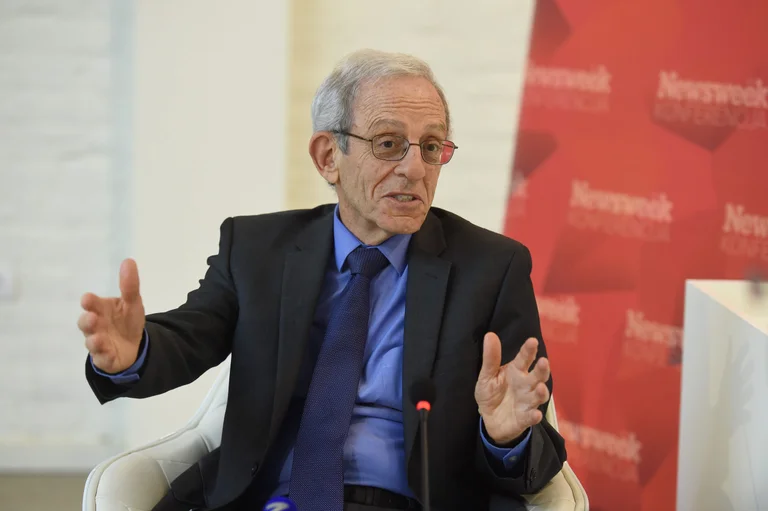
Miodrag Vlahović, Montenegro’s former foreign minister, writes:
The death of convicted Serbian war criminal Ratko Mladić found Montenegro – as officials from Brussels declare and representatives of Montenegro’s ruling majority repeat – in the final stages of its journey toward EU membership.
Official Podgorica’s optimism is so pronounced that the speaker of Montenegro’s Parliament, Andrija Mandić – who has a three-decade record of supporting Milošević and Putin – offered his condolences to the family of the deceased, while mourning the “Butcher of Bosnia.” Many members of the governing structures followed his example, revealing their sincere support for the criminal policy in which Mladić served as the perpetrator of the genocide in Srebrenica. Most officials in Montenegro’s current government still do not acknowledge what happened in Srebrenica.
The EU’s response
The actions of Aleksandar Vučić’s regime – which is organizing the funeral and commemorative events associated with it, honoring this “defender of the Serbs” – have drawn Brussels’ attention. Commissioner Kos canceled her announced visit to Belgrade.
But most likely, that will be the extent of the EU’s response. Serbia’s arms sales to Ukraine come at a price – and have consequences.
As for Montenegro, however, Brussels is silent.
The opposition party DPS has launched an initiative to dismiss Mandić, who still proudly bears the title of Chetnik vojvoda. However, this initiative cannot secure a parliamentary majority, because the main party in government – Prime Minister Spajić’s PES – refuses to support it.
As a result, Montenegro finds itself in an ambivalent situation. On the one hand, its path toward the EU is accelerating, while on the other, the principles and values of a democratic and civic society are being eroded and undermined.
The official administration in Brussels has no answer – or, rather, does not wish to give an answer – to the question of whether openly (and demonstrably!) anti-European individuals can lead Montenegro toward Europe. The official position is “business as usual,” with an emphasis on closing negotiation chapters and an ambitious program for rapidly aligning the legal framework with European standards. “Montenegro is the leader of the process” – and there is an unwritten obligation to remain optimistic.
How long this “idyllic” state of affairs can last remains to be seen.
Three challenges
There are three major challenges – or problems – that cannot be ignored.
The first issue is the discrepancy between the stated and actual objectives of the ruling majority. Seen from the outside, this presents the risk of “Trojan horses” inside the EU – a risk Europeans cannot ignore, and not just because of their experience with Viktor Orbán.
Viewed from within Montenegro, this manifests itself in the rapid “Serbianization” of Montenegrin society – encompassing everything from politics and culture to education and the authorities’ ideological and political decisions.
To put it in terms our Western friends can understand: there is not a single ethnic Montenegrin (!) in the government of Montenegro, while the policies of the ruling parties are under the strong and decisive influence of the Serbian Church – an institution that brutally and unequivocally denies Montenegrin national identity and statehood and behaves like an occupying force within Montenegro.
The second problem is the complex relationship with the Republic of Croatia. Montenegro has unresolved land and maritime border disputes with its neighbor, as well as a number of issues – uncomfortable for Podgorica – stemming from the 1991–1992 aggression against Dubrovnik, a conflict in which Montenegro played the role of a willing pawn in the nationalist policies of Milošević’s Serbia.
Montenegro’s current government views all its neighbors – with the exception, of course, of Serbia – and Croatia in particular, as historical adversaries. Consequently, any form of “concession” to Zagreb is unacceptable to them. The situation is clear: those who supported and participated in the wars in the former Yugoslavia (on Serbia’s side) cannot promote peaceful and civilized solutions with Croatia.
This position of the Montenegrin government conflicts with its official European orientation. For Montenegro to become an EU member, Croatia must also vote in favor of its membership.
Finally, there is an extremely complex situation within the EU itself regarding the manner, pace and rules governing the admission of new members. France and Germany are – logically – at the forefront of these new ideas.
Both the veto rights of new members and the membership mechanism itself are being called into question. The EU is considering not only the Western Balkans, but also its “eastern periphery” – Ukraine and Moldova.
The purpose of forced optimism
None of this seems to trouble Prime Minister Spajić or Speaker of Parliament Mandić very much. Beyond a brief dismissal of these ideas, there is no real debate among politicians or analysts – not even among those on the government’s side. Montenegro therefore now oscillates between forced optimism and a heap of grave and burdensome problems.
Instead of serious questions and analysis – both in Brussels and in Podgorica – we are witnessing a new version of Milan Kundera’s famous novel The Joke: “Optimism is the opium of the people.”
For precisely this reason, our American friends – who have both the desire and the interest to engage with Europe and its enlargement – may, we hope, understand us better, since they too are facing an extreme form of official optimism in their own country.
Related
Opinions
Hello, Albin.
Opinions
Why Does Emotion Overwhelm Logic?!
Opinions
Serbian Nationalism on the EU Stage: Stabilitocracy at Kosovo’s Expense
Opinions
A market without a “guardian”: the vital role of the Competition Authority and the cost of its paralysis in Kosovo
Opinions
Things That Cannot Coexist
Opinions
Speaking and reading Albanian badly has now attained official status in Kosovo
Opinions
The Mirror We Refuse to See Ourselves In
Opinions
The Ohrid Agreement: Normalization Without Recognition and an Endless Dialogue
Opinions
A PDK MP rightly raised concerns today, on World Urbanism Day
Opinions
Kosovo is growing in percentage terms, but remains behind in the economic strength of the Western Balkans
Opinions
The Legal Battle to Defend the KLA Leaders in the Appeals Chambers of the Specialist Chambers
Opinions
USA: The Supreme Power of the Free Vote





