
On October 29, 1996, Britain and Albania agreed that Tirana would pay London $2 million in compensation for the Corfu Channel incident, and that Britain would give Albania $18 million from the value of the frozen gold. The Corfu Channel incident refers to three separate events that took place in […]
The Agreement That Ended the Anglo-Albanian Conflict over the Corfu Channel Incident
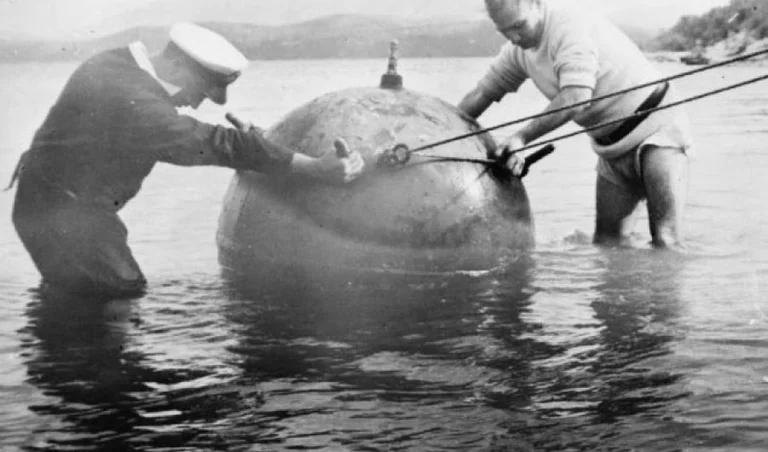
On October 29, 1996, Britain and Albania agreed that Tirana would pay London $2 million in compensation for the Corfu Channel incident, and that Britain would give Albania $18 million from the value of the frozen gold.
The Corfu Channel incident refers to three separate events that took place in 1946 in the Corfu Channel, where Great Britain violated Albania’s sovereignty through a deliberate, premeditated military operation with clearly threatening characteristics, entering Albania’s internal and territorial waters.
These three incidents have been considered an early manifestation of the Cold War.
The Albanian version
On May 15, 1946, two warships sailing without a flag or other identifying marks entered Albanian territorial waters near Saranda. The coastal artillery battery signaled the warships to change course. When the ships continued on the same course, the battery opened fire as a warning. The warships raised the English flag and withdrew from Albanian territorial waters.
On October 22, 1946, four warships (1 cruiser and 3 destroyers) coming from the Port of Corfu passed through the channel and entered our territorial waters, approaching between Cape Varese and Cape Kassiopa. Near Cape Varese, two destroyers struck mines left over from the Second World War, sustaining damage to their hulls and causing casualties.
On May 15, 1946, a small fishing boat with armed men came toward us and demanded that we leave their waters, without offering us any kind of assistance, and then left
The English version
On October 22, 1946, near Cape Varese, our two destroyers struck mines laid by the Albanians. Our two destroyers struck mines, sustaining damage and sinking, and several of our sailors also lost their lives. (From the logbook of the English flagship, presented at the Hague trial.)
Although the court acknowledged that on November 12, 1946, and November 13, 1946, the entry of English warships into Albanian waters, where the incident occurred, was a violation of Albania’s sovereignty, the final ruling blamed Albania for the incident and issued a judgment ordering Albania to pay the United Kingdom $844,000.
The Albanian government refused to recognize the ruling of the International Court of Justice in The Hague. The British government requested the freezing of the gold found in Germany after the end of the Second World War, which was to be distributed proportionally among the states whose national bank treasures had been looted by Germany.
Related
History
What Lincoln and the technological revolution he led can teach us today
History
Exhibition “Luigj Gurakuqi in the Documents of the Central State Archive” Opens, Honoring His Contribution to Albanian National History
History
1941: When leaders of the Sanjak regions sought protection from Tirana
History
Was King Arthur, after all, real?
History
The 1973 oil crisis forced Nixon to rethink time
History
The Life and Work of Murat Bey Toptani
History
The Forgotten Photograph That Rewrites the History of the Second World War
History
The Pastor Who Saw Hiroshima Burning
History
An American physicist’s account of the atomic bombing of Nagasaki
History
Albania Judged by an English Lady
History
John Kantakouzenos’ Campaigns Against the Albanians
History
Albania as Judged by an Englishwoman





