
Tintagel is a bleak and remote place. It takes determination to reach this village on the north coast of Cornwall: tourists have to leave behind the main roads that lead towards sun and surf. But this does not deter those drawn by the legend of King Arthur. Since the 12th century, the impressive castle has been mythologized as the place of his conception; a cave that you can walk through when the tide is low bears the name of Arthur’s legendary wizard, Merlin. Arthur’s memory (and the question of whether he existed) looms over Tintagel in the literal sense – in the form of Rubin Eynon’s eight-foot-tall [2.43 meters] bronze sculpture, as unreal and ethereal as the legend itself.
Was King Arthur, after all, real?
Tintagel is a bleak and remote place. It takes determination to reach this village on the north coast of Cornwall: tourists have to leave behind the main roads that lead towards sun and surf. But this does not deter those drawn by the legend of King Arthur. Since the 12th century, the impressive castle has been mythologized as the place of his conception; a cave that you can walk through when the tide is low bears the name of Arthur’s legendary wizard, Merlin. Arthur’s memory (and the question of whether he existed) looms over Tintagel in the literal sense – in the form of Rubin Eynon’s eight-foot-tall [2.43 meters] bronze sculpture, as unreal and ethereal as the legend itself.
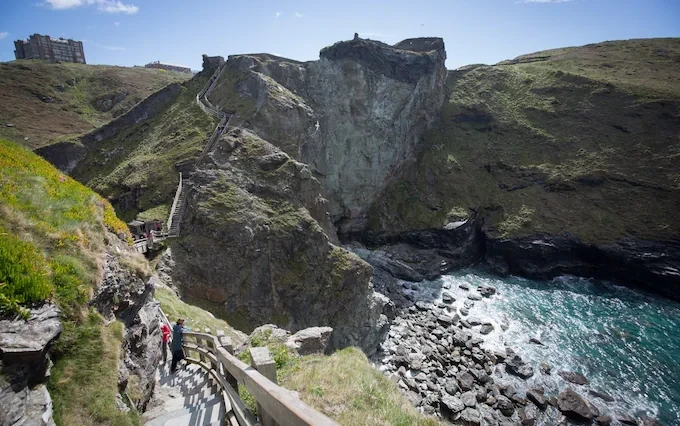
Historians have suggested that Tintagel was once an important royal centerPhoto: Matt Cardy/Getty Images
It has long been fashionable to question whether Arthur was ever a real person – indeed, such skepticism is practically academic orthodoxy. But in Tyrants and Traders [Tyrants and Traders] – a history of Britain’s early medieval period – Ken Dark is willing to challenge this tendency, at least to some extent. The lack of sources, he argues, does not entirely negate the evidence for the king.
“Arthur” was a relatively rare name in Britain, and the fact that it began to appear as a name for royal men as early as the second half of the 6th century onwards suggests that a real person lay behind this wave. The oft-heard claim that Arthur is simply “fiction” also ignores the awkward problem that we have no evidence that 5th-century Britons wrote speculative literature – nor any reason to think they did.
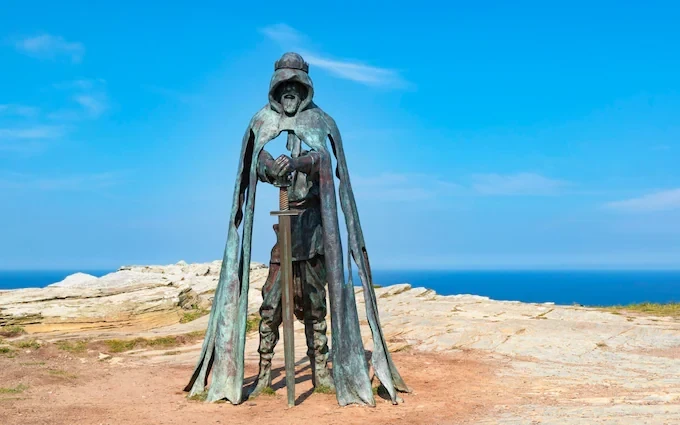
Rubin Eynon’s eight-foot-tall bronze sculpture, “Gallos,” was installed in 2016 at Tintagel Castle in CornwallPhoto: Education Images/Universal Images Group via Getty Images
The period in which Arthur (perhaps) lived is so obscure that historians and archaeologists are not even sure what to call it. The period, often described as extending from the end of Roman Britain in 410 to the Anglo-Saxon conquest around 577 and the establishment of their kingdoms, was once called the Dark Ages (a term that has fallen out of favor, but which refers to the darkness of the evidence rather than an absence of culture or human achievement).
But today it is more often called “post-Roman,” “sub-Roman” or “Arthurian” by those with a more romantic bent. There is no clearly defined chronology, because Roman rule continued in many parts of the country, particularly in Wales. Our sources are limited to a handful of well-known texts by authors such as Gildas, Bede, Nennius and Patrick and, until recently, the post-Roman period was quite impenetrable even to archaeologists.
But advances in archaeology are changing this. If archaeological interpretation has often centered around a single famous site (Stonehenge for the Bronze Age; Bath for the Romans), Tintagel has become the symbol of archaeologists studying the post-Roman period.
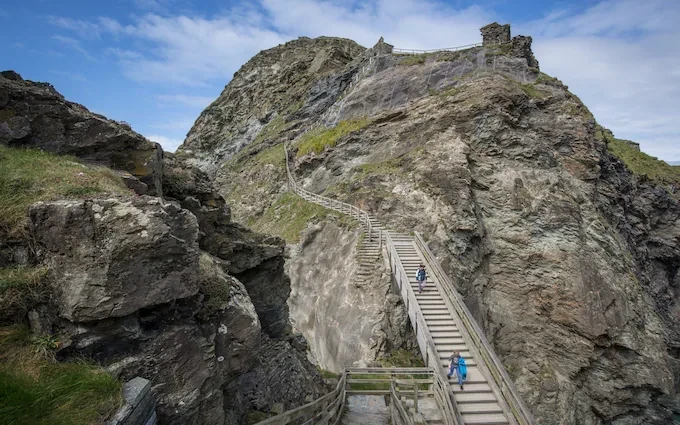
Tintagel has become the symbol of archaeologists studying the post-Roman periodPhoto: Matt Cardy/Getty Images
In the 20th century, a Dark Age trading center was discovered under the direction of Ralegh Radford. More recently, historians have suggested that Tintagel was an important royal center, perhaps a kind of capital of the kingdom of Dumnonia (present-day Devon and Cornwall). On an island engulfed by internal and interethnic wars, it made more sense to settle on a desolate headland – even if that meant facing a dangerous sea.
Everything else we know about the period comes from a small number of sources, such as Gildas’s De Excidio et Conquestu Britanniae [On the Ruin of Britain], a powerful denunciation of Britain’s corruption (and its fate under the invading Saxons).
It is difficult to date, but it gives us a vivid picture of the divisive politics and religion of Dark Age Britain, along with five kings (compared to a lion, a leopard, a bear and a dragon), whom Gildas harshly condemns for breaking oaths, sacrilege, murder, fornication, adultery and deceit. Bede, meanwhile, tells us that the community of Britons was scattered across the diaspora, from southern Scotland in the north to Brittany and Galicia in the south. It was the connection with Brittany that explains why French-speaking medieval people very quickly began telling stories about Arthur.
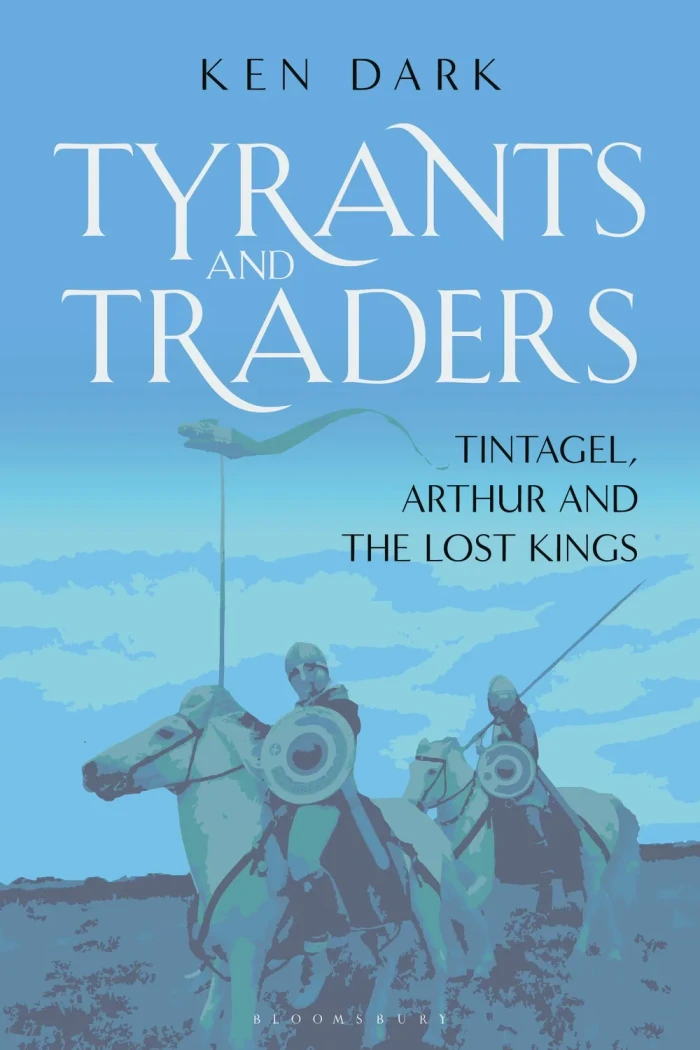
Dark has a possible candidate for Arthur – Arthur, son of Pedr, a minor member of the 6th-century Welsh royal family, who would have been the right age to win a battle in 537 (one of the more reliable references to a battle involving Arthur). But even if not all readers are convinced, Dark’s general assertion that an Arthur of flesh and blood existed will remain persuasive.
The book strikes a rare balance between conveying, on the one hand, the often ambiguous and debatable nature of archaeological interpretation and, on the other, keeping the narrative accessible to the general reader.
Tyrants and Traders intelligently tackles several contentious issues, comprehensively engages with the latest archaeological research and puts forward some intriguing hypotheses – albeit ultimately unprovable ones – about Britain’s most mysterious historical period. /Telegrafi/
Related
History
What Lincoln and the technological revolution he led can teach us today
History
Exhibition “Luigj Gurakuqi in the Documents of the Central State Archive” Opens, Honoring His Contribution to Albanian National History
History
1941: When leaders of the Sanjak regions sought protection from Tirana
History
The 1973 oil crisis forced Nixon to rethink time
History
The Life and Work of Murat Bey Toptani
History
The Forgotten Photograph That Rewrites the History of the Second World War
History
The Pastor Who Saw Hiroshima Burning
History
An American physicist’s account of the atomic bombing of Nagasaki
History
Albania Judged by an English Lady
History
John Kantakouzenos’ Campaigns Against the Albanians
History
Albania as Judged by an Englishwoman
History
Why and who killed Hasan Riza Pasha?





