
For the benefit of the various readers who write to me and ask questions, prompted by a television program about the figure of Esat Pasha Toptani, his role in defending Shkodër from the Serbo-Montenegrin aggression of 1912–1913, and above all the killing of Hasan Riza Pasha, I am offering this public clarification. On the Siege of Shkodër […]
Why and who killed Hasan Riza Pasha?
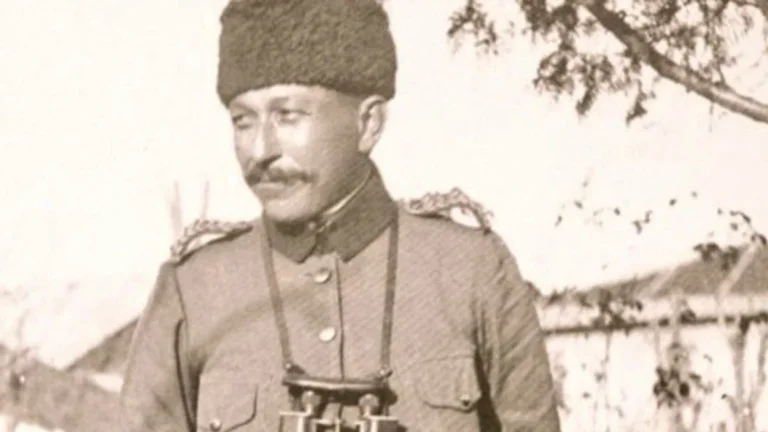
For the benefit of the various readers who write to me and ask questions, prompted by a television program about the figure of Esat Pasha Toptani, his role in defending Shkodër from the Serbo-Montenegrin aggression of 1912–1913, and above all the killing of Hasan Riza Pasha, I am offering this public clarification.
There are many books and few studies on the Siege of Shkodër. For this reason, I have spent years gathering archival materials and literature. However, because of the need for financial support, I still need some time to complete a study I have begun, based on documentary sources.
Nevertheless, the following Albanian authors have written closest to the truth about this event: 1) Tahir Kolgjini, who published a book in Istanbul as early as 1977, Was Esat Pasha Toptani a Traitor or a Patriot?, reprinted twice; 2) Ilir Ikonomi; and 3) the two books by the Tirana intellectual Xhemal Kusi. The latter also gives the names of the Albanian officers who organized the killing of Hasan Riza Pasha, as a unanimous decision, because he had planned a withdrawal.
The latter account was also confirmed by Hasan Riza Pasha’s two aides, who were also members of the staff that directed the war. In 1933 they published the book The Defense of Shkodër, which I photocopied when I was a student in this city, at the university library. I still keep it as a memento. The book in question was later reprinted in 2007 by the General Staff of the Turkish Army in Ankara (Abdurrahman Nafiz i Kiramettin, 1912-1913, Balkan Savaşı’nda İşkodra Savunması (I-II Cilt), Ankara, Genelkurmay Başkanlığı, 2007). It is therefore considered a serious source by firsthand witnesses.
In this book, the authors explain that Hasan Riza Pasha had made the following decision about the fate of the fortress:
“Ten days before the food supplies ran out, we would give the soldiers three days’ leave and feed them well. On the fourth day, we would leave the area between Tarabosh and the Buna, heading toward Tivar (Bar); we would march toward the Austrian port of Spizza, 60 kilometers from Shkodër. With Austria at our backs, we would hold a defensive line that we would fortify inside Montenegro, resist until our supplies were completely exhausted, and, if forced to, cross into Austrian territory.”
He had discussed the details of this plan with Major Abdurrahman Nafiz Bey.
Several reserve battalions and local volunteers would be left in Shkodër and on the other fronts. The units would be told:
“The Ottoman fleet will land troops in Tivar and Ulqin; we will go to meet them and open the way for them. This would create great enthusiasm, and with this momentum the Montenegrin forces on the Tarabosh front would be attacked. It was thought that an enemy brigade was constantly stationed in the mountains opposite Tarabosh, and, because the enemy was continually reinforcing that front, there was hesitation about undertaking this operation. Hasan Riza Pasha generally kept the plan of action he had devised very secret.”
In fact, the Ottoman fleet would not actually land in Tivar and Ulqin. This was a ruse to motivate the forces.
And what happened? Esat Pasha and the Albanian officers learned of the plan, and in vain tried to convince Hasan Riza Pasha that Montenegro’s terrain was too rugged to allow the Ottoman troops to withdraw.
On the other hand, leaving Shkodër would have abandoned the population to its fate and to Serbo-Montenegrin bayonets. It should not be forgotten that the volunteer/reserve forces Esat Pasha had gathered numbered more than half the Ottoman forces, or roughly the same. What would happen to these forces after the Ottoman troops left? Therefore, the Albanian junta (Xhemal Kusi gives their names) decided to kill Hasan Riza Pasha and continue defending Shkodër, which was carried out with dignity for almost three and a half more months, until the Great Powers decided that it should remain part of the future Albanian state.
The bloodiest battles against the Serbo-Montenegrins took place after Hasan Riza Pasha’s killing. Many Albanians have probably never heard of the Battle, or “Slaughterhouse of Bërdica,” where, in just a few hours, more soldiers were killed on both sides than were killed by all political formations during the years of the Second World War.
Related
History
What Lincoln and the technological revolution he led can teach us today
History
Exhibition “Luigj Gurakuqi in the Documents of the Central State Archive” Opens, Honoring His Contribution to Albanian National History
History
1941: When leaders of the Sanjak regions sought protection from Tirana
History
Was King Arthur, after all, real?
History
The 1973 oil crisis forced Nixon to rethink time
History
The Life and Work of Murat Bey Toptani
History
The Forgotten Photograph That Rewrites the History of the Second World War
History
The Pastor Who Saw Hiroshima Burning
History
An American physicist’s account of the atomic bombing of Nagasaki
History
Albania Judged by an English Lady
History
John Kantakouzenos’ Campaigns Against the Albanians
History
Albania as Judged by an Englishwoman





