
The Bujan Conference began on December 31, 1943, and ended on January 2, 1944. A resolution was signed there recognizing Kosovo’s right to self-determination, including secession, and the fulfillment of the desire of the Albanian people of Kosovo to unite with Albania. The Bujan Conference was held as a reaffirmation of the new circumstances […]
75 Years Since the Start of the Bujan Conference
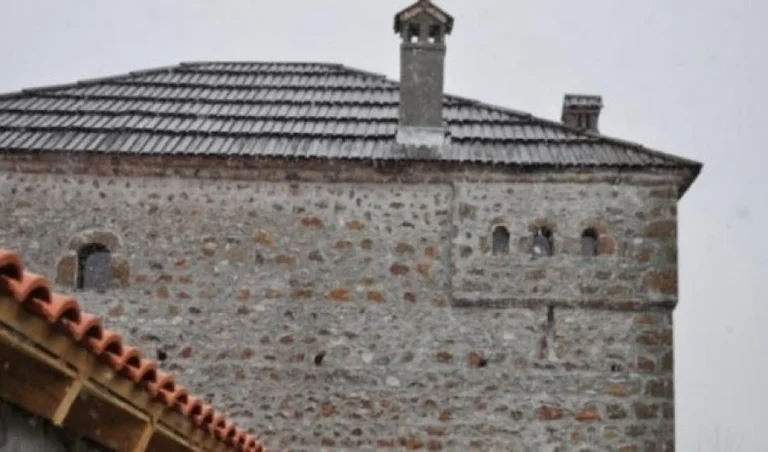
The Bujan Conference began on December 31, 1943, and ended on January 2, 1944. A resolution was signed there recognizing Kosovo’s right to self-determination, including secession, and the fulfillment of the desire of the Albanian people of Kosovo to unite with Albania.
The Bujan Conference was held as a reaffirmation of the new circumstances created after the Mukje Meeting, as well as a result of the exclusion of Kosovo and other Albanian areas under the rule of the former Kingdom of Serbs, Croats and Slovenes (the Bujan Conference), which was held precisely to oppose the decisions of the Second Session of AVNOJ in Jajce (November 29–30, 1943) and the exclusion of Kosovo as an independent entity, which until then had been represented through Montenegro in the National Anti-Fascist Council for the Liberation of Yugoslavia (AVNOJ).
Bujan was a place where representatives of two nationalities (Albanians and Serbs) met in hopes of reaching an agreement to prevent further interethnic conflicts. The Conference was held in the tower of Sali Mani, the Bajraktar of Krasniqe, located near the base of the Main Staff of the National Liberation Army of Kosovo and the Regional Committee for Kosovo and the Dukagjin Plain. It was attended by 49 delegates representing all the regions and social strata of Kosovo. Participants included communists, nationalists and other patriotic democrats, representatives of the Armed Forces, the youth and the anti-fascist women’s movement, etc.
Forty-nine delegates representing the people of Kosovo and the political forces aligned with the National Anti-Fascist Liberation Front of Kosovo took part in this conference. The Conference spent three consecutive days examining the problems arising from the war against the occupier. It elected a nine-member presidium: Mehmet Hoxha (chairman), former prefect of Elbasan; Rifat Berisha (vice-chairman); Pavle Joviqeviç (vice-chairman); Xheladin Hana (member); Fadil Hoxha (member); Hajdar Dushi (member); Zekeria Rexha (member); Milan Zeçari (member); and Ali Shukriu (member).
The Bujan Conference issued a final document, a resolution adopted at the conference, which stated: Kosovo and the Dukagjin Plain are a region inhabited predominantly by the Albanian people, who, as always, also wish today to unite with Albania. As Hajdar Dushi said, the formulation of such a position was based on the declarations of the Communist Party of Yugoslavia and the Anti-Fascist Council for the National Liberation of Yugoslavia, which recognized the principle of the self-determination of peoples, including secession—a fundamental principle of the Atlantic Charter, solemnly proclaimed by the allies of the anti-fascist coalition.
The resolution went on to emphasize that the common struggle with the other peoples of Yugoslavia against the Nazi occupier and its hirelings was the only way to win freedom, in which all peoples, including the Albanian people, would have the opportunity to determine their own fate, with the right to self-determination, including secession. This was guaranteed by the National Liberation Army of Yugoslavia and the National Liberation Army of Albania, with which it was closely linked. In addition to these, our great allies, the Soviet Union, England and America, guaranteed this (the Atlantic Charter, the Moscow Conference and the Tehran Conference).
Kosovo and the Dukagjin Plain are a region whose population is predominantly Albanian, and which, as always, still wishes to unite with Albania today. Therefore, we feel it is our duty to point out the true path that the Albanian people must follow to achieve their aspirations. The only way for the Albanians of Kosovo and the Dukagjin Plain to unite with Albania is through a common struggle with the other peoples of Yugoslavia.
In 1946, Tito told the American news agency Associated Press that Kosovo and other Albanian territories would be returned to Albania. The leader of former Yugoslavia, Josip Broz Tito, promised Enver Hoxha in 1946 that he would return Kosovo and other Albanian territories that were part of the Yugoslav federation. The Serbian newspaper Pravda writes that in 1946 Tito came close to “giving” Hoxha Kosovo and Metohija, as well as other Albanian territories. Little known to the world is the fact that the former Yugoslav leader had openly said: Kosovo and other predominantly Albanian territories would be returned to Albania, Shekulli reports, citing the Serbian newspaper.
“If the communists come to power in Albania, it (Kosovo) may come under the jurisdiction of Tirana,” the Yugoslav leader told “Associated Press” at the time.
“Albanian head of state Enver Hoxha always said that Tito had promised him at the end of June 1946 that Kosovo and other predominantly Albanian territories would become part of Albania. However, these statements were not given much weight, as relations between Tirana and Belgrade had always been tense,” the Serbian newspaper further writes.
Tito’s right-hand man, Edvard Kardel, according to some conspiracy theories, told Stalin during his visit to Moscow that Kosovo would be given to Albania, in return for its struggle against the occupier and its servants.
Related
History
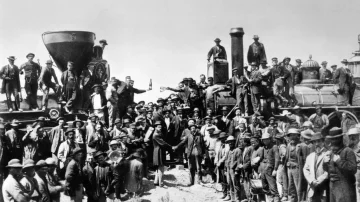
What Lincoln and the technological revolution he led can teach us today
History
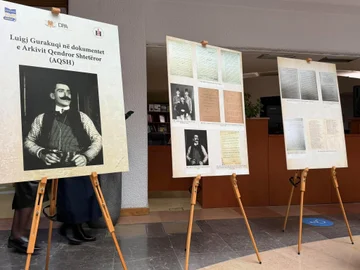
Exhibition “Luigj Gurakuqi in the Documents of the Central State Archive” Opens, Honoring His Contribution to Albanian National History
History
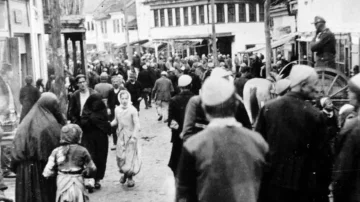
1941: When leaders of the Sanjak regions sought protection from Tirana
History
Was King Arthur, after all, real?
History
The 1973 oil crisis forced Nixon to rethink time
History
The Life and Work of Murat Bey Toptani
History
The Forgotten Photograph That Rewrites the History of the Second World War
History
The Pastor Who Saw Hiroshima Burning
History
An American physicist’s account of the atomic bombing of Nagasaki
History
Albania Judged by an English Lady
History
John Kantakouzenos’ Campaigns Against the Albanians
History
Albania as Judged by an Englishwoman





