
The Muslim population (Albanian and Bosniak) believed that the farther the people stayed from the occupier’s schools and culture, the better. But even those who wanted to educate their children lacked the financial means. Despite the great natural wealth and the vitality of the population, a marked economic and cultural backwardness prevailed in the Albanian-inhabited lands […]
Terror and Serbian State Violence in Kosovo and Sanjak Between the Two World Wars
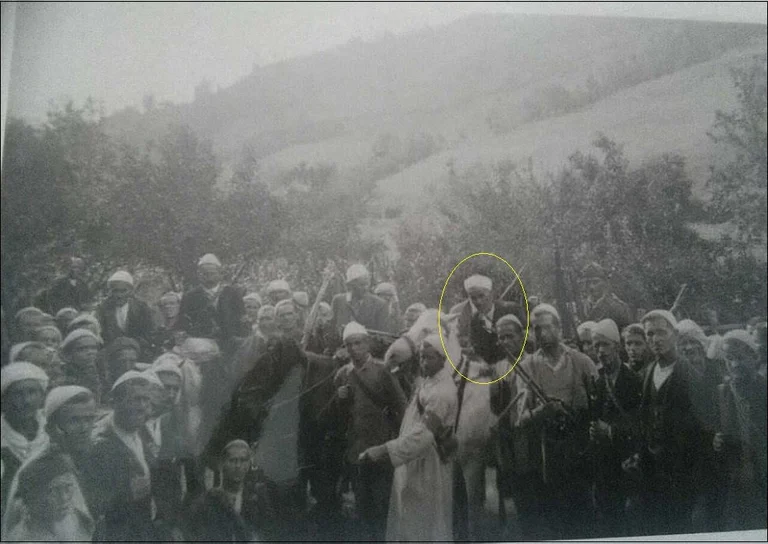
The Muslim population (Albanian and Bosniak) believed that the farther the people stayed from the occupier’s schools and culture, the better. But even those who wanted to educate their children lacked the financial means.
Despite the great natural wealth and the vitality of the population, a marked economic and cultural backwardness prevailed in the Albanian-inhabited lands. Unlike the other peoples of the Kingdom of Yugoslavia, Albanians were denied every cultural, democratic and human right.
Not only were Albanians denied schooling in their mother tongue, but they also faced all kinds of obstacles to receiving an education in Serbian. In 1939–1940, of the 37,885 primary school pupils in Kosovo, only 11,876 were Albanian, while in secondary schools the number of pupils was no more than 2% of all students. Teaching was conducted only in Serbian and Montenegrin. Under these circumstances, over 90% of the Albanian population was illiterate.
The situation in Sanjak was even worse for Bosniaks and especially for Albanians, who fought assimilation in various ways. Until the 1990s, that is, until the end of the 1980s, we had no analyses, writings or accurate data on the situation and position of Sanjak’s population. Among the first, and one of the few, was author Avdia Avdiq, who addressed this subject. Writing about Sanjak’s educational and cultural situation, he says: “It is difficult to speak about education, culture and healthcare in the period between the two world wars, especially from 1930 onward, when the population was almost entirely illiterate. Sanjak was known not only as an underdeveloped region, but also for its cultural and educational backwardness. In entire villages there was no one who could read a document, and people had to travel for hours to find someone who could. Novi Pazar was the city in what was then Yugoslavia with the highest number of illiterate people. According to the 1931 census, 60% of men over the age of 10 had no education, while the figure for women was 92%. It should be borne in mind that these figures concern the population as a whole, most of whom were rural people living in difficult conditions. There were also major differences between towns; for example, in the Tutin district, which was inhabited only by Albanians and Bosniaks, the illiteracy rate was 89%, while in Novi Pazar it was 63%. In Sanjak in particular, the Muslim population (Albanian and Bosniak) was almost entirely illiterate. It was rare for a Muslim woman to be educated. There were many factors behind this situation, ranging from the fact that the Muslim population did not want to accept Serbian literacy, while they had none of their own, to the belief that Muslims, especially Muslim women, did not need it.”
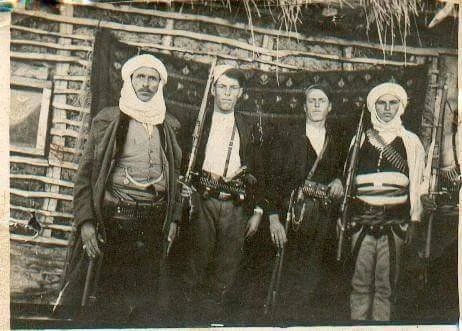
In the photo: The Popular Muslim Militia in Sanjak
In all of Sanjak, in 1931, there were only 127 four-grade primary schools. Schools were mainly located in large settlements, while the mountain villages, especially those in Peshter, were almost entirely without schools, and the population therefore remained completely uneducated.
At that time, there were only four four-year secondary schools (lower secondary schools) in all of Sanjak, which would be open for a time and then closed again. Novi Pazar had only one eight-grade lower secondary school; this school was later reduced to a four-year one, so that only Pljevlja had an eight-grade secondary school in all of Sanjak.
The schools had only small numbers of pupils. Parents were not interested in educating their children. They resisted sending their children to school. The Muslim population, in particular, did not send girls to school. This suited the rulers of the time. Influential people, especially in Peshter, even after 1935, asked their representative not to open schools in their areas. How such a thing was possible, I will try to explain further below.
The Muslim population (Albanian and Bosniak) believed that the farther the people stayed from the occupier’s schools and culture, the better. But even those who wanted to educate their children lacked the financial means.
Some Albanian children attended religious schools (mejteps and madrasas), which were mainly organized in mosques. In these schools, which had unsuitable premises, teaching was conducted mainly by unqualified imams, in a foreign language and using medieval methods. However, there were cases in which progressive imams with a strong national consciousness taught their pupils to read and write in their mother tongue.
The only secondary educational institutions that trained Muslim religious personnel were the two madrasas in Skopje: the King Alexander Madrasa and the Gazi Isa Beg Madrasa. The former was state-run and its teaching staff was better qualified, while the latter was a religious school run by the Islamic community. Alongside religious personnel, these institutions produced a generation of patriots, democratic intellectuals and fighters devoted to national liberation and unification, including the well-known intellectuals and writers Esad Mekuli, Hivzi Sylejmani, and others.
The National Movement in Kosovo, Sanjak and other Albanian regions during 1925–1941 developed in two main stages. The first stage covered 1925–28, and the second 1929–1941.
Although the Committee for the National Defense of Kosovo ceased its activities, and although the free zones were liquidated and the activities of Xhemijet were halted, the movement for national liberation and unification continued, mainly through the armed struggle of kaçak bands and other forms of resistance. The kaçak bands carried out armed actions against the army and gendarmerie in almost all Albanian territories.
After 1928, the intensity of the armed struggle declined. Nevertheless, during the movement’s second stage, the struggle continued in specific forms, such as the intermittent resistance of small kaçak bands, which also found refuge in Albania. During this stage, efforts were made to organize and coordinate the movement among former members of the Committee for the National Defense of Kosovo, Xhemijet, and the political émigré community. The former conducted propaganda and both illegal and legal activities—through memoranda and protests by Albanian deputies against the arbitrary actions of agrarian authorities and against forced displacement—while the latter, led by Hasan Prishtina, worked to submit memoranda calling for an end to violence, terror and genocide against Albanians and Bosniaks.
During the 1930s, there were spontaneous individual and collective uprisings against arbitrary actions and state violence. This period also saw armed actions by small kaçak bands. Toward the end of the 1930s, demands emerged that, alongside resolving the Croatian question, the Albanian question should also be resolved, at least within the framework of autonomy, although unification with Albania remained the principal aspiration. Various illegal associations and organizations were also established during this period, including those called “Kosmet” and “Besa.”
One form of illegal activity was the distribution of leaflets in Albanian, through which Albanian youth and students condemned the implementation of agrarian reform and colonization on the one hand, and called on the Albanian people not to abandon their lands on the other. Albanian peasants forcefully opposed almost all the actions to collect weapons that the Belgrade regime undertook in Albanian territories.
In addition, Sanjak was a multi-ethnic, multi-religious and multicultural environment, burdened by conflicts inherited from the past. In fact, mutual killings between Serbs and Muslims stopped only in 1929, when the last kaçak band was driven out of this part of Serbia, but sporadic cases of their activity continued until the beginning of the Second World War.
According to information held by the Museum in Novi Pazar, during the period between the two world wars, in addition to a large number of commercial premises (150), this city had quite a large number of artisans, although they were underdeveloped. In Novi Pazar, the number of craftspeople between the two world wars was also as follows: 34 barbers, 28 tailors, 33 shoemakers, 13 mitan makers, 10 abaya makers, 11 woodworkers, 8 tas makers, 10 razor makers, 5 wheelwrights, 7 cooks, 2 sahan makers, 6 skullcap makers, 4 nanla makers, 2 goldsmiths, 4 coppersmiths, 2 painters, 2 saddle makers, 11 millers, etc.
(The article is part of the Master’s thesis “The Diplomatic Role of Aqif Blyta in the Defense of Novi Pazar”)
Related
History
What Lincoln and the technological revolution he led can teach us today
History
Exhibition “Luigj Gurakuqi in the Documents of the Central State Archive” Opens, Honoring His Contribution to Albanian National History
History
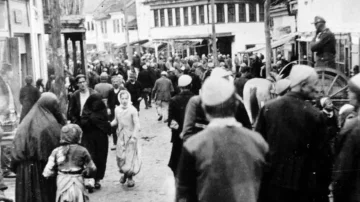
1941: When leaders of the Sanjak regions sought protection from Tirana
History
Was King Arthur, after all, real?
History
The 1973 oil crisis forced Nixon to rethink time
History
The Life and Work of Murat Bey Toptani
History
The Forgotten Photograph That Rewrites the History of the Second World War
History
The Pastor Who Saw Hiroshima Burning
History
An American physicist’s account of the atomic bombing of Nagasaki
History
Albania Judged by an English Lady
History
John Kantakouzenos’ Campaigns Against the Albanians
History
Albania as Judged by an Englishwoman





