
Few people are aware that before Korçë was founded as a city, the first forms of social organization emerged in several areas that today stand out for their centuries-old history as well as their traditions and culture. Before the “Little Paris,” Korçë’s culture began to flourish in the mountains surrounding the Korçë basin. Indeed, according to historians […]
From the Academy of Voskopojë to the City of Korçë
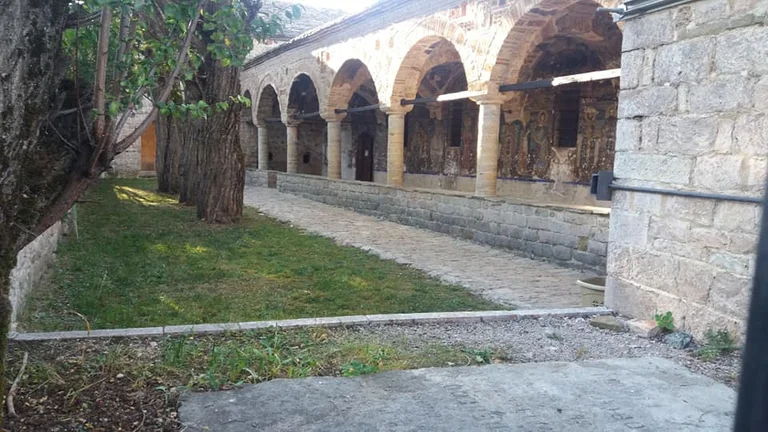
Few people are aware that before Korçë was founded as a city, the first forms of social organization emerged in several areas that today stand out for their centuries-old history as well as their traditions and culture. Before the “Little Paris,” Korçë’s culture began to flourish in the mountains surrounding the Korçë basin.
Indeed, according to historians, civilization contracted from Voskopojë toward the Korçë plain, where the city was established. Today, in an era of innovative technological development, Korçë, as the regional center, once again depends for its existence on the surrounding areas, such as Voskopojë, Dardha and Vithkuqi, the main destinations for tourism in the Korçë region.
Why Voskopojë?
Just 21 km from the city of Korçë, Voskopojë stands out for its history. Once a flourishing cultural center founded in 1330 and inhabited by Albanians, Aromanians and Greeks, Voskopojë became a cultural epicenter because the second printing press in the entire Ottoman Empire was established there.
The New Academy was founded there, along with an orphanage (the first in the post-Byzantine world), a hospital and 30 unique churches. Anastas Kavaljoti is thought to have prepared the first Albanian alphabet; he even wrote several treatises in Albanian, which have since disappeared. Voskopojë was destroyed in a series of fires: in 1769, by Muslim Albanian tribes from Dangëllia, who attacked it as a center of Orthodoxy, and in 1788, when Ali Pasha’s troops razed it to the ground once and for all.
The view offered to visitors from the Church of Saint Prodhom is astonishing, with the peaks of Lënie and Ostrovica visible in the distance. Voskopojë reached its greatest prosperity in 1764. At that time it had 25 churches with highly coveted frescoes, while now no more than 8 churches remain. In 1720, the town’s economy was based on handicrafts, textiles and trade between the neighboring countries of Greece and Turkey. It was first destroyed in 1769, a second time in 1789, and a third time in 1916.
Voskopojë preserves great treasures of medieval art. Today, 8 churches have survived in the village, none of which can be considered to be in good condition. The Church of Saint Elias is damaged and is expected to be taken over by a French association for restoration. The former Pioneers’ Camp in this area has for several years been transformed into the only place where visitors can find the necessary facilities for mountain tourism.
The hotel located at the former Camp, surrounded by numerous pine trees, has been named ‘Akademia’. Built in 1954, it has been restored in recent years, giving it a unique style in harmony with the surrounding nature, with a trail at the center of its grounds. The place is always frequented not only by active people who love nature and sports, but also by visitors who appreciate the peace and relaxation offered by its distance from the rest of the inhabited area. In winter, the Ski Slope operates and famous regional competitions are held. National championships have also regularly been held there.
In the heart of Vithkuqi
At a distance of 26 km, hidden among the mountains, lies one of Korçë’s greatest treasures, Vithkuqi. It has been known as a settlement since the Middle Ages. In the 17th century, it was one of the most developed centers in the region. It has cultural monuments such as the frescoes of the Monastery of Saints Peter and Paul, by the Zografi painters.
Vithkuqi is the birthplace of Naum Panajot Bredhi, an initiator of the National Renaissance and the author of “Evetari,” the first Albanian primer with 33 letters. In addition to the harmony between nature and its ancient cobbled streets, this village also offers a range of ecclesiastical destinations. The largest church in Vithkuqi is the Church of Saint Michael, built in 1728. Its interior features several frescoes, some of which are being restored. Family tourism has begun to develop, especially during the summer months, as visitors regard it as an excellent climatic retreat, just like Voskopojë.
Amid the natural attractions, traditional food and history as ancient as the village’s streets, one destination not to be missed is the Baptismal Grave. This grave belongs to a newborn child. It is called this because the child died before being baptized.
It is said that the parents wanted the priest to conduct the service in Albanian, but the priest insisted on Greek, and in the end he drove them out of the church, and the child died from the cold. For this reason, a magnificent grave was erected for the child, compared with the other graves of that time. For several years now, it has become a stopping point for tourists, and recently a book about its history was published by Artan Mullaj.
In the village of “those who left”
The village of rebels persecuted by the Turks for rejecting their religion, otherwise known as “The Village Beneath the Pear Tree,” is today one of the most popular destinations for tourists. Dardha has managed to become known throughout the country, not only for its nature and climate, but especially for its traditions, its way of life and the distinguished people it has given the country.
The village is relatively new, if we accept as such the three centuries for which we have historical records. It was founded and grew through those who had “left”—rebels who were persecuted and had scores to settle with the Ottoman government, often because they did not want to change their religion. These people, born with a rebellious spirit, found refuge in this remote mountain location and settled around a sheepfold situated beneath a wild pear tree. When asked “where are you?” they would simply say: “At the sheepfold beneath the pear tree,” from which the phrase “nëndardhë” emerged over time, soon shortened to “Ndardhë.”
Dardha takes pride in its origins, from its speech to its clothing, songs and dances. A study of the village’s architecture reveals a distinctive European-style model that is also found in other villages in the South. The appearance of the buildings and the village’s urban layout—with solid, beautiful buildings made of carved stone and covered with gray tiles, cobbled streets, numerous fountains, workshops for the main crafts and commercial establishments—gave the village the appearance of a flourishing small town until the early 1940s, although its population had by then dwindled to barely 1,000 because of emigration.
The village’s speech preserved some old forms of Albanian, similar to the Cham dialect, until recently. Its distinctive feature is the women’s red-and-black costume. It is so beautiful and unique that others have wanted to appropriate it. Some of the well-known women’s dances were created in Dardha. Speaking of its history, I can say that this village represents one of the beautiful examples of our national vitality, pride in our origins and traditions, as well as a desire to move forward and embrace the new. This fact offers one example of the resilience of this spirit: for 150 years, the people of Dardha studied Greek at school, but treated it simply as a foreign language.
In the past, it was a tradition in Albania for the oldest member of a family to teach the profession they practiced and pass it on to their brothers, sons or relatives. A typical example is an entire generation of painters from Dardha, who practiced the profession of icon painter and passed it down from generation to generation. This lineage of painters began with Nikolla Zengo in the second half of the 18th century and continues to painters from this family today, such as Andromaqi and Sofia Zengo. For these and other qualities, Dardha attracts hundreds of tourists every year, who choose to take refuge in a delicate haven of centuries-old history. (Konica.al)


Related
History
What Lincoln and the technological revolution he led can teach us today
History
Exhibition “Luigj Gurakuqi in the Documents of the Central State Archive” Opens, Honoring His Contribution to Albanian National History
History
1941: When leaders of the Sanjak regions sought protection from Tirana
History
Was King Arthur, after all, real?

History
The 1973 oil crisis forced Nixon to rethink time
History
The Life and Work of Murat Bey Toptani
History
The Forgotten Photograph That Rewrites the History of the Second World War
History
The Pastor Who Saw Hiroshima Burning
History
An American physicist’s account of the atomic bombing of Nagasaki
History
Albania Judged by an English Lady
History
John Kantakouzenos’ Campaigns Against the Albanians
History
Albania as Judged by an Englishwoman





