She, Nellie Bly, born in Pennsylvania on May 5, 1864, under the name Elizabeth Jane Cochran, did not need Jules Verne to see the famous ending of his novel “Around the World in 80 Days.” New York, 1889: Joseph Pulitzer, owner of “The New York World,” was surprised, almost mocking Nellie Bly’s proposal. “I can do it in fewer days!” Pulitzer hesitated; a woman? Impossible! Yet his journalist’s instincts did not fail him, and he accepted. Against all odds, Nellie set off with minimal, strictly limited luggage: a dress, paper, ink, a fountain pen, pencils. She did it! New York, London, Hong Kong, San Francisco, Chicago, New York again. Only by train and ship; there were no other means of transport in those days. Distance covered: 34,986 kilometers, hours of travel: 1,356, hours lost to delays: 377, days: 72! Eight days less than Phileas Fogg, with two bonuses: she met Jules Verne at his home in Amiens, and her dispatches from every country doubled the newspaper’s circulation.
The Story of the Girl Who Circled the World in Less Than 80 Days
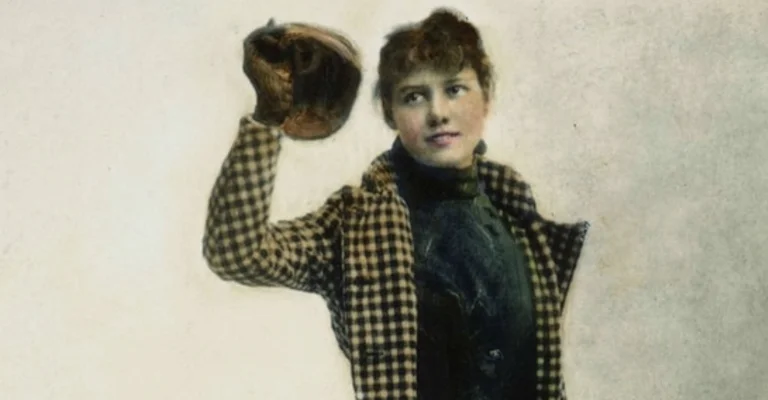
She, Nellie Bly, born in Pennsylvania on May 5, 1864, under the name Elizabeth Jane Cochran, did not need Jules Verne to see the famous ending of his novel “Around the World in 80 Days.” New York, 1889: Joseph Pulitzer, owner of “The New York World,” was surprised, almost mocking Nellie Bly’s proposal. “I can do it in fewer days!” Pulitzer hesitated; a woman? Impossible! Yet his journalist’s instincts did not fail him, and he accepted. Against all odds, Nellie set off with minimal, strictly limited luggage: a dress, paper, ink, a fountain pen, pencils. She did it! New York, London, Hong Kong, San Francisco, Chicago, New York again. Only by train and ship; there were no other means of transport in those days. Distance covered: 34,986 kilometers, hours of travel: 1,356, hours lost to delays: 377, days: 72! Eight days less than Phileas Fogg, with two bonuses: she met Jules Verne at his home in Amiens, and her dispatches from every country doubled the newspaper’s circulation.
She became famous, but she had been born a journalist. Her father, Michael, was a miller and earned a low wage. Her mother, a homemaker, had barely completed six months of college; there was no more money. In the midst of this poverty, an ace appeared up her sleeve. She read an article in the “Pittsburg Dispatch” advising women not to study or work, but to occupy themselves with housework. She wrote the editor a letter of protest, signing it “the lonely orphan.” The editor liked the quality of her writing and hired her as a reporter, but assigned her to the dull women’s pages—gardening, decorating, child-rearing, and so on, reports Bota.al
She moved to New York, sought work at Pulitzer’s “The New York World,” and he assigned her to write an article about a women’s asylum on Blackwells Island. She came up with another plan. She imagined that the classic question-and-answer approach would be a failure, and that conditions at the asylum would be appalling, while she would receive only false, sugar-coated information. She decided to show life from the inside. It was not easy to get in; saying she was crazy and waiting to be admitted seemed delirious in itself. She found a way: she took up residence at a boarding house for working women on Second Avenue under the name Nellie Brown and integrated herself into the boarding house’s routine, while feigning signs of distress such as staring eyes, confusion, and screams at night. “I’ve lost my trunks. I need them. My home is in Cuba…”
The landlady called the police: “I have a very strange lodger. I believe she’s insane.” She was arrested and questioned by Judge Duffy. Nellie kept insisting about her lost trunks and her home in Cuba. Diagnosis: deranged, a hopeless case. The judge ordered her committed to the Blackwells Island asylum. That was the first step…
The food: a cup of tea all day, cold meat without salt, a potato, oatmeal, and a slice of bread without butter. They cut her nails, as they did for all the patients. She soon understood the slogan, “You’ll never get out of here.” It was hell. The menu was repeated: a red thing they called tea, in metal cups like those used for dogs; a slice of greasy bread with butter; five prunes. The bath: once a week, with cold water and a piece of soap—and on other occasions without soap—all the patients in each ward, around 20 of them, using the same water until it darkened and thickened.
Punishments: long hours naked in the ward doorways in the bitter cold. Only 16 doctors for 1,600 patients. The bed: rubber and a sheet on top, another sheet over that, and a wool blanket. In the event of a fire, it was a deadly trap. All the doors and windows were locked. The nurses were tyrannical and lazy. Nellie’s notes: “This asylum is a human trap… for mice.” Her article “Ten Days in a Madhouse” caused controversy. The newspaper tripled its circulation, and the city of New York allocated millions of dollars to improve conditions in that place worthy of Gothic novels. Nellie Bly became a star. In the same way, she exposed the exploitation at a cleaning agency by applying for work under the name Sally Lees. The agency was a filthy business. Girls had to pay one dollar for a position as a waitress, nurse, or seamstress, with a wage of 14 dollars a month, in addition to doing the washing and ironing required by the household they were assigned to. The girls also paid for lodging—in short, they worked just for a filthy roof over their heads, often while enduring sexual harassment from the householders. Her report caused a scandal, but changed nothing.
She wrote: “I climbed the narrowest, darkest, steepest stairs and had the bad luck to arrive in an unventilated room that reeked of the worker who loaded the crates. The hours were from 7 in the morning until 6 in the evening for 3.5 dollars a week, barely enough to rent the room with its low ceiling, and we were not paid until we had learned the trade.” She titled her article “White Slaves.” In 1895, at the age of 31, she married the millionaire Robert Seaman (73), owner of the “Iron Clad Manufacturing Company,” which manufactured metal boxes, garbage cans, and boilers. It was a short marriage: Robert died nine years later, and Nellie left journalism to devote herself to the factory. At its helm, she introduced several sanitary measures. She reduced working hours and improved wages. Nevertheless, the factory went bankrupt because she failed to balance humanitarianism with production, sales, and finances. She returned to journalism. Now writing for another newspaper, she made her influence felt with articles supporting women’s suffrage and covering events from the throne of birth to the First World War. She was one of the first female war correspondents.
She died of pneumonia in 1929 at the age of 57. In Brooklyn, she is remembered by an amusement park that bears her name. In 1998—very late—she was inducted into the “National Women’s Hall of Fame.” Circling the globe in less than 80 days, and faster than Verne’s character, was not her greatest achievement. She left her mark, pioneering investigative journalism seven decades before Tom Wolfe, Truman Capote, Gay Talese… and a long list of others; she was the woman who entered a newspaper with a letter signed “the lonely orphan,” and who, at the age of 25, became acquainted with the filth and pain of madness.
Related