
It is interesting how Faik Konica describes the end of Ahmet Zog’s rule. In his manuscripts found in the Vatra archive, the way he judges this period is among the most realistic assessments. Shqiponline is publishing Konica’s perspective on this period in Albania’s history below: On the Black Friday of April 7 […]
Faik Konica: How Zog’s Albania Came to an End
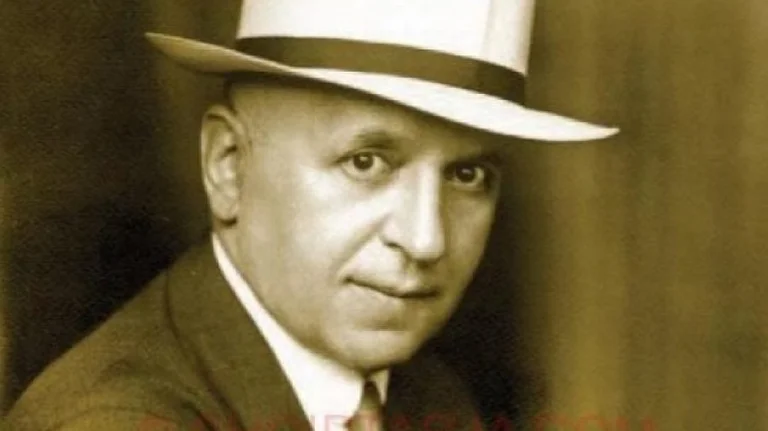
It is interesting how Faik Konica describes the end of Ahmet Zog’s rule. In his manuscripts found in the Vatra archive, the way he judges this period is among the most realistic assessments. Shqiponline is publishing Konica’s perspective on this period in Albania’s history below:
On the Black Friday of April 7, 1939, while Queen Geraldine was ill in bed, having given birth to a son two days earlier, the Fascists, without any warning, without any prior provocation and without declaring war, invaded Albania, an unarmed country nearly fifty times smaller than the aggressor.
This “glorious” deed aroused the envy of King Zog of Albania, who, eager to perform a similar act of heroism, fled at the first shot, leaving the Albanians to fight against innumerable hordes.
The contempt of the civilized world for the aggressors was greater than its terror of them, insofar as that world restrained itself and, moved by compassion, did not express its opinion of the Albanian deserter.
At that time I was Albania’s diplomatic representative in Washington, where I had been appointed in 1926 as the delegate of my country, whose rebirth I had worked for since childhood. The American government, which did not recognize territorial changes made by “gangster methods,” continued to regard me as Albania’s lawful representative. Moreover, this position regarding my status was further facilitated by the fact that the Fascists, who initially played the part of Albania’s “liberators” and not violators of its freedom, took care to create a puppet Albanian government, with its own diplomatic missions.
But the Italians, who, although they occupy a place of great honor in the history of culture, sometimes give the impression of being more clever than intelligent. Known as they are for their impatience, they could no longer tolerate a disguised situation that benefited them, since it concealed with a veil the violence they had inflicted on Albania; thus, in mid-June, the puppet government in Tirana was ordered to close all Albanian missions and consulates abroad.
At the same time, the representatives of various nations accredited in Tirana were suddenly informed that their diplomatic status was no longer recognized. A little later, to be precise, on June 24, 1939, the Secretary of State summoned me to the State Department and informed me that, on the basis of reciprocity, he was obliged to consider my mission concluded.
Mr. Cordell Hull, who was showing himself to be even more humane than usual, seemed to read in my eyes my astonishment at the blatant discrimination against Albania, compared with Czechoslovakia, whose representative continued to be recognized as the lawful representative of his nation. Mr. Cordell Hull explained this differential treatment by saying that “the changes in Czechoslovakia had occurred suddenly,” whereas in Albania, the change had come about gradually.
I do not doubt that this explanation may have been justified, but I must confess that I could not understand such a thing. Nevertheless, I did not think it appropriate to ask for clarification. After listening in silence from the beginning, I thanked the Secretary of State for all the courtesies he had extended to me during my service and left.
It must be said that this melancholy epilogue saddened me for my country’s future, but I must admit that, at the same time, I felt relieved. The position of a man recognized as the lawful representative of a country, without representing its actual government, causes many difficulties. It brought to mind that actor of Schopenhauer’s who kept playing his part even after the curtain had fallen. I also felt more relieved because my ties with Zog had long since been severed.
Zog had never been an easy ruler to put up with, but in his final years he had become intolerable. Naturally endowed with certain notable qualities, at first he was able to mask his many shortcomings, until one success after another made him lose his self-control, whereupon he emerged as a wandering and treacherous barbarian. But, whether we like it or not, he remains an interesting and enigmatic character, an indiscriminate mixture of various contradictions, half hero and half buffoon, who will interest both the collector of strange historical facts and the student of psychology.
I have been repeatedly urged to write a book about this interesting personality. I hesitated for a long time, mainly because I was busy writing a history of Albania, which required laborious research, including in the unpublished manuscripts held in Europe’s libraries.
Nevertheless, in my free time, I would glance at the Elizabethan authors (as I still do from time to time). It seemed to me that I had found a portrait of Zog in Shakespeare’s King John, or in Marlowe’s “The Young Martyr,” or in that same author’s “The Jew of Malta.” In short, Zog, who had never attracted me as a statesman, finally aroused my interest as a subject for dissection. “The die is cast.” I feel that I must write something about him.
Perhaps readers may think that I began criticizing Zog because he had fallen from power. Assumptions sometimes prove correct, but in this case such an assumption is entirely wrong. I criticized Zog even when he was in power; I did so without pause, from 1922 to 1939, in open conversations and in the press, even when I was his minister, and so much so that I expected to be dismissed every day, and everyone wondered how he put up with me. To illustrate what I have said, I will present some facts here.
In February 1934, Zog was fortunate to escape an assassination attempt in Vienna. I will not weary the reader or myself by presenting statistics here. Those with a good memory may recall the headline, in large letters, in the press. I expressed my disapproval of this despicable assassination attempt, even though it may have been inspired by misguided patriotism.
When the trial began, the defense used quotations from my writings, in which it was said that Zog was nothing but a small, ignorant despot. Taken out of the general context, whose purpose was to turn Zog’s mind and actions in a better direction by making constructive and carefully considered criticisms, those quotations reportedly helped the accused escape with a light sentence.
In 1938, Zog’s three kind and attractive sisters visited the United States. I did my utmost as their escort, philosopher, and friend. Before I parted from them, the seventy-year-old Abdurrahman Salihu, an old friend of the Zog household who had come as the princesses’ escort, expressed his gratitude for my care.
The king himself, he said, could not have done more for his sisters. Then the kind-hearted old man told me that, if I wished, I could give him an oral message for the king; “do you promise to deliver my message without changing a single thing?” I asked him. The old man gave his word that he was willing. “Very well, then,” I said, “let the king know that my criticisms will remain confined to Albanian circles; outside these circles I will defend the regime with all my might. I will continue to serve him loyally and wholeheartedly, because I am his representative and he is the head of the Albanian state. But personally, I feel the greatest contempt for his character.” Abdurrahman Salihu was left speechless.
“Do you really want me to repeat everything you said?” he asked. “You promised, and you must keep your word,” was my reply. “I will keep my word, but…” the old man added after a pause, “can you tell me why you have such a poor opinion of the king?” “With pleasure,” I calmly replied. “I despise the king for these reasons: I have known him since he was eighteen, but I have never heard him tell the truth. He has never kept his word. He has no sense of responsibility whatsoever.
He is insatiable, selfish, hard-hearted, dishonest. He hates everyone who has something, whether it be culture, family background, wealth, some ability in any field, or simply because they are honest patriots. He does not value the important things, but attaches importance to empty matters. In the past, Albania was always known as a nation with a certain tragic dignity; he has reduced Albania to the level of a worthless musical farce.”
Naturally, the articles published in the press under my name did not have the tone of the statement I made to the good old man Abdurrahman. They appeared from time to time in “Dielli,” the best and most reputable newspaper in the Albanian language, published in Boston, Massachusetts, since 1909.
As soon as “Dielli” arrived in Albania, if that issue contained something written by me, people crowded to get a copy. If the police had confiscated a particular issue, as often happened, a copy of it could sell for as much as twenty gold francs (equivalent to seven dollars at today’s exchange rate). This shows the great interest in that newspaper, considering that hard currency is scarce in Albania.
In the August 22, 1938 issue of “Dielli,” I published an article under my own signature about the various forms of government; the article concluded with these words: “The monarchy in Albania has two kinds of enemies: those who praise it excessively, everywhere and for no reason, and those who make it ridiculous with various celebrations. If we love the monarchy, let us try to give it seriousness and dignity, setting aside carnival festivities.”
It is necessary to add that the only person responsible for those carnival festivities was Zog himself. In truth, Zog’s entire kingdom was nothing but one long carnival, with a tragic ending.
Strangely enough, as soon as he came to power, the former king of Albania changed his name. Born Ahmet Zogolli, son of Xhemal Zogolli, chieftain of the Mat district, he later became Ahmet Zogu and, in the final stage of his turbulent career, gave himself the title “King Zog.” In any case, his political career in the new Albania may be regarded as a minor historical episode. He was born on October 8, 1895, in the village of Burgajet in the Mat region and came from a family of government officials for generations. He was sent to school in Istanbul as a child, but his education was interrupted in 1912, when Albania was liberated from Turkey.
He made up for his lack of education with intelligence and quick-wittedness. Zog began to attract notice in 1914, when Prince Wilhelm von Wied (Vied), king of Albania for six months, found himself in difficult circumstances with his subjects. As leader of the Mat region, Zog placed himself at the head of 2,000 men and proposed that they go to the Prince’s aid. Although he failed to keep his promise, he extorted many hundreds of napoleons from the unfortunate monarch.
During the First World War, when a large part of Albania was occupied by Austro-Hungarian troops, Zog collaborated with the occupiers, but the Austrian officers began to notice a certain unease in the young leader. The death of Emperor Franz Joseph in 1916 gave them an opportunity to remove him from the scene, and they sent him to Vienna to attend the coronation of Emperor Karl. Zog was kept there until the end of the war. This was his first contact with the Western world, where he received his higher education, learning German and closely observing prominent Western politicians.
It is interesting to imagine what impressions the coronation ceremony of Emperor Karl may have left on the young highlander’s imagination; perhaps it was there that the idea first occurred to him that one day he too might place a king’s crown on his head. Strangely enough, as soon as he returned to Albania after the war, he embarked on the path that would make him king. He seized power by truly Machiavellian methods, although it is not known whether or not he had read the teachings of “The Prince.”
When Zog returned to Albania, he found the small country devastated by the war and in political chaos bordering on anarchy. This gave him the opportunity to make good use of the 2,000 highlanders who were ready to follow him into any adventure. Moreover, Albania’s troubles were not only internal, since the country was also threatened with partition by its neighbors. This crisis forced the Albanians to postpone their disagreements with one another.
On January 21, 1920, they gathered at the historic Congress of Lushnjë, where they relied on President Wilson’s principle of “self-determination” for nations and declared their “besa,” swearing that they were ready to die to preserve the country’s territorial and political integrity. It should be mentioned here that the area where the Congress of Lushnjë convened was still occupied by the Italians, and the only forces protecting the leaders were Zog’s loyalists.
With the formation of the government at the Congress, Zog became minister of the interior, a position that gave him control over the gendarmerie and police. From then on, he rose like a meteor: prime minister in 1923, president in 1925, and finally king in 1928. It is interesting to note that every step he took, from minister of the interior to king, was carried out “according to the constitution.” Only one person opposed his rise to power, and that was Bishop Fan S. Noli, who had been educated in America.
The Bishop placed himself at the head of the country’s liberal forces, most of whom had experienced democracy in America. Moreover, he was looked upon favorably by the peasants, who made up 95% of the population, as the only man capable of leading the country toward progressive and democratic reforms.
In June 1924, in a spontaneous uprising against the dark forces of reaction, Fan Noli forced Zog to leave the country. But six months later, Zog returned to Albania with military aid from his Yugoslav neighbors and the approval of England, Italy, and Greece. His “triumphal” return to Tirana marked the definitive end of Bishop Noli’s political career. During his turbulent career, two assassination attempts were made against Zog.
One took place on February 23, 1924, as he was climbing the steps of parliament. A young student named Beqir Valteri fired twice and wounded him in the hand, but Zog entered the assembly hall as if nothing had happened. The second assassination attempt took place in Vienna on February 21, 1931, where he had gone for medical treatment. They fired at him as he was leaving the Opera House, where “Pagliacci” was being performed. One of Zog’s adjutants was killed, but Zog himself escaped.
Summing up his entire career, several things speak in his favor. First of all, he gave the country a visible unity by establishing order over anarchy and, as some wise people have observed, tyranny is preferable to anarchy. Then he saved the country from banditry and lawlessness, a deed much appreciated, as can be understood from these words that circulated “sotto voce” in the cafés: “There really are no more bandits in Albania, because they have all gathered in Tirana, where they rob with authority from behind their desks.” Finally, although he was himself a bey, he greatly reduced the power of the beys. He did this mainly to strengthen his personal power.
On the negative side were an administration marked by corruption and incompetence, since he was surrounded by people without character, knowledge, or even the most ordinary honesty. Freedom of speech and of the press had disappeared entirely, and his spies, who were everywhere, terrorized the people. Although ignorant of economics, he was shrewd in his own affairs. He took three percent of state revenues for himself in the form of salary and bonuses, but most of his fortune, which amounted to five million dollars, came from the bribes Mussolini gave him for the political and economic concessions he had granted Italy.
Zog’s reputation as a skilled negotiator can be summed up in these words of a former United States minister in Tirana: “It was easy to buy Zog, but he would not stay bought.” On May 7, 1938, Zog married Countess Geraldine Apponyi of Hungary, with Count Galeazzo Ciano, Italy’s foreign minister and son-in-law of the invincible Mussolini, as his best man.
A year later, on April 5, 1939, a son was born to him. Two days later, on a Black Friday, while Christendom had fallen to its knees before the Prince of Peace, Mussolini’s Christian legions crossed the Adriatic and swooped down upon the small country. Although he was not lacking in animal courage, when the time came to exercise it, on that fateful Black Friday, Zog’s nerves failed him and he abandoned the country. It is significant that the Italians made no attempt to capture him as he crossed the border into Greece.
Since Italian aircraft could easily track his convoy, it may be thought that Mussolini let “escape” the man he had once kept under his protection. Had Zog decided to remain with his people and fight the occupier from the mountains, he would have repeated the era of Skanderbeg in the twentieth century, won the admiration of the whole world and the gratitude of his people. Instead, he chose to run away.
Zog spent the war years in England, but his hands were completely tied politically, since England had promised Greece southern Albania as a reward for its resistance against the Italians in 1940. Toward the end of the war he went to Egypt, where he was warmly received by former King Farouk.
A year or a little later, when Colonel Gamal Abdel Nasser came to power, Zog was stripped of his royal privileges. Finally, the atmosphere of Egypt’s revolutionary government became unbearable to Zog, so he left the land of the Pharaohs.
Now he lies gravely ill in France, a victim of serious heart disease, watching Albania ruled by the very people he had mistreated and terrorized during his reign. Sic transit gloria mundi
Related
History
What Lincoln and the technological revolution he led can teach us today
History
Exhibition “Luigj Gurakuqi in the Documents of the Central State Archive” Opens, Honoring His Contribution to Albanian National History
History
1941: When leaders of the Sanjak regions sought protection from Tirana
History
Was King Arthur, after all, real?
History
The 1973 oil crisis forced Nixon to rethink time
History
The Life and Work of Murat Bey Toptani
History
The Forgotten Photograph That Rewrites the History of the Second World War
History
The Pastor Who Saw Hiroshima Burning
History
An American physicist’s account of the atomic bombing of Nagasaki
History
Albania Judged by an English Lady
History
John Kantakouzenos’ Campaigns Against the Albanians
History
Albania as Judged by an Englishwoman





