
How misguided strategies cost companies millions of dollars. Nobody is perfect, not even the greatest minds or multimillion-dollar organizations. This has been proven time and again through various mistakes made by corporate giants, which later turned out to be blunders. These disasters should not be taken lightly, as they contain some of the best marketing lessons. So […]
The 10 Biggest Marketing “Disasters” in History
How misguided strategies cost companies millions of dollars
Nobody is perfect, not even the greatest minds or multimillion-dollar organizations. This has been proven time and again through various mistakes made by corporate giants, which later turned out to be blunders. These disasters should not be taken lightly, as they contain some of the best marketing lessons. So, let’s take a look at the 10 biggest marketing disasters in history.
- In 1992, the Hoover Company offered free airline tickets with purchases of more than £100 of its products, but the offer cost the company nearly £50,000,000 after an overwhelming response from customers who were more interested in getting the free flight than buying Hoover products.
In the 1990s, the British division of the Hoover Company had a surplus of washing machines and vacuum cleaners in its warehouse. To sell them, Hoover began a marketing promotion in August 1992. Under Hoover’s free-flight promotion, purchasing £100 worth of Hoover products would make customers eligible for two round-trip tickets to Europe. Later, the flight destinations were expanded to include the US. The actual cost of the same flight was several times more than £100. So, it was a very cheap deal.
Soon, hundreds of people flocked to Hoover stores to take advantage of the offer. Hoover never anticipated such a huge response and was overwhelmed by demand, which meant it could not keep its promise. This prompted customers to sit up and take notice, and Hoover quickly landed in their bad books. Later, a BBC reporter investigated and secretly filmed the loopholes. Armed with evidence, the BBC created a documentary, “Hoover Fiasco Flight,” and broadcast it. The documentary led to the dismissal of a number of senior Hoover executives and a loss of £50 million for the company.
- Red Lobster lost $500,000 every week during a seven-week all-you-can-eat promotion in 2003. Having underestimated Americans’ appetites, each restaurant began losing money on the third plate of crab legs served.
In 2003, seafood restaurant chain Red Lobster launched its new all-you-can-eat promotion under the direction of its then-head, Edna Morris. As part of the promotion, Red Lobster offered an unlimited supply of crab legs for a $20 fee. Along with the crab legs, it also offered a selection of side dishes. For seafood lovers, it was a godsend.
When Red Lobster executives announced the deal, they believed people would not eat more than three plates of crab. Their underestimation soon became apparent as people sat for hours, ordering plate after plate of crab legs. At the same time, the price of crab began to rise. Soon the seafood chain began to suffer major losses. In the end, the seven-week promotion left the company with a net loss of $3.3 million.
- In 1981, American Airlines offered unlimited first-class tickets for a one-time fee of $250,000. One first-class pass holder took more than 10,000 flights, costing the company $21,000,000.
The AAirpass was a discount program offered to its members by American Airlines. It was launched in 1981 and was intended to reward the company’s most loyal customers with a gift card. According to American Airlines, pass holders would have unlimited access to first-class travel for life.
The pass cost $250,000, and a companion pass could be obtained for another $150,000. It was a huge amount of money, especially considering that this was three decades ago. American Airlines believed it was a good deal that would keep its loyal customers tied to the company. A man named Steve Rothstein bought the pass in 1987 and took 10,000 flights, traveling more than 10 million miles. In another case, a Dallas-based marketing executive bought the card and traveled nearly 38 million miles. His AAirpass was later revoked after he was caught selling his seat on the plane.
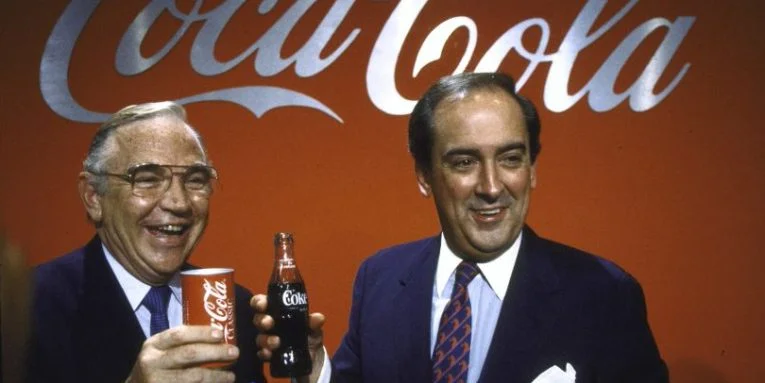
- In response to rival company Pepsi’s Pepsi Challenge advertising campaign, Coke scrapped its old formula and introduced a new product called New Coke. But consumers didn’t like the new taste, leading to a sharp drop in sales, and the old formula was quickly reinstated.
The biggest disaster for the Coca-Cola Company began on April 23, 1985, when it changed its century-old secret formula and introduced New Coca-Cola. Coke took this step when its rival Pepsi began expanding its sales in Coke’s market share. According to market research and surveys conducted by Coke, the new product was expected to be a hit. But reality took a turn, and consumers did not like it.
Coca-Cola fans were furious and began campaigns to bring back the original version. On July 11, 1985, Coca-Cola held a press conference and officially announced the return of the old version.
- In 1994, as part of a promotional campaign, Fiat sent 50,000 anonymous love letters to young women in Spain, intending to reveal its identity after four to five days. The campaign backfired and, instead of curiosity, spread panic and fear among women who thought they were being stalked.
When Italian carmaker Fiat decided to expand its market in Spain, it took a unique approach. Instead of an advertisement or another form of marketing, the company sent love letters to women in Spain. Fifty thousand pink letters were sent, each addressed personally to its recipient. The letter contained complimentary words about the woman, inviting her to enjoy a “little adventure.” It also said, “I should be alone with you for just a few minutes and, even if things don’t work out between us, I promise you won’t forget our experience together.” The catch: all the letters were sent anonymously.
Fiat was planning to send a second letter a few days later. The second letter would explain who the writer was, i.e. Fiat, and suggest a test drive.
But when they received the first letter, most women were frightened, believing it had been sent by a stalker. Many women across the country complained to the police. Fiat soon apologized and stopped the campaign. Later, Fiat was fined for sending the letters and was also ordered to pay damages to a woman who had taken the case to court.
- Hyundai’s suicide advert, which showed a man failing to kill himself in a car, was fiercely condemned after a blogger denounced it and published her father’s suicide note; he had died in a similar way.
In 2013, Hyundai launched a television advertisement showing a man attempting suicide in a car. But the man fails in his attempt because the car’s exhaust emissions are 100% water, as it is a fuel-cell car, not a diesel or gasoline car. The advertisement was praised by the UK advertising media. But it lost viewers as soon as it was released. The biggest backlash came from Holly Brockwell, a copywriter.
Holly’s father had previously committed suicide in his car using the same method shown in the advertisement. So the advert brought back a flood of negative emotions for Holly. She wrote a letter on her blog condemning the advert. She also included an image of her father’s suicide note. The blog post spread like wildfire and went viral. As a result, Hyundai took down the video and apologized. Hyundai also stated that the video would not be used in any future advertising or marketing.
- The Tata Nano, built in India and the world’s cheapest car, became a sales disappointment because, in a country where a car is a luxury good that signifies prestige and status, people perceived the Tata Nano as too cheap.
When the Tata Nano was launched in India, its purpose was to bring a vehicle to the masses. Priced at $2,400, the Tata Nano was easily affordable even for those with lower incomes. Before it went on sale, Tata Group Chairman Ratan Tata had set a sales target of 20,000 per month. But after its launch, sales figures were nowhere near the target.
The main reason for the Tata Nano’s decline was its marketing. The Tata Nano was launched in India as the cheapest car available. But for Indian people, a car is a luxury, not a commodity. So the more expensive a car is, the more prestigious a person feels. In such a society, owning the cheapest car was considered a stigma, and so people refrained from buying the Tata Nano even though many could afford it.
- In mid-2008, Dr Pepper offered everyone in the US a free can if Guns N’ Roses released their album Chinese Democracy in 2008. On the day the album was released, they reneged on their promise, spoiling the album’s release day, and were threatened with a lawsuit by Axl Rose.
The making of Guns N’ Roses’ Chinese Democracy album began in 1994. Fourteen years later, in 2008, the album was still in production. People began to believe the album would never become a reality, much like actual Chinese democracy. So, in 2008, American soft-drink giant Dr Pepper issued a statement saying it would provide a free can of its drink if the album was released by the end of 2008.
To everyone’s surprise, Guns N’ Roses released Chinese Democracy on November 23, 2008. To honor its promise, Dr Pepper created a 24-hour offer that same day. The website offered a coupon that could be redeemed for a free can of Dr Pepper. But many people complained that the coupon was inaccessible for most of the day. In the end, Dr Pepper’s free-can promotion proved inadequate and affected the album’s release. Two days later, on November 25, 2008, Guns N’ Roses lead singer Axl Rose threatened the company with a lawsuit and demanded a full-page apology.
- In the 1970s, Nestlé aggressively distributed free samples of infant formula in Third World countries, encouraging mothers to use its formula instead of breastfeeding, which resulted in hundreds of thousands of infant deaths in Africa.
Nestlé’s marketing of milk-based baby food began in the late 1800s. Infant formula was marketed as a substitute for breast milk, and Nestlé successfully convinced millions of mothers that bottle-feeding was better than breastfeeding. The biggest impact of infant formula was seen among babies in the Third World.
In poor countries, due to a lack of sanitation, formula was often mixed with unclean water, causing serious harm to babies’ health. Because of illiteracy and a lack of money, many mothers used less formula powder, so babies received inadequate nutrition. Also, antibodies and some nutrients found in breast milk were missing from infant formula. All these factors caused illness and the deaths of many children in Africa and other developing countries. This gave Nestlé a bad reputation, and it was dubbed the “Baby Killer.” In 1977, a boycott was launched in the US, which spread to Europe.
- As part of a promotion, Lifelock’s CEO published his Social Security number in product advertisements to promote his company. But this led to his identity being stolen 13 times, and the company was later ordered to pay $100 million for misleading advertising.
Lifelock is an American company that offers identity theft protection. It was founded in 2005 by Todd Davis and Robert J. Maynard. When Lifelock began promoting its services in 2006, it was so confident in its product that, as a symbol of trust, CEO Todd Davis’s Social Security number was featured in its advertising. In 2007, its security system failed, and Todd Davis himself became a victim of identity theft. The crime came to light when a telephone company called his wife about an unpaid debt. After an investigation, it was discovered that someone had used Todd Davis’s identity and obtained a $500 loan.
Four months later, Davis’s identity was stolen again. The person who stole it used it to open an AT&T/Cingular wireless account and ran up a bill of $2,390 that remains unpaid. Later, Davis’s identity was stolen another 11 times. (Scan TV)
Related
History
What Lincoln and the technological revolution he led can teach us today
History
Exhibition “Luigj Gurakuqi in the Documents of the Central State Archive” Opens, Honoring His Contribution to Albanian National History

History
1941: When leaders of the Sanjak regions sought protection from Tirana
History
Was King Arthur, after all, real?
History
The 1973 oil crisis forced Nixon to rethink time
History
The Life and Work of Murat Bey Toptani
History
The Forgotten Photograph That Rewrites the History of the Second World War
History
The Pastor Who Saw Hiroshima Burning
History
An American physicist’s account of the atomic bombing of Nagasaki
History
Albania Judged by an English Lady
History
John Kantakouzenos’ Campaigns Against the Albanians
History
Albania as Judged by an Englishwoman





