
His mother had died of cancer. Years later, he and his colleagues won an important battle in the fight against this disease. It sounds like the narrative arc of a book or film protagonist—the hero who sets out to exact “personal revenge” on his nemesis, in this case, the emperor of all maladies, as Siddhartha Mukherjee calls cancer. […]
Science Against Cancer… and “Politics”
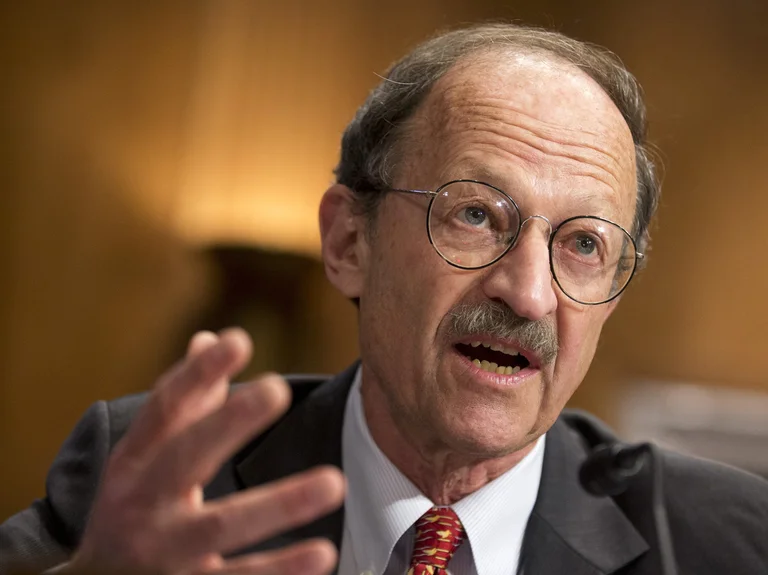
His mother had died of cancer.
Years later, he and his colleagues won an important battle in the fight against this disease.
It sounds like the narrative arc of a book or film protagonist—the hero who sets out to exact “personal revenge” on his nemesis, in this case, the emperor of all maladies, as Siddhartha Mukherjee calls cancer.
Calm and composed, phlegmatic and measured, Harold Varmus does not like this way of looking at things, in the interview he recently gave to Klan Kosova.
Varmus sees this moral and scientific triumph as something accomplished for the community as a whole, without risking reducing it to a narrow motive arising from personal pain or limited family experience.
He and his colleague J. Michael Bishop won the Nobel Prize in Physiology or Medicine “for their discovery of the cellular origin of retroviral oncogenes,” a discovery that fundamentally changed how the link between viruses and cancer was understood.
Such a discovery paved the way for studying proto-oncogenes, which regulate cell growth, and how mutations lead to cancer. The work of Varmus and his colleagues marked a turning point in understanding the molecular basis of this disease and contributed to the development of more advanced molecular therapies. It represented the initial stage in the development of targeted and personalized treatments for cancer, and opened the curtain onto new horizons in studying the molecular profiles of different types of this disease.
Varmus also served as director of the U.S. National Institutes of Health for six years in the 1990s, and from 2010, for five years, he headed the National Cancer Institute.
Harold Varmus & co-laureate J. Michael Bishop
How did the discovery come about & how did it change our understanding?
Well, those are two very big questions. First of all, the work began with curiosity about how a normal cell becomes a cancer cell. This is an obvious mystery of great biological importance, but it is also an issue of extraordinary human importance because of our need to control how cancer arises and what we can do when people develop cancer.
There were many reasons to think that genetics might be involved, but by the time we began the work that led to the Nobel Prize, the techniques did not exist to analyze the entire human or mammalian genome and sequence DNA. All those techniques still lay in the future. One possible way to try to understand how cancer arises is to use viruses, which are genetically very simple. They have only a few genes, and yet infection with some of these viruses causes normal cells to become cancerous.
How does that happen? Well, work by a number of virologists led to the realization that certain genes within viral genomes were responsible for the cancer-causing action of these viruses. One of these viruses was discovered in chickens more than 100 years ago by Peyton Rous at Rockefeller University.
This virus is called the Rous sarcoma virus. Among those trying to study this virus, there was a great deal of uncertainty about why the virus carried a gene that caused cancer and where that gene had come from. What my colleague Mike Bishop and I decided to do was ask whether this gene might have come from a normal cell. And in fact, when we used techniques that were new at the time and are very well known today, such as molecular hybridization, we were able to show that the gene carried by the virus, which could cause an infected cell to become cancerous, was a gene acquired from an earlier version of the virus that did not cause cancer. The gene had changed in some important ways, but it was essentially a normal cellular gene that had been affected by mutations. This led to the idea that perhaps the genes we were identifying using cancer-causing viruses such as the Rous sarcoma virus could help us understand which few genes, out of the thousands in our bodies, cause cancer in humans.
This turned out to be true. Many other viruses of the same class, a class known as retroviruses, which also includes HIV, the cause of AIDS, likewise carry such genes. Many of the genes we now know to be important in causing cancer in humans belong to this class and were discovered through similar methods, by tracing cancer genes in a virus back to their predecessors in normal human cells. Many of the drugs now used in what is called precision medicine are drugs that inhibit the enzymatic or other activities of proteins produced by those genes. To summarize my answer to your question, we helped explain how cancer arises and provided some guidance for developing drugs that, although not always curative, are important parts of the therapeutic regimens we have for treating cancer patients today. In some cases, we give people many additional years of life, sometimes restoring a normal life expectancy. In other cases, unfortunately, cancer cells develop resistance to drugs that may have worked initially, but only for a few months or years.
The greatest victories & current setbacks in the fight against cancer
Cancer mortality rates are still very high, but we have made progress not only by identifying the cancer genes responsible for cancer development and leading to what is called precision therapy, which interferes with the activities of those mutated proteins, but also by making a great deal of progress—not because of my work, but that of others—in developing immune treatments against cancer. These have been major advances. We have also made a great deal of progress in diagnostics and in ways to track the course of cancer while treating patients. We have made progress in early detection, and some of this progress has helped people avoid metastatic cancer that would ultimately kill them, for example, through the use of colonoscopies and other methods to detect colon cancer at an early stage when it can be cured.
What kind of enemy is a cancer cell, and what kind of enemy is a virus?
First, let me emphasize that most cancers in humans are not caused by viruses. They are caused by mutations that affect genes that have sometimes appeared in viruses that cause cancer in animals. Sometimes they affect genes that have never been involved in any kind of viral cancer, but there are also some types of cancer in humans that are caused by viruses. One very important thing your question brings up is the development of a vaccine against human papillomavirus, which has had a major impact in helping to prevent cervical cancer and, in fact, some other types of cancer that are directly caused by this virus. The human hepatitis B virus also causes liver cancer.
This was established many years ago, but several decades ago the development of a vaccine against the hepatitis B virus provided immunity against infection by this virus and significantly reduced the incidence of liver cancer. Mutations occur in our bodies all the time, and some of those mutations affect cell growth in a way that serves as a precursor to the development of cancer. But ultimately, what concerns us are cancer cells that grow uncontrollably and eventually invade many different tissues in the body and lead to the death of the individual. One of the great challenges in modern cancer research is identifying those cells that have mutated during our lives and must be eliminated to prevent the onset of cancers that are ultimately fatal and kill the individual. This is a challenge that has not yet been solved, and it is one that present and future cancer researchers must confront, because we still have a very high incidence of cancer. There will always be a threat from cancer in humans and all animals, because one of the features of life essential to evolution is change in the genetic information we all carry. We will not be able to avoid changes in our genome that we call mutations, and those mutations will inevitably lead to changes in growth properties that allow cells to advance within normal bodies. It will be essential to begin to understand this tension and this situation in the “society” of cells that make up our bodies, so that we can avoid being destroyed by the clinical disease we call cancer.
How can science deal with changing political dynamics?
I have been doing science for more than 50 years, under both Republican and Democratic administrations—and, in general, well-intentioned politicians have supported the initiative established in America after the Second World War to support scientific communities in the commercial sector, in academia, in research institutions, in the federal government and in state governments. There has been broad acceptance that scientific work leads to improvements in healthcare, improvements in the environment, regulation of the pharmaceutical industry, better education, and commercial benefits that have been very helpful to the United States.
The current administration, in my opinion, is undermining the progress made over these roughly 50 years, and I am trying to criticize them for the things they are doing that I think are fundamentally destructive to the scientific enterprise. I do not want to use medical metaphors to describe this. I simply want to say: here are the things I think are inappropriate, and let’s make sure we are encouraging people to do good science and providing a sufficient level of funding to ensure that science is a competitive process in which the best proposals attract federal funding and federally funded scientists produce new ideas and results that benefit the commercial sector and create products that improve the health, well-being and overall living conditions of the citizens of our country and the citizens of the world.
One of the best things about science is that it is an international activity. It has a common language—not just English, but the practice of science. The rules by which we make judgments about nature are universal, and they bring people together in ways that are useful to those of us trying to live longer and better lives.
What does science policy mean to you?
Well, this is a question that is really impossible for me to answer precisely, but I have been fortunate to lead major federal agencies such as the National Institutes of Health and the National Cancer Institute, and to serve on the President’s Council of Advisors on Science and Technology, where we have tried to improve the conditions in which science is done, to ensure that science is overseen in a reasonable way, with both the legislative and executive branches of our government participating in the regulation and funding of the scientific enterprise, and that the products of science are properly disseminated to other people around the world through enlightened publishing practices, and that the products of science—results, fundamental observations about the basic workings of life forms—are used by commercial entities that develop drugs, devices and other instruments that help improve human health. I have been fortunate to be part of this community that has developed new ways to diagnose, prevent and treat cancer, and although we are still far from finishing this work, we have made a great deal of progress and, in my opinion, this has come through enlightened collaboration between government and academia, with the aim of making these products available to citizens around the world. One of my current initiatives is an effort to improve health in developing countries through investment in global health research, and there we need not only collaboration between scientists and government within a country, but also among entire countries. This creates another level of complexity which, I think, is very much worth understanding and encouraging.
How would you help a developing country like Kosovo?
Well, I cannot say specifically, but in general the idea is for scientists who meet at conferences, or through correspondence or the internet, to identify problems in medical care and research that could be advanced through collaborations between scientists in more developed countries and those in countries that simply have not had the resources to build a strong medical research enterprise. This has obviously happened in many parts of the world.
I have just returned, for example, from a trip to Tanzania in East Africa, where there are many bright people without access to some of the new research techniques from which they could benefit significantly through a collaboration such as the one taking place between Cornell’s Center for Global Health and the hospital I had the opportunity to visit. So I am seeing how this works, and everything is very specific to the country and the people. But talent exists everywhere in the world, and medical problems exist everywhere in the world; it is just a matter of bringing people together and coordinating.
There is no general recipe. I think things work best when there are human relationships that ultimately bring people together to work on problems of mutual interest.
Your mother’s death from cancer & your eventual scientific triumph
Let me clarify from the outset: my mother died of breast cancer before I did any research on cancer. Look, I think people connect themselves to this issue, and cancer in a family is a very emotional problem. But it is not something I have directly connected to my day-to-day work in cancer research. That would be very difficult to do, because my mother died in 1971, just as I was beginning to work on the Rous sarcoma virus. It so happened that a few years later I began working on a virus that causes breast cancer, the same type of cancer my mother died of. I took on these issues because they were scientifically interesting and important, and I thought they were areas where I could make a real contribution. But they were not issues I took on simply because my mother had had breast cancer. I think that is an overly simplistic way of looking at how people choose their professions. It may have influenced my motivation, but you cannot pursue this kind of work solely with the aim of doing something for someone—in this case, someone who has already died.
But…doesn’t that experience add a layer of pride?
I think I would feel proud of the work we have done whether or not my mother had had cancer. That is how I see it. Other people may see it differently. It is different when you are dealing with a very rare disease. There are scientists who have pursued diseases that have affected their families and are unique to those families. That is a different situation. I was motivated to study cancer long before I knew that my mother had breast cancer. It was an important human problem, and one for which newly developed scientific tools were well suited to understanding the nature of this common human disease.
Philosophy, literature & you
I think writing is a very important skill, and it is very important for scientists to be able to express themselves, both in discussions like the one we are having and in writing, because writing up your results and describing them to other scientists, as well as to the general public, is a very important function for a scientist. I also think scientists should take part in cultural events, and I read a lot, both fiction and nonfiction, and continue to be a strong supporter of many kinds of cultural activities: music, art, theater and films, as well as literature. This is simply part of being human, and its actual contributions to my science, I think, are not that important, except when I am trying to describe our results and explain what they mean.
A comparison between your experience as a scientist and as director of the NIH?
Running an organization is very different from running a laboratory, of course, because interactions with politicians, the public and many other sectors of medicine are very common. I had to go to Congress and ask for funds, and work with other people in the administration—in this case, the Clinton administration—to argue for the importance of the NIH, which not only had a large budget but a growing one, and this had to be justified to many people in a way I did not have to do with the students or postdoctoral researchers in my laboratory.
So life in the laboratory, thinking about science every day, is a very different activity. Of course, we had discussions and disagreements, but everyone was focused on the central principle, whereas in government things are much more complex. There is money available to do a certain number of things across a very wide range of topics, and the need to defend the relevance of the work done by an agency like the NIH is simply part of the landscape; it is why we call it “politics.” It is about how people come together, contribute money through taxes, and how the representatives of those people, members of Congress and the administration, decide how to use that money for the public good. So it is a pleasant activity, it is a difficult activity, but in many ways it is different from trying to make discoveries about the natural world through experiments and intellectual work.
Related
History
What Lincoln and the technological revolution he led can teach us today
History
Exhibition “Luigj Gurakuqi in the Documents of the Central State Archive” Opens, Honoring His Contribution to Albanian National History
History
1941: When leaders of the Sanjak regions sought protection from Tirana
History
Was King Arthur, after all, real?

History
The 1973 oil crisis forced Nixon to rethink time
History
The Life and Work of Murat Bey Toptani
History
The Forgotten Photograph That Rewrites the History of the Second World War
History
The Pastor Who Saw Hiroshima Burning
History
An American physicist’s account of the atomic bombing of Nagasaki
History
Albania Judged by an English Lady
History
John Kantakouzenos’ Campaigns Against the Albanians
History
Albania as Judged by an Englishwoman





