
In the 16th century, servant Elizabeth Barton became a famous visionary – but when she defied the monarch, she paid the ultimate price with a gruesome end. Was she a charlatan or a courageous heroine of the Tudor world? In a small village in Kent, England, in 1525, a servant with […]
“The Holy Maid of Kent” Who Prophesied the Death of King Henry VIII
In the 16th century, servant Elizabeth Barton became a famous visionary – but when she defied the monarch, she paid the ultimate price with a gruesome end. Was she a charlatan or a courageous heroine of the Tudor world?
In a small village in Kent, England, in 1525, a servant named Elizabeth [Elizabeth] Barton fell seriously ill. In her delirium, she murmured passages from the Bible. Then she began falling into ecstasies – dramatic experiences similar to epileptic seizures – and uttering religious prophecies. News of her revelations spread quickly, and people flocked to see this enigmatic young woman.
After Barton publicly fell into an ecstasy that lasted for hours and supposedly cured her of her illness, she was declared a “genuine visionary”. One eyewitness, among the thousands present, said: “Her face was strangely distorted, her tongue hung out and her eyes were, as it were, bulging out”.
Barton later entered a small convent of nuns in Canterbury and continued to wield extraordinary influence in Tudor England – senior religious figures, nobles and even King Henry VIII himself sought her advice. But her prophecies – which took on an increasingly dangerous political character – led to her tragic downfall. Now, a newly published paperback, Heroines of the Tudor World, reassesses her significance.
Barton's rise in popularity coincided with the Reformation (the split between Catholics and followers of Protestant reformers), which had reached England. By the 1520s, Protestant ideas – which criticized the wealth of the Catholic Church and challenged the Pope's power – had spread from continental Europe.
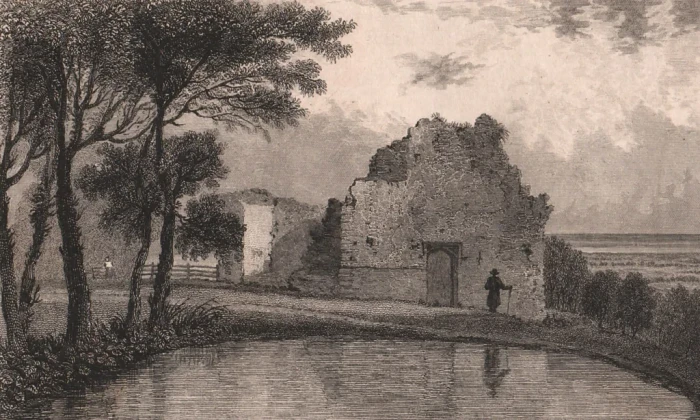
In the rural church of Our Lady in Court-at-Street, Kent, the young servant Elizabeth Barton claimed she had been miraculously cured(Alamy)
Many Catholics were concerned. “They saw all this as a threat to their way of life, and anything that helped them fight that threat would be encouraged,” says Sharon Bennett Connolly, author of Heroines of the Tudor World. Seeing Barton as an instrument of God's word, people widely spread her revelations – both orally and in writing.
“Everyone took it seriously. Whether her visions were real or not, people believed them,” Connolly tells the BBC.
In addition to the support she enjoyed from ordinary people, the “Holy Maid of Kent” or “Nun of Kent” – as Barton had become known – had impressed some monks and prominent religious figures, including the king's chief minister, Cardinal Wolsey, as well as the Archbishop of Canterbury. The news was then passed on to Sir Thomas More – the influential lord chancellor to King Henry. After meeting Barton, More said he wished to witness “her great virtue”, of which he had heard “for so many years”.
But the lord chancellor later wrote to her, warning her never to speak about the king or his personal affairs.
Barton then continued to enjoy the king's personal favor and met with him many times, growing close because of their devout Catholicism (Henry remained Catholic for most of his life). However, Henry's desire to divorce, remarry and have a male heir was in direct conflict with Catholic doctrine. Much of her prophecy was against the break with Rome, and she fervently supported Catherine of Aragon. Barton even wrote to Pope Clement, warning him that there would be a plague if he turned against Catherine.

Barton's prophecies led to the widespread belief at the time that she was a genuine visionary(Getty Images)
Senior figures in the Catholic Church believed Barton could influence the king and “prevent him from pursuing a course of action that terrified them”, says Diane Watt, professor of medieval English literature at the University of Surrey in the UK and author of Women Prophets in Late Medieval and Early Modern England.
A leader of the resistance
This has led some to argue that the so-called Holy Maid of Kent was nothing more than a puppet of the Catholic Church and that she was manipulated, Watt says.
“I think this perception of her as a charlatan and puppet figure is precisely the perception her opponents wanted us to have. I think she was an extraordinarily talented and charismatic woman,” Watt tells the BBC. Another interpretation is “to see her as a leader of the resistance to Henry's divorce and remarriage, rather than simply as a puppet of other people”.
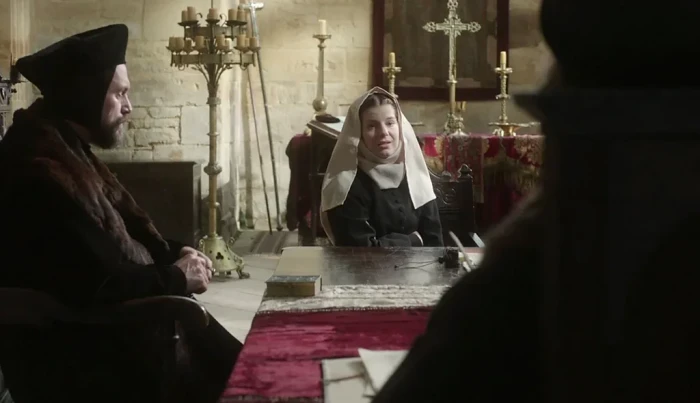
In the BBC adaptation of Hilary Mantel's novel “Wolf Hall”, Barton was played by Aimee-Ffion Edwards(BBC)
It is worth noting that there were several influential mystics and visionaries in medieval Europe – including Saint Bridget of Sweden and Saint Catherine of Siena – who had access to kings and even the Pope. In England, Julian of Norwich and Margery Kempe were well-known 15th-century visionaries, although they did not achieve the same level of popularity as Barton, Watt says.
She had also been born a servant – whereas mystics usually came from a higher social class. “Unless you were a queen or a truly exceptional member of the upper classes or aristocracy, women really had no political voice,” Watt says. “Mysticism and prophecy, if you had the Church's support, could give women the opportunity to intervene in political affairs”.
Defying the king
And intervene she did. She first claimed to have received a revelation from God that Henry would not live more than seven months if he married Anne, and then that he would not be king after a month if he married her. She did not specify how or why. “She was walking a very, very fine line,” Connolly says.
It was a bold move. What was extraordinary, Connolly adds, was “the idea that this young woman … could confront a king and say this to him”. Under the Treason Act of 1351, predicting a king's death constituted treason.
The king and Anne were so troubled by the prophecy that in October 1532, on their way to Calais, they visited Barton in Canterbury in an attempt to win her approval. Henry offered to make her an abbess if she would keep silent about his marriage, while Anne offered her a place in her household. Barton refused both offers, angering the king – but this did not stop him from marrying Anne in January 1533.
And as the months passed, it became clear that the prophecies were not coming true.
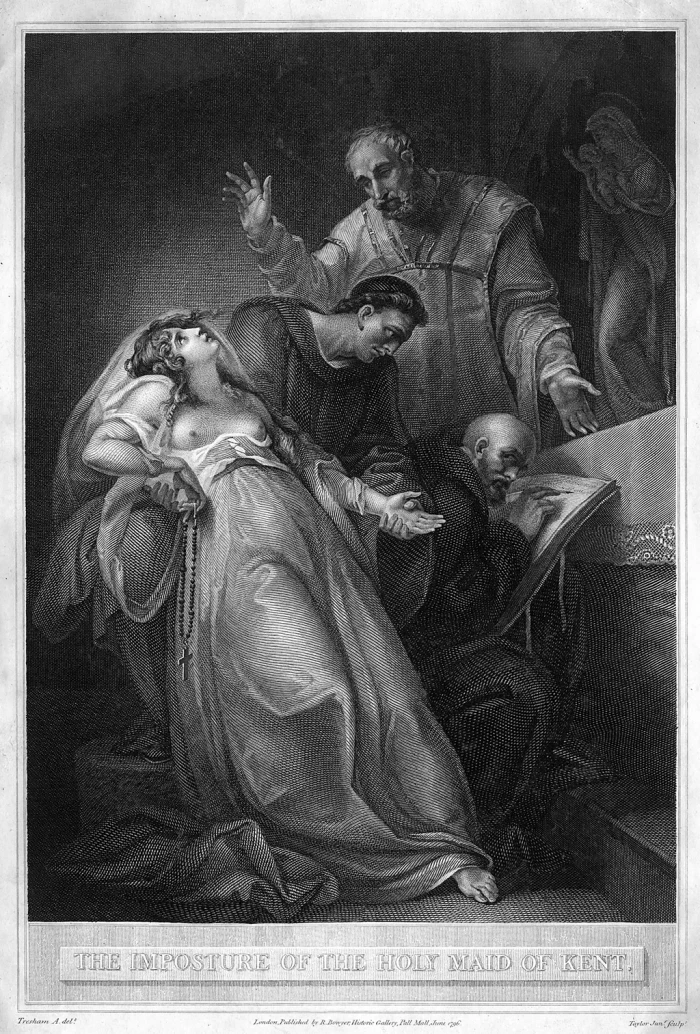
“The false claim of the Holy Maid of Kent”, an illustration from around 1534, depicts Barton in a state resembling ecstasy(Getty Images)
She was sent to the Tower of London to be interrogated by Thomas Cromwell, the king's new chief minister, where she admitted that she had never received a revelation from God. “That is precisely why she continues to fascinate us, because we don't know whether or not she had visions,” Connolly says. “If she lied, she was very clever and managed to deceive an extraordinarily large number of people”.
Whether she was manipulated – or forced – into confessing, we will never know, just as we will never know whether she was a true prophetess.
A gruesome end
On 20 April 1534, Barton and six of her loyal supporters, including her confessor Edward Bocking, were executed by hanging and beheading at Tyburn gallows. She was only 28 years old.
Her severed head was then impaled on a pike and displayed above the south gate of Old London Bridge. This macabre tradition, practiced from around the 14th century until the end of the 17th century, was a harsh and grim warning to traitors. Sir Thomas More, Thomas Cromwell and Guy Fawkes are other well-known examples of traitors whose severed heads were displayed. However, the Holy Maid of Kent is the only woman known to have suffered this fate.
Aside from this grim distinction, Barton is genuinely significant, Connolly says. “A young woman from Kent, with very little education, managed to rally people to her ideas. She showed what ordinary people thought at the time”.
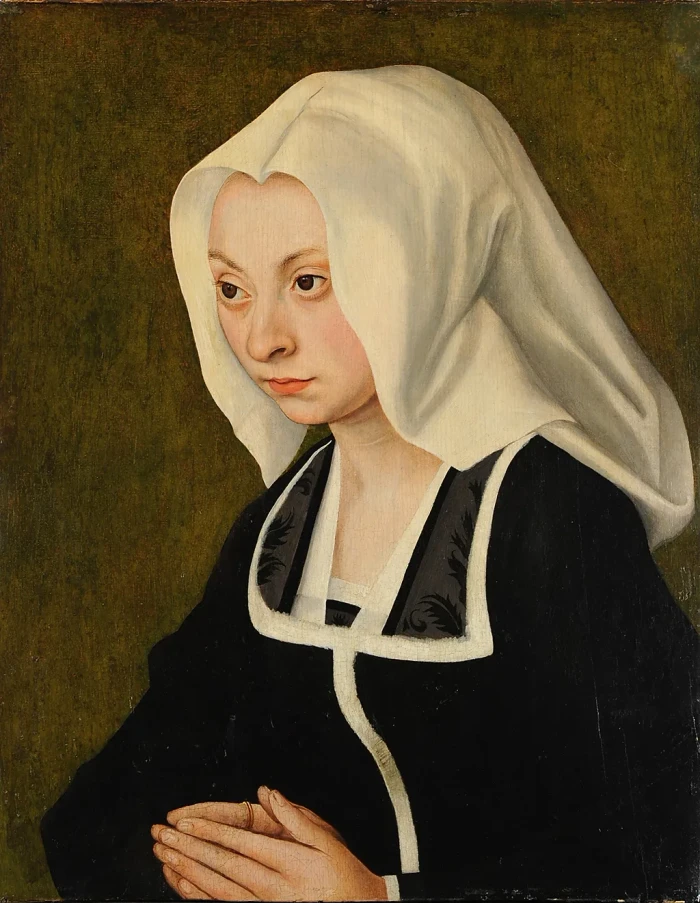
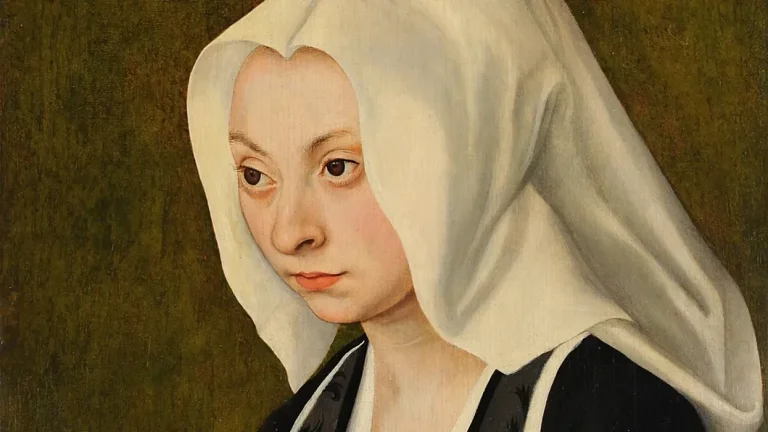
“Portrait of a Woman” by Lucas Cranach the Elder appears on the cover of Jennifer N. Brown's 2026 novel, “The Lost Book of Elizabeth Barton”(Getty Images)
Unfortunately, Barton's version of events has been largely erased from history. None of her writings, nor the accounts of her followers, are known to have survived. Cromwell made sure that 700 copies of a book containing her revelations, written by Bocking, were seized after printing and destroyed. A later pamphlet, which had been planned for distribution, was also destroyed.
Scholars hope that one day her revelations will be found – indeed, a new murder mystery novel imagines a world in which a historian makes this epochal discovery.
It remains to be seen whether this will happen. What we are left with are official state documents from people like Cromwell and the biased Protestant view of her – that she was a “charlatan”, Watt says.
“This negative view of Barton has really influenced history books, and that's why she has ended up becoming quite unknown, because very few people have wanted to champion her cause,” she says. “I hope that one day the lost book of Elizabeth Barton's revelations will truly come to light”. /Telegrafi/
Related

History
What Lincoln and the technological revolution he led can teach us today
History
Exhibition “Luigj Gurakuqi in the Documents of the Central State Archive” Opens, Honoring His Contribution to Albanian National History
History
1941: When leaders of the Sanjak regions sought protection from Tirana
History
Was King Arthur, after all, real?

History
The 1973 oil crisis forced Nixon to rethink time
History
The Life and Work of Murat Bey Toptani
History
The Forgotten Photograph That Rewrites the History of the Second World War

History
The Pastor Who Saw Hiroshima Burning

History
An American physicist’s account of the atomic bombing of Nagasaki
History
Albania Judged by an English Lady
History
John Kantakouzenos’ Campaigns Against the Albanians
History
Albania as Judged by an Englishwoman





